
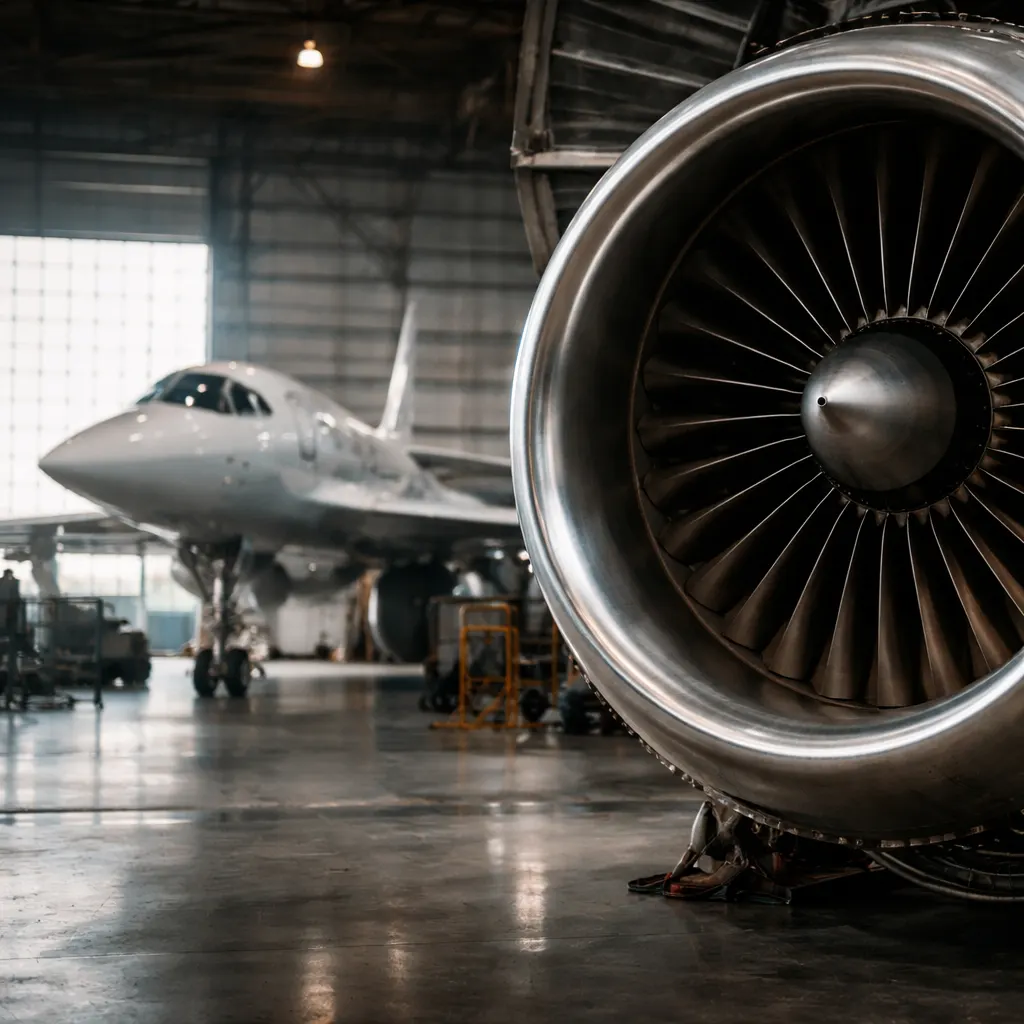
Crusoe, a Denver-based artificial intelligence data center startup, has abandoned a $1.25 billion agreement to purchase stationary power plants from Boom Supersonic, according to a report published by TechCrunch on September 25, 2026. The deal, which would have made Crusoe the launch customer for Boom's new energy business, involved 29 Superpower turbines rated at 42 megawatts each. Deliveries were scheduled to start in 2027, but the partnership has now dissolved.
The canceled agreement represented a significant shift for both companies. Crusoe, which began in 2018 as a bitcoin mining operation using surplus natural gas from oil fields, recently raised $3.9 billion and has grown into one of the largest builders of AI data centers, including a major facility in Abilene, Texas, providing computing power to OpenAI. Boom Supersonic, known for developing the Overture supersonic passenger jet, launched its stationary power business last year to sell a version of the Symphony engine it's creating for that aircraft. The Superpower turbine shares roughly 80% of its components with the airborne engine. Crusoe's initial 1.2 gigawatt data center in Abilene, built for Oracle and OpenAI, runs on grid power with a gas-turbine plant for backup only. The company is also constructing a 900 megawatt facility in Abilene for Microsoft that will use on-site gas turbines.
According to Boom Supersonic CEO Blake Scholl, who announced the partnership's end in a post on X on Friday, turbines are no longer part of Crusoe's near-term primary power strategy at Abilene and other sites, making a launch partnership impractical. Scholl stated that Boom will deliver approximately 250 megawatts of Superpower turbines next year to other locations and is targeting 1 gigawatt in 2028. A Crusoe spokesperson told TechCrunch that as the company's portfolio expands, it maintains flexibility in selecting energy solutions appropriate for each site as requirements change, including turbines alongside wind, solar, batteries, and grid power, but the Boom partnership isn't the right match currently.
The collapse of this launch customer relationship appears to be a blow for Boom, which raised $300 million last year primarily to commercialize the stationary power business. Scholl had explained at the time that the strategy was to use revenue from the power plant business to finance Overture development. While Scholl noted other customers remain in the pipeline and expressed gratitude for Crusoe's help in shaping Superpower, the loss of a $1.25 billion anchor customer fundamentally alters the business plan. Crusoe's decision reflects the evolving power needs of large-scale AI infrastructure, where companies are prioritizing flexibility across multiple energy sources rather than committing to a single technology platform. For energy startups betting on the AI boom, the lesson is clear: even billion-dollar commitments can evaporate when strategic priorities shift, and diversification matters more than any single customer, no matter how deep their pockets appear.