
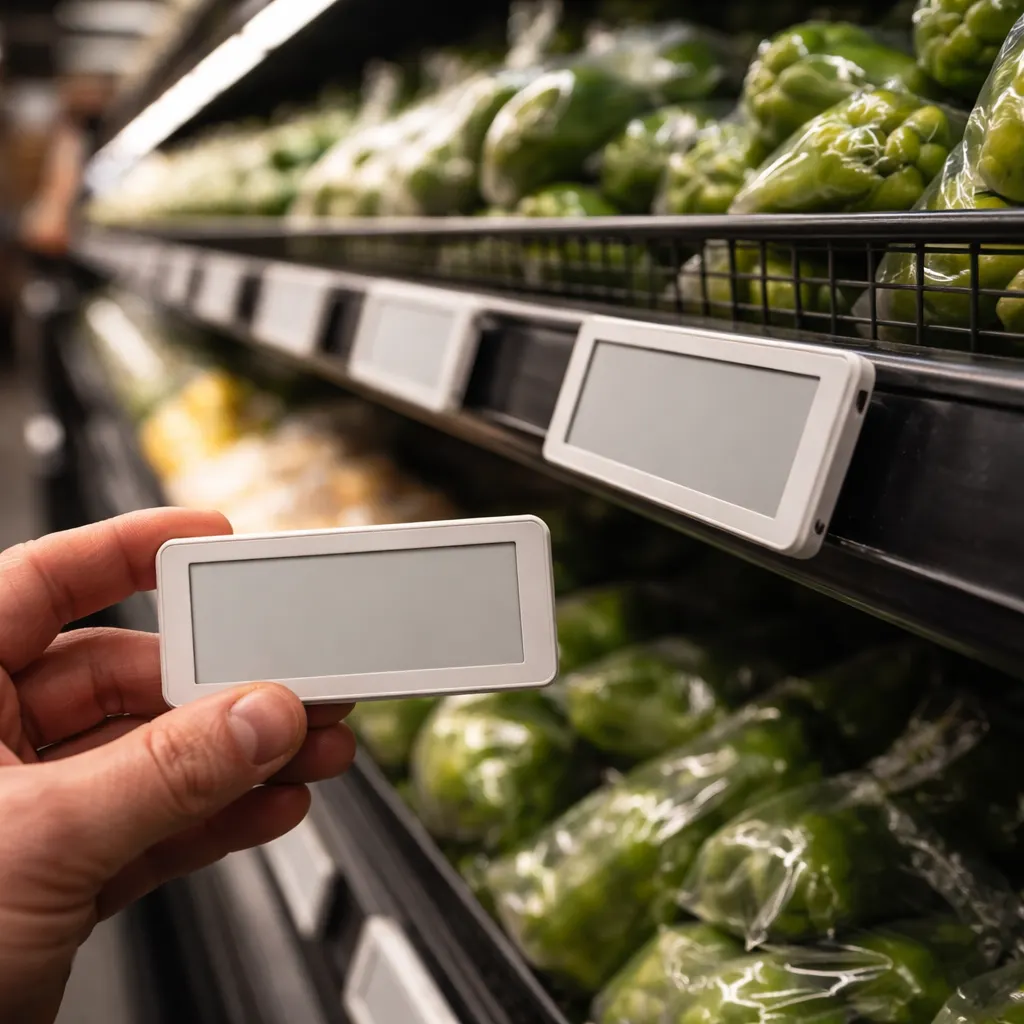
Workers in New Jersey stand to lose more than $300 million in annual wages and over 7,500 jobs if electronic shelf labels become widespread in grocery stores, according to a new report released by the AFL-CIO Tech Institute this week. The analysis, which drew responses from the United Food and Commercial Workers International Union and the Retail, Wholesale and Department Store Union, projects that nationwide adoption of the digital price tags would drain billions from workers' paychecks and eliminate hundreds of thousands of positions across the country. The findings arrive just as New Jersey implements the nation's first moratorium on the technology.
The report examined marketing studies from two major ESL manufacturers, Pricer and Vusion Group, to project the national impact of rolling out the technology across American supermarkets. Under Pricer's marketing estimates, workers would forfeit $6.9 billion in wages nationally, with job losses reaching 191,000 positions. Vusion's projections suggest a smaller but still substantial impact, with $1.6 billion in lost wages and more than 44,000 jobs eliminated. The Tech Institute broke down these projections state by state, revealing how individual communities would bear the burden of the shift to digital price displays.
UFCW International Vice President Ademola Oyefeso challenged industry claims about the technology's benefits, stating that "grocery giants like to claim that electronic shelf labels will free up workers to serve customers directly, but this report shows this is not the case." The report draws on studies and marketing materials from the manufacturers promoting the technology to calculate the potential damage to workers and their families. Oyefeso emphasized that when grocery employees experience income loss, the effects ripple through entire communities as those workers have less money to spend at local stores and businesses.
The report's release comes at a moment when retailers are racing to deploy electronic shelf labels across their operations. Walmart plans to swap out traditional paper price tags for digital versions in all its stores by the end of 2026, and the company recently obtained patents allowing it to use customer personal data to adjust prices at scale. The technology enables retailers to change prices instantly, a capability that unions argue threatens both workers and consumers. Beyond job losses, the report highlights concerns about surveillance pricing practices that the digital labels make possible, potentially squeezing household budgets to their breaking point.
New Jersey signed the Fair Price Protection Act into law in July, establishing the country's first ban on surveillance pricing and moratorium on ESLs, and twelve additional states have introduced similar legislation targeting AI-driven technology in grocery stores. Federal lawmakers have joined the effort, with Senator Ben Ray Luján and Senator Jeff Merkley introducing the Stop Price Gouging in Grocery Stores Act in February, accompanied by a House companion bill led by Representatives Rashida Tlaib and Val Hoyle. Polling shows 67 percent of American voters favor banning the technology and practices in supermarkets, with support crossing party lines, and 72 percent say they don't trust grocery stores to use electronic shelf labels responsibly. The question now shifts to whether other states will follow New Jersey's lead in blocking a technology that promises operational efficiency for retailers but threatens to reshape the economics of grocery work across the country. The debate forces policymakers to weigh corporate cost savings against the livelihoods of more than a million food retail workers who stock shelves and serve communities daily.