
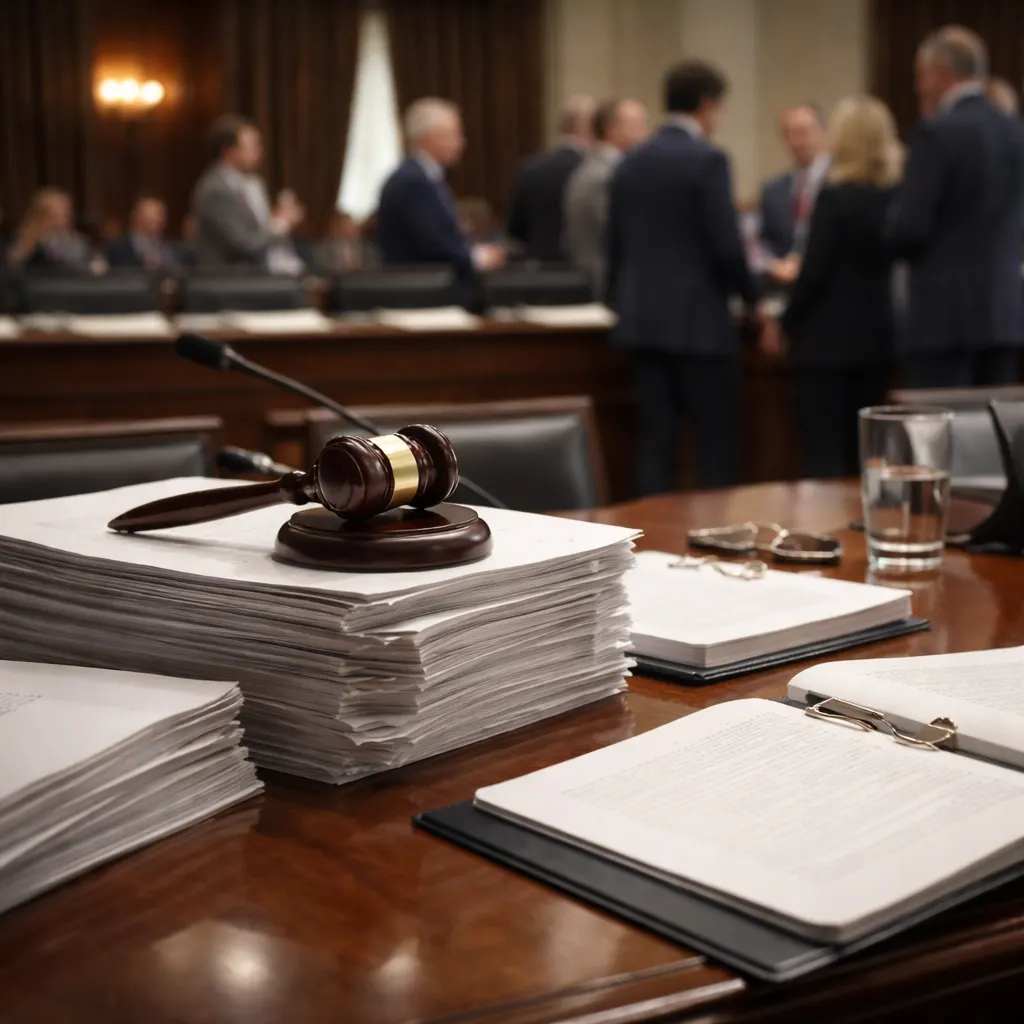
With only three weeks left in the 2026 congressional session, lawmakers are racing to pass legislation that would allow victims of online harm to file lawsuits against tech platforms and deepfake creators, according to a report from The Verge. On Tuesday, senators held a hearing targeting Roblox's use of forced arbitration clauses to block legal complaints from children allegedly groomed on the platform, while Representatives Alexandria Ocasio-Cortez and Laurel Lee brought Paris Hilton to Capitol Hill to advocate for the Defiance Act, which would let victims of nonconsensual intimate deepfakes sue their creators. The dual push reflects growing frustration with tech companies' ability to avoid public accountability through arbitration agreements and Section 230 protections.
The report details that Roblox faces approximately 180 lawsuits in a consolidated case over its alleged failure to protect children, with the company enforcing arbitration clauses against users who agreed to terms as minors—in some cases under age 10. Sen. Josh Hawley and Sen. Dick Durbin introduced legislation to make arbitration agreements unenforceable for disputes involving alleged child sexual exploitation or "child cyber injury," which could include reputational harm, mental suffering, or death. A competing bill from Sens. Richard Blumenthal, Katie Britt, and Cory Booker takes a slightly different approach that explicitly covers data privacy violations. Hilton said over 50 million people have been victimized by sexually explicit deepfakes, and that strangers have created more than 100,000 AI-generated explicit images and videos portraying her.
"The best thing we can do in terms of enforcement is we can open up the courthouse doors," Hawley told reporters after the Roblox hearing, calling the jury system "corruption-proof" and "an incredibly big hammer." Northwestern University law professor Myriam Gilles, an expert on forced arbitration, testified that she "never expected to come before this body to talk about its use against 9 year olds." According to the report, Roblox denied it's trying to dodge accountability, with its global head of public policy stating that "a legal position about arbitration is not a measure of a company's safety record."
Litigation has emerged as one of the more effective avenues for survivors of online harm to pursue change, the report notes, as Congress has failed to pass many prominent child safety, privacy, and consumer protection bills. Under Roblox's arbitration process, the public wouldn't get to see legal discovery like the kind that's come to light in recent cases against Meta. The report explains that attorneys general and individual plaintiffs have collected significant settlements and legal wins despite Section 230's broad protections for tech companies. If the Defiance Act or forced arbitration bills pass, tech companies and perpetrators of online harms could face a new wave of legal challenges. Gilles predicted that "you will be amazed by how quickly the company will change its behavior once it is sued in public court."
The window for passage is narrow, as Republicans are expected to focus on confirming President Donald Trump's judicial and executive branch nominees during the lame-duck session, along with year-end legislation like the National Defense Authorization Act. A new Democratic majority takes over in January. Elliston Berry, an advocate whose friend group was targeted by a classmate who made an explicit deepfake from "an innocent social media post" when she was 14, said the Defiance Act means "recognition that victims deserve to be heard, that their experience matters, and that their right to seek justice should not depend on how quickly technology advances." Hilton pledged to return to Congress as many times as necessary for the bill to become law, saying that if someone with her resources and platform can have 100,000 explicit AI images created, "imagine how powerless a young girl might feel facing this completely alone." The competing legislative approaches suggest bipartisan momentum exists, but the question is whether procedural realities will allow floor time before the calendar runs out. Opening courthouses to these claims could shift the economic calculus for platforms that have long relied on arbitration to contain legal exposure and keep damaging evidence out of public view.