
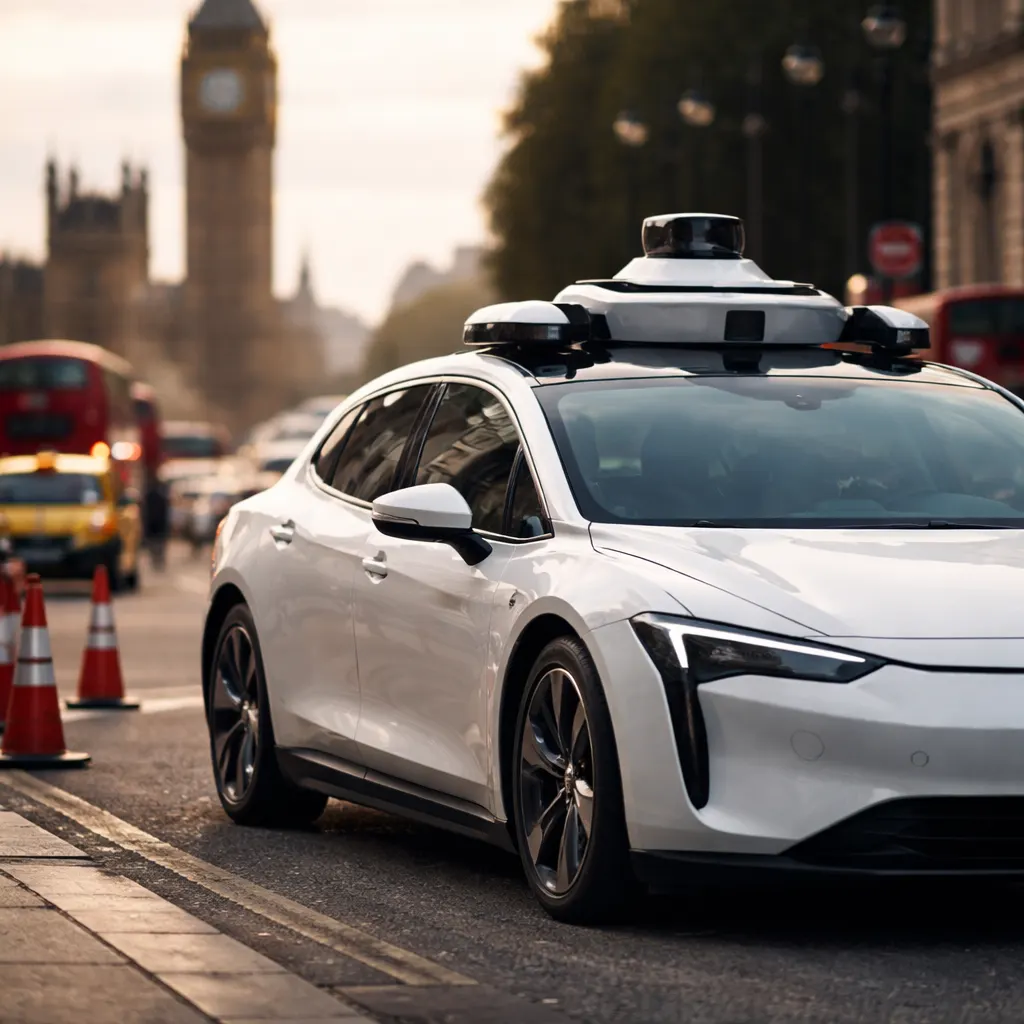
A London Assembly Transport Committee report published Monday has concluded that insufficient evidence exists to persuade members that the capital should welcome autonomous passenger services. The 66-page investigation found that London's regulatory framework leaves Transport for London (TfL) unable to independently suspend or revoke permits once issued, while operators aren't legally required to report incidents. The Independent Workers' Union of Great Britain responded by demanding TfL halt the robotaxi rollout entirely, warning that thousands of jobs are at stake as companies including Google's Waymo, British startup Wayve, and Chinese tech giant Baidu prepare to launch driverless taxi fleets.
London currently has around 105,000 licensed private hire drivers who could face displacement from autonomous vehicles. Public sentiment appears skeptical: a YouGov survey commissioned by the committee found 42 percent of Londoners oppose autonomous passenger vehicles, compared with 29 percent who support them, while just 29 percent said they'd be likely to use one. Waymo is targeting a commercial fleet of "low hundreds" this year pending regulatory approval, while Freenow and Baidu are aiming for fully driverless launches in 2027. The report documented multiple incidents involving autonomous test vehicles, including a car entering a police crime scene cordon in April, another turning the wrong way into a one-way street in June, and a collision with a motorcycle in July.
"As it stands, we currently have not heard sufficient evidence to persuade us that London should welcome autonomous passenger services," the report concludes. The committee heard testimony that robotaxis could displace large numbers of drivers and wants TfL to collaborate with unions and operators to retrain, redeploy, and fund those affected. According to IWGB Private Hire Drivers union vice chair Gholomreza "Rez" Kamyabi, an Uber driver, "Every car feeds a family, and the prospect of not being able to earn money leaves us all with a deep uncertainty as to how we will provide for them."
The regulatory structure creates a fragmented oversight system that limits London's control over driverless operations on its streets. Under the government's interim Automated Passenger Services permitting scheme, the Driver and Vehicle Standards Agency issues operating permits, and while TfL must consent before a service launches, it can't independently suspend or revoke permits once they're granted. TfL also lacks formal authority over existing driverless trials, forcing it to rely on voluntary information sharing from operators. The report raises questions about how autonomous vehicles would manage medical emergencies, passenger safety, and accessibility—none of the vehicles currently being tested are wheelchair accessible. Congestion concerns also loom, as robotaxis could draw passengers away from public transit while adding traffic through empty vehicles traveling between fares.
The committee stopped short of recommending a ban but called for tougher safety requirements, authority for TfL to cap vehicle numbers, and a process to request immediate permit suspensions. It wants TfL to assume permitting responsibilities when the Automated Vehicles Act is fully implemented in the second half of 2027. At the time of the investigation, TfL had not yet published the criteria it would use to approve driverless passenger services, meaning the capital is preparing for robotaxis while its transport authority is still working out the approval rules. The regulatory ambiguity and fractured oversight suggest that London may be rushing toward a technology shift without the institutional readiness to manage its consequences, raising the question of whether innovation timelines should bend to accommodate governance capacity rather than the reverse.