
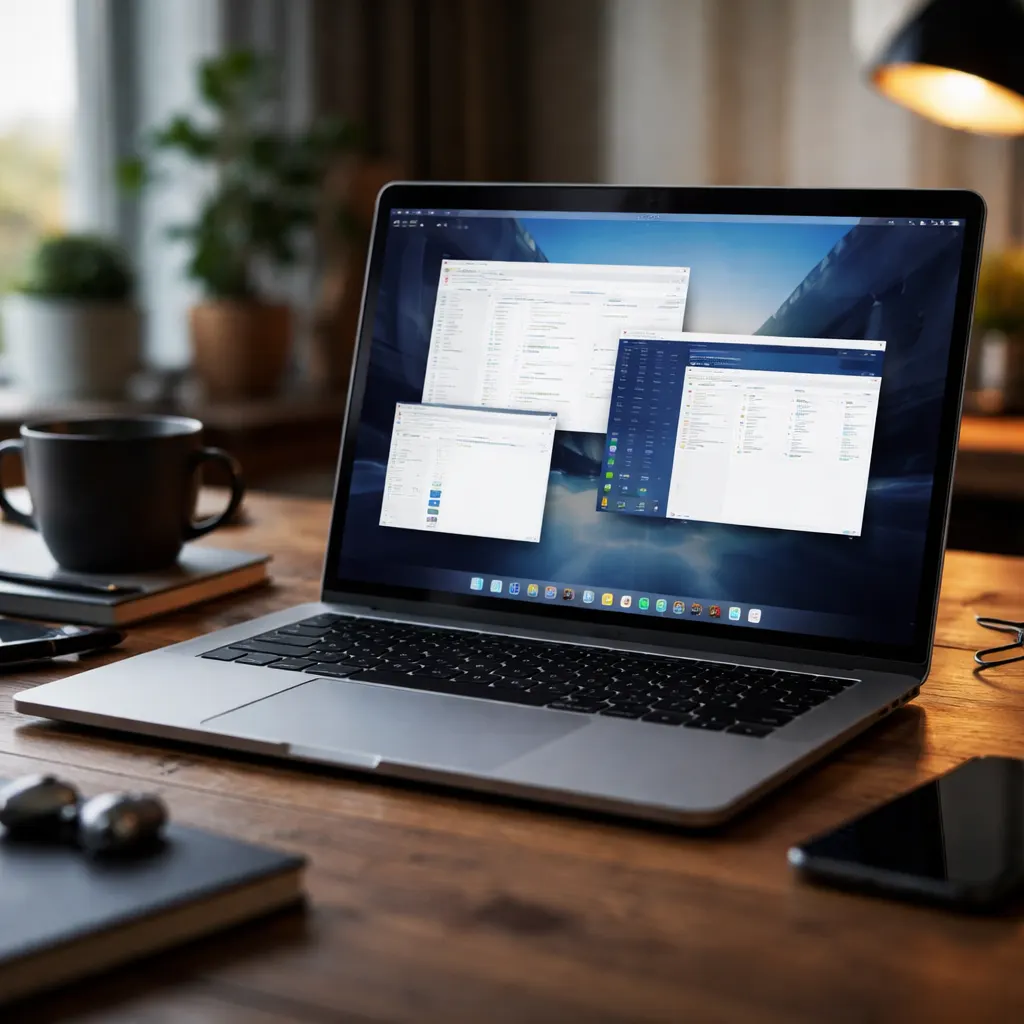
A new Mac application called Beam allows users to take a single window from one Mac and display it on another, where it functions as if it were a locally installed program, according to a report published this week on The New Stack. Serial entrepreneur Hiten Shah, who previously co-founded Crazy Egg and KISSmetrics, developed the software with Sam Asante under their company Noats, launching it on Product Hunt on Tuesday. The tool targets the expanding practice of running AI agents on headless Mac Minis stored in closets or on racks, eliminating the need to navigate a full remote desktop when checking on agent activity.
Beam's core functionality lets users select a single window from a remote Mac—such as a Terminal session or a browser where an agent is operating—and open it directly alongside other windows on their primary machine. The transferred window receives its own Dock icon, appears in the Command+Tab app switcher, and supports keyboard shortcuts, file dragging, and local audio playback while the underlying application never leaves the original Mac. Both machines must run Apple Silicon with macOS Sonoma or newer and have Beam installed, connecting either over the same Wi-Fi network or remotely via Tailscale. For accessing devices without Beam, users can generate a share link that opens a single window in any browser as view-only unless control is explicitly granted, with expiration times ranging from one hour to one week.
Shah described his motivation in the Product Hunt launch post, explaining he runs Macs that host agents and local models "with work continuing even when nobody's sitting in front of them." Accessing those systems typically requires Screen Sharing and navigating a complete second desktop, but Beam reduces that interaction to only the window that's relevant. The company states that windows, keystrokes, clipboard data, and audio travel directly between Macs with encryption and never pass through its servers, while hidden windows and password managers are automatically excluded from the window picker.
The application addresses a hardware trend that's reshaping developer infrastructure. The New Stack notes that Mac Minis have become the standard choice for always-on agent workloads, a shift initially driven by OpenClaw and later adopted by companies like Perplexity, with Apple acknowledging agentic workloads during its April earnings call. The report observes that existing remote access tools—including Astropad's Workbench, Jump Desktop, Screens, and Apple's native Screen Sharing—handle basic connectivity, but Workbench focuses on mobile devices while traditional tools treat remote access as a full second desktop rather than isolating individual windows. Pricing for Beam makes hosting a Mac and joining share links free, while using your own Mac costs nothing for the first 20 minutes daily, then $12 monthly, $84 annually, or $199 for lifetime access. The window-based approach reflects a bet that developers want to integrate remote agent activity into their primary workspace without the overhead of managing an entire virtual desktop. For teams running multiple Mac Minis as infrastructure rather than personal computers, the ability to monitor specific processes without context-switching may determine whether remote agents remain peripheral tools or become core components of daily workflows.