
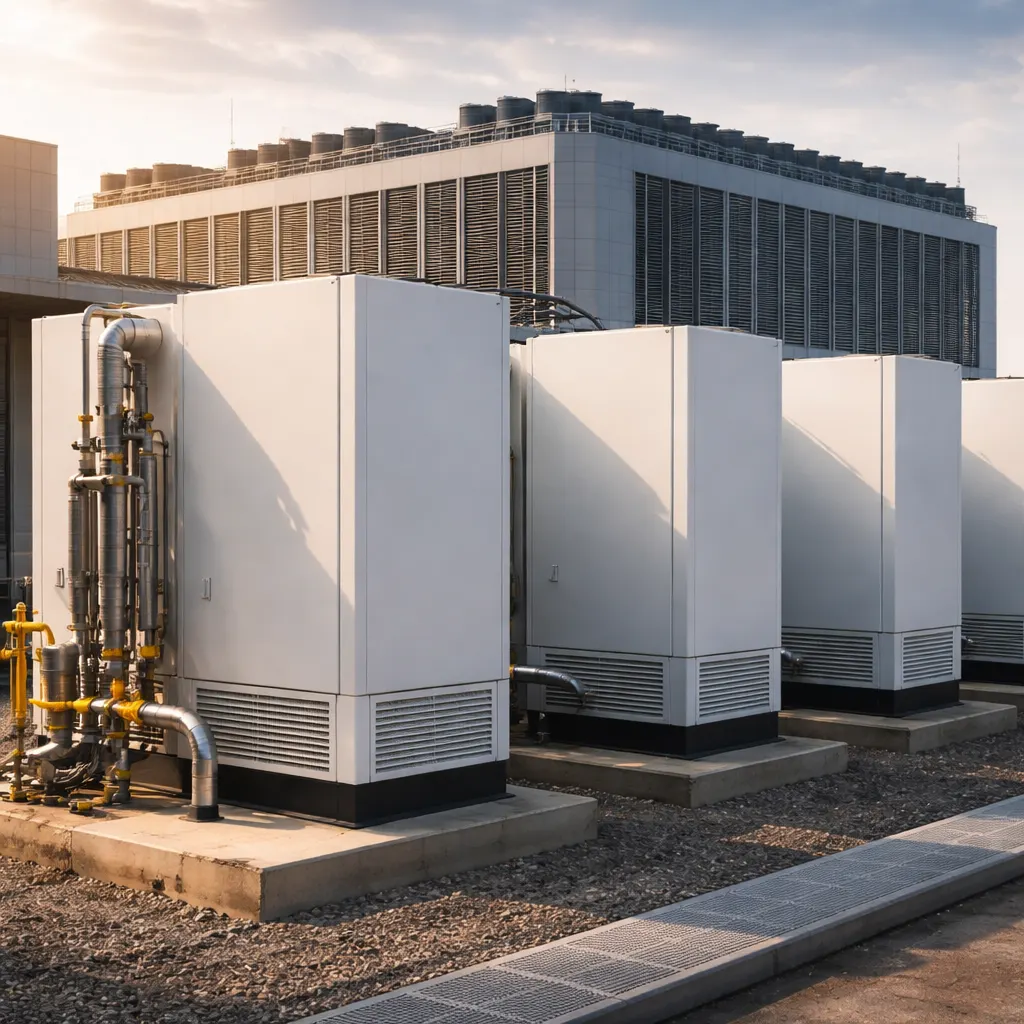
A startup developing ceramic fuel cells that generate electricity without combustion is positioning itself to serve two major power-hungry markets: artificial intelligence data centers and military vehicles. Petra Power, founded in 2017, was profiled by TechCrunch on October 10, highlighting the company's solid oxide fuel cells as a more efficient and environmentally friendly alternative to traditional power generation. The company markets its technology as capable of delivering significantly reduced fuel expenses and emissions while occupying less physical space thanks to a more compact and lightweight design.
Petra has secured nearly $9 million in contracts from the Defense Department and employs about 15 people, according to founder Aaron Goodman. The company is currently working with neoclouds and other infrastructure providers below the hyperscaler tier, with initial deployment targeted for 2028 and full-scale production hoped for by 2029. While hyperscalers represent an ideal customer profile and Petra maintains ongoing discussions with them, no firm agreements have been reached yet. On the defense side, the fuel cells are being tested to provide auxiliary power for land vehicles—electricity for onboard equipment when the main engine is off—but haven't been deployed on active vehicles yet, with the government still in the decision-making phase about moving forward.
"Combustion takes fuel and creates explosions," Goodman explained, describing conventional power generation. "Those explosions create heat. That heat creates motion. The motion powers an electromotive force, which eventually creates electricity. It's a lot of steps, and they all have so much loss in them that you end up with a really inefficient system." By contrast, fuel cells extract electrons directly from the fuel, which produces electricity in a single step with theoretically far greater efficiency, Goodman said. The result is that companies running on fuel cells could save substantial amounts on fuel costs.
The technology addresses a growing challenge as artificial intelligence consumes increasingly large quantities of energy, driving the search for efficient and cost-effective power sources. Traditional power generation loses energy at multiple stages—combustion creates heat, heat generates motion, and motion finally produces electricity—whereas solid oxide fuel cells convert natural gas or other fuels into electric power by stripping electrons directly from the fuel without burning it. This streamlined process eliminates the cascading losses inherent in combustion-based systems, making the approach attractive for organizations facing steep energy bills. Petra's compact design also reduces the physical footprint required for power generation, a meaningful advantage for space-constrained facilities. The company was selected for the 2026 TechCrunch Startup Battlefield 200, a program recognizing 200 emerging startups, with presentations scheduled for downtown San Francisco at Moscone West. Goodman said the company aims to scale its Defense Department work significantly in coming years, while hoping to eventually secure partnerships with hyperscalers—the largest power consumers where Petra believes it can make the biggest impact. The promise of efficiency gains and the cost savings they enable will determine whether fuel cell technology can carve out a meaningful role in powering the next generation of energy-intensive infrastructure. Whether fuel cells become a mainstream solution or remain a niche alternative will likely hinge on how quickly potential customers move from testing to deployment, and whether early partnerships demonstrate returns compelling enough to attract the industry's biggest players.