
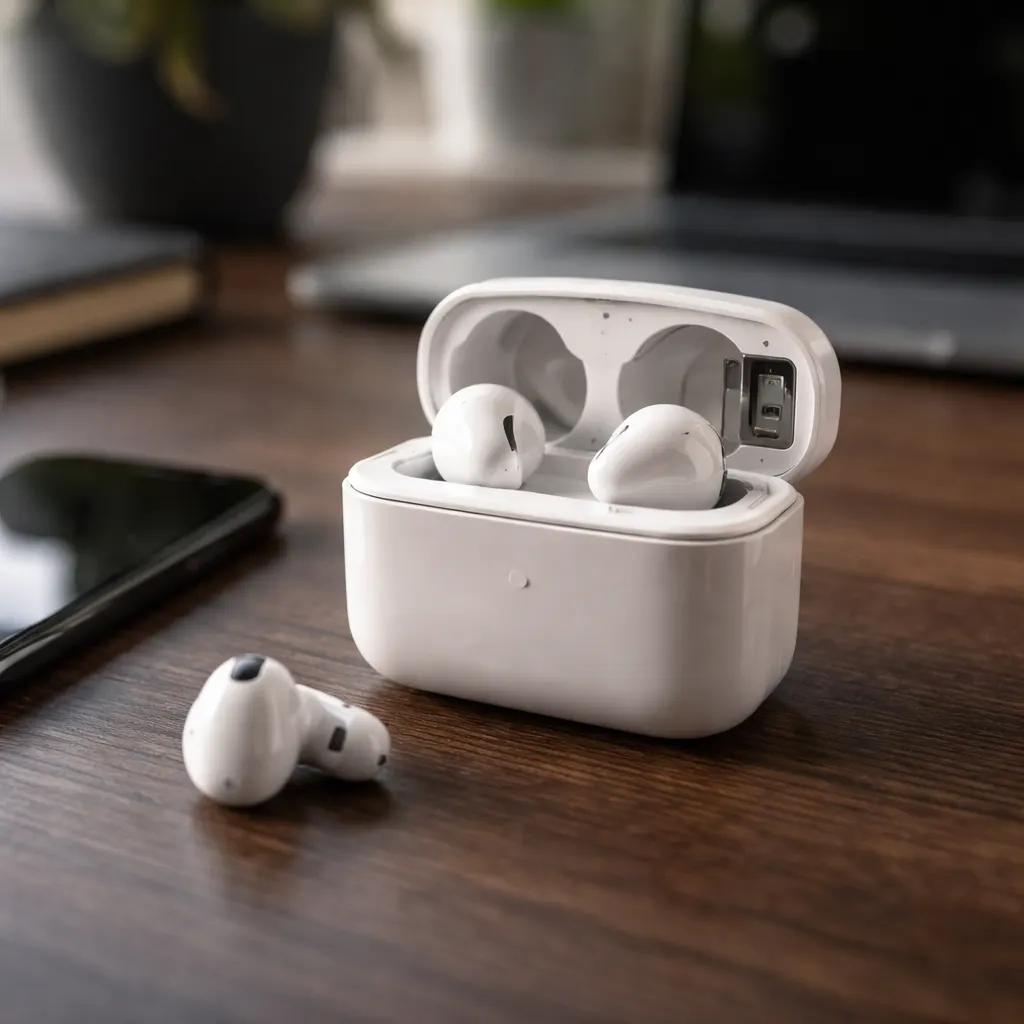
Hardware maker Plaud is launching AI-powered earphones with a built-in recording case that supports eSIM connectivity, allowing users to command AI agents without relying on a phone or computer. The company, which serves over 2.5 million users across its hardware and software products, announced the Plaud One earbuds on August 27, 2026, positioning the device as a note-taking tool that can transcribe conversations and trigger automated workflows through connected services like Gmail, Google Calendar, Notion, and Slack. The earphones adopt a minimalist design similar to Apple's AirPods, with the case serving as a standalone recording device for in-person meetings.
The Plaud One features 12mm drivers and active noise cancellation, with the case capable of capturing voices clearly within a five-meter range. The earbuds can record six hours of in-person meetings and three hours of phone calls on a single charge, while combined battery life with the case extends recording capacity to 25 hours. Users receive 300 minutes of free transcription monthly, after which subscription plans start at $8.33 per month when paid annually. The device is available for preorder at $249 and will ship in the fourth quarter of 2026, though Plaud says the launch will be limited in quantity. Buyers will receive $200 in credits for upcoming agentic tasks, which the company plans to roll out through a credit-based system in coming months.
According to the report, Plaud claimed in June that it had reached $100 million in annual run-rate revenue, though it faces intense competition from rivals including YC-backed Pocket, which has hit the same revenue milestone, as well as hardware makers Anker, Viaim, and Comu. CEO Nathan Xu stated that "we need to have a wearable and an always-ready interface, one that people love to wear, is socially acceptable, and private by design," explaining the company's rationale for entering the earbud market. The report notes that Viaim and Anker already offer similar note-taking earbuds, making Plaud not the first to this form factor.
Plaud is betting its software and AI capabilities will differentiate the product from competitors, with its AI agent able to write follow-up emails and create documents or presentations based on transcribed conversations. The report explains that while software note-takers like Granola, Fathom, and Read AI already offer similar workflow automation, the eSIM-enabled case represents Plaud's attempt to enable remote AI agent commands without requiring a connected device. However, the company acknowledges a significant challenge: convincing users to switch from existing wireless earbuds like AirPods, Google Pixel Buds, or Samsung Galaxy Buds, which can perform similar functions when paired with note-taking apps. Xu says the company isn't competing directly against these audio manufacturers, but rather adapting its meeting-recording technology to a popular wearable format. The limited initial production run suggests Plaud wants to test demand before committing fully to the earbud category, as the note-taking hardware market sees new devices launching weekly.
Organizations evaluating voice-first AI interfaces will need to weigh whether dedicated hardware offers meaningful advantages over software solutions running on devices employees already own and prefer. The eSIM feature may appeal to niche use cases requiring device independence, but mainstream adoption will likely hinge on whether the workflow gains justify managing yet another piece of hardware in an already crowded wearables market.