
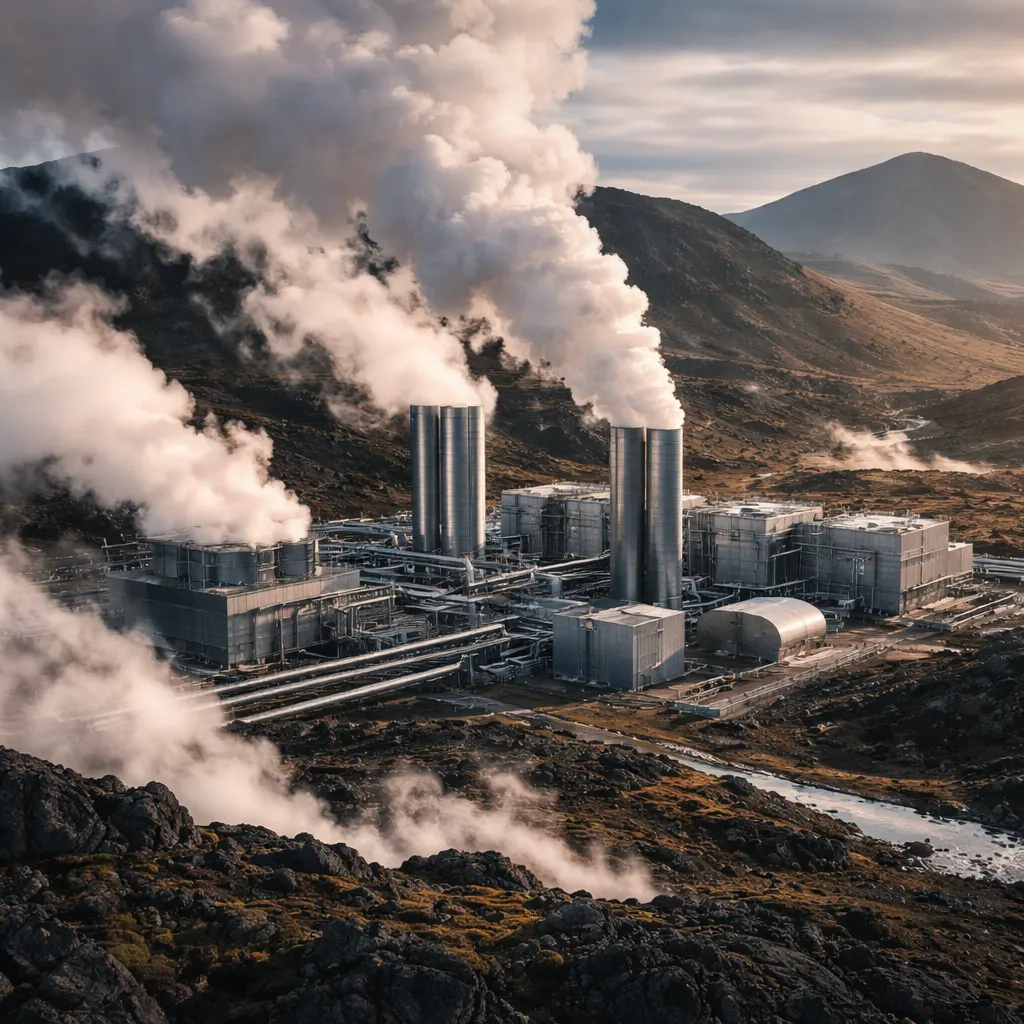
Google has committed more than $500 million to purchase 50 megawatts of power from Quaise Energy's super-hot rock geothermal project in central Oregon, according to a TechCrunch report published November 20. The deal marks a major milestone for an emerging class of geothermal energy that taps heat three miles underground, where water transforms into a supercritical fluid capable of carrying enormous amounts of energy. The technology could unlock up to 57 terawatts of generating capacity in the U.S., more than enough to power the next wave of AI data centers.
Super-hot rock geothermal works by drilling to extreme depths where both temperature and pressure rise dramatically near Earth's superheated core. At those conditions, ordinary water becomes a supercritical fluid—a gaseous-liquid hybrid that can transport tremendous energy. A single well using this approach could produce 15 megawatts or more, the report notes. Two startups are racing to make the technology commercially viable using radically different drilling methods. Quaise will swap conventional drill bits for gyrotron-powered ones starting at roughly 2.5 miles deep, using millimeter-wave radiation to turn rock into ash. Mazama Energy announced Monday it has developed Carbon Chill technology, which uses supercritical carbon dioxide instead of water-based drilling mud to keep traditional drill bits cool—the CO2 flows through a rocket nozzle-like valve that rapidly cools it through expansion, allowing it to absorb significant heat while removing drill cuttings.
The report states that Google is paying a premium for the amount of power Quaise will deliver, consistent with the hyperscaler's strategy of backing potential suppliers early—it was an investor in and early customer of Fervo Energy, which went public earlier this year. Mazama co-founder and CEO Sriram Vasantharajan told TechCrunch that the company drilled its second well 80% faster than its first, and its CO2-cooling technology reduced drilling time another 20%. According to the report, drilling accounts for roughly a quarter to a third of a geothermal power plant's total costs, so drilling fewer wells could make projects more competitive.
The technology has drawn heavy investor interest because going deeper and hotter could yield substantially more power from each well, potentially leapfrogging today's commercial geothermal plants. Quaise has raised over $270 million from backers including Prelude Ventures, Collaborative Fund, and Engine Ventures, with Vinod Khosla participating as an angel investor, according to PitchBook data cited in the report. Mazama has secured $171 million from investors including Khosla Ventures, Doerr Capital, and Bill Gates. The Department of Energy granted XGS Energy funding last week to develop materials, well designs, and models for improving reliability at depths where super-hot rock exists, while Khosla-backed Mazama made its cooling breakthrough public Monday.
The report concludes that Google's vote of confidence in Quaise, combined with Mazama's early drilling efficiency gains, suggests the race to super-hot rock geothermal is heating up. As with any new technology, there's some risk the techniques won't deliver, but early results point toward success. Geothermal has become a favorite among investors, tech companies, and even the Trump administration, with advances in drilling techniques borrowed from oil and gas supercharging decades-old basic technology. The economics hinge on whether experimental drilling methods can withstand conditions that destroy conventional equipment—and whether the energy payoff justifies the engineering risk. If super-hot rock delivers on its promise, it could reshape not just data center infrastructure but the broader grid's capacity to absorb unprecedented demand.