
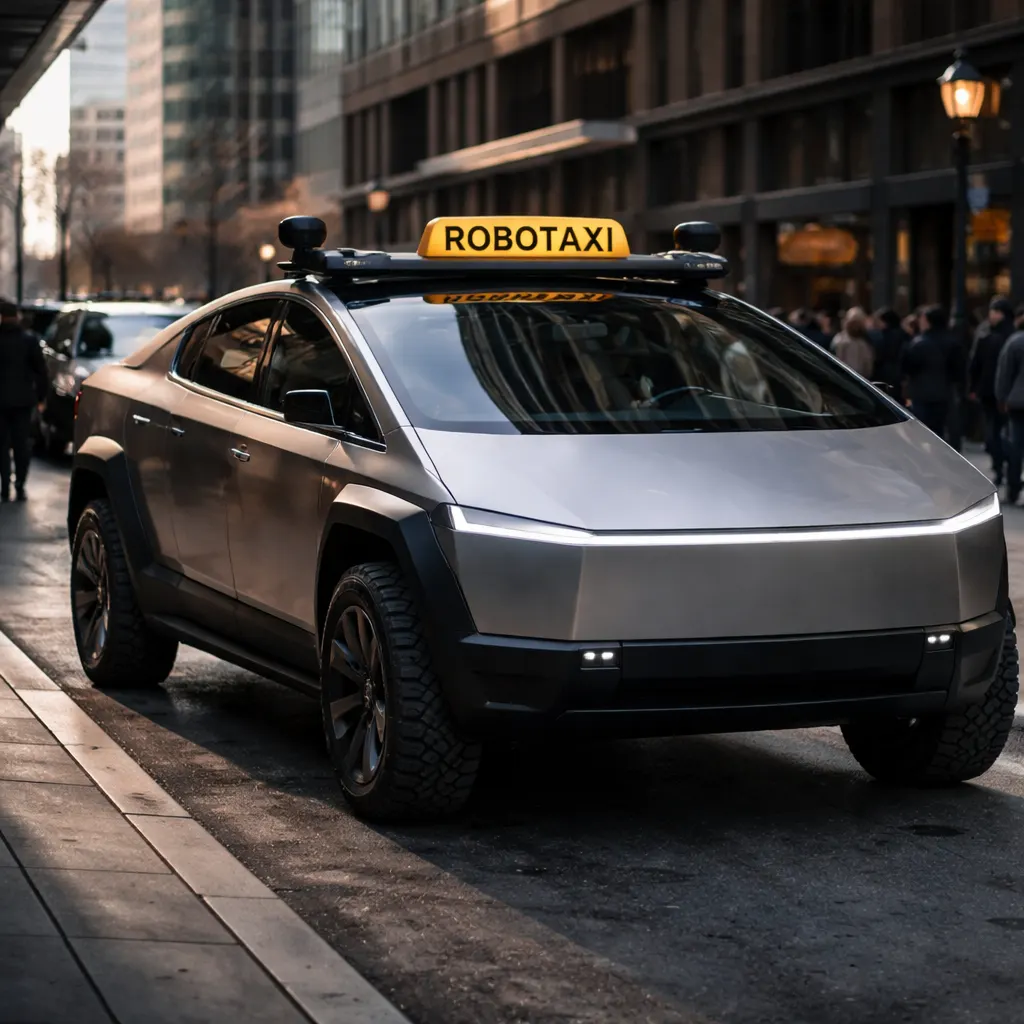
Tesla announced Wednesday it will begin selling its autonomous Cybercab to customers before year's end, even as federal authorities examine whether the vehicle complies with safety regulations. The gold-colored, two-passenger vehicle operates without a steering wheel or conventional driving controls, according to a company statement during its third-quarter earnings call. The announcement marks a shift in Tesla's long-discussed robotaxi strategy, moving from plans to convert privately owned vehicles into autonomous taxis through software updates to manufacturing dedicated autonomous vehicles for sale to third-party fleet operators.
Lars Moravy, Tesla's vice president of engineering, stated that all Cybercabs currently being manufactured are allocated to the company's own robotaxi fleet. As that fleet expands, the company plans to "mainly deliver fully designed autonomous vehicles to our customers," starting with limited initial sales, he said. Tesla will increase production as it gains experience with delivery, ownership, and fleet management of autonomous vehicles, Moravy added. The company first suggested selling the autonomous vehicle to outside parties last month during its Cybercab event in Austin and posted a form for interested robotaxi buyers. CEO Elon Musk indicated Wednesday that an unsupervised version of Full Self-Driving would launch for customers sometime in the second quarter of next year, representing another postponement for Tesla owners who purchased or subscribed to the software years earlier. If both schedules are met, third-party fleet customers would be able to purchase the autonomous Cybercab and potentially run it as a robotaxi service before Tesla owners gain access to the same autonomous capability in their existing vehicles.
Musk characterized the Cybercab as a ride-hailing vehicle rather than a car for individual ownership. "Cybercab is primarily going to be something that is offered as like transport as a service, whereas our other cars would be more, you know, the cars that you'd want to own, like the 3 and the Y and whatnot, and the Roadster, obviously," Musk said. He added that "the vast majority of the Cybercab stuff will be essentially Tesla-owned and transported as a service." Tesla owners can currently subscribe to Full Self-Driving (Supervised), an advanced driver-assistance system that automates numerous driving functions but still requires the driver to maintain control and remain ready to intervene.
A significant regulatory hurdle could disrupt Tesla's Cybercab fleet plans. The National Highway Traffic Safety Administration opened an investigation into the Cybercab last month, hours after the vehicles started operating on public streets in Austin. Federal Motor Vehicle Safety Standards mandate manual controls like brake pedals, along with other features including rearview and side mirrors. While automakers traditionally self-certify compliance with these rules—and Tesla has done so—current regulations don't accommodate vehicles without manual controls. The Department of Transportation recently proposed eliminating those requirements for vehicles designed to be driven autonomously. NHTSA stated it would investigate "the process and technical data on which Tesla relied when certifying the Cybercab and related issues." The investigation's outcome could determine whether Tesla or any other company can legally operate the Cybercab. The timing creates an unusual dynamic where the regulatory framework may not catch up to Tesla's production schedule, potentially forcing the company to either delay sales or operate in a legal gray area until new rules take effect.