
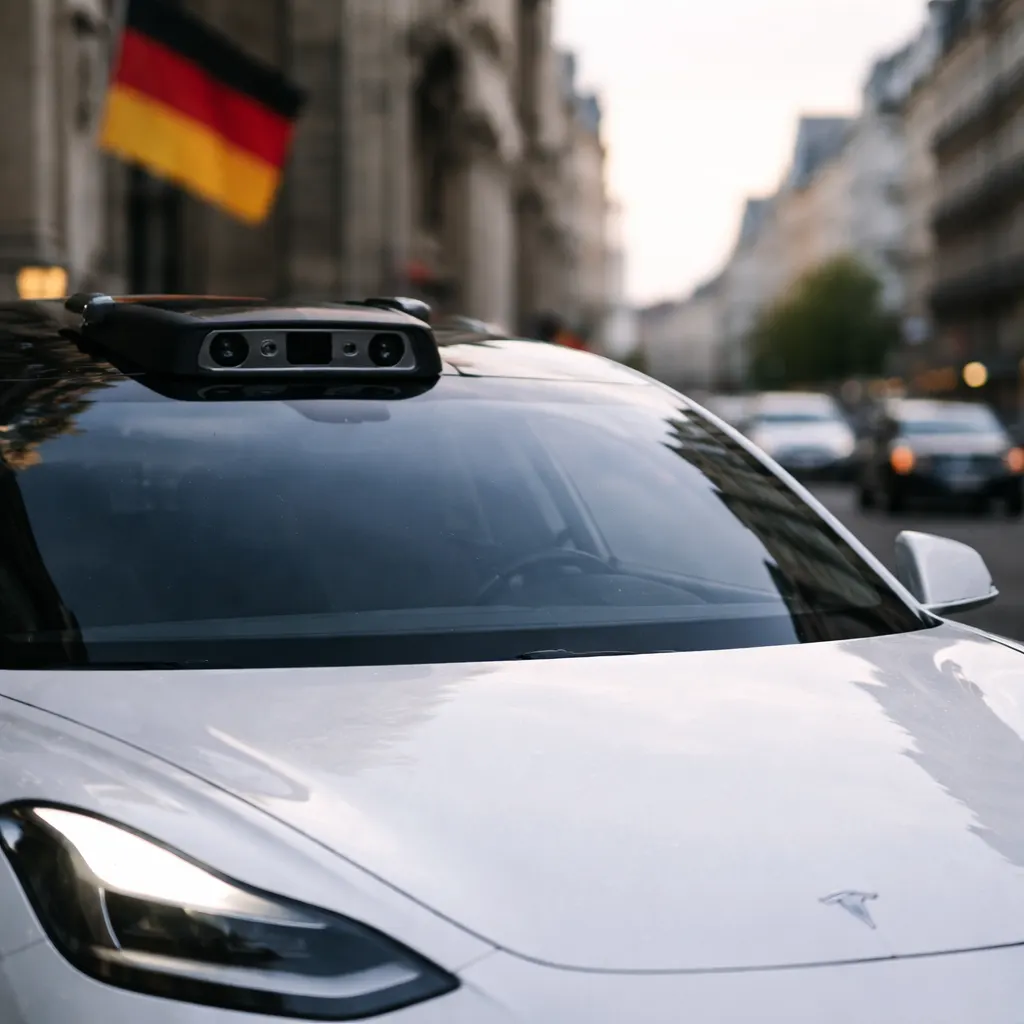
Tesla has renamed its advanced driver assistance system in Europe to "Tesla Assisted Driving," abandoning the "Full Self-Driving (Supervised)" label after Germany's transportation ministry challenged the branding as misleading, according to a report published Thursday by TechCrunch. The change marks a significant retreat for Tesla, which has used the Full Self-Driving name for years despite the system requiring constant human attention and intervention. The company hopes the rebrand will unlock approval across the European Union and access to what could become a major revenue source.
Germany's transport minister, Steffen Bilger, stated earlier this month that labeling the software "Full Self-Driving" was misleading given that it doesn't handle the complete driving task, the report notes. After discussions with Tesla last month, the company proposed the name change, according to an official ministry release. Bilger has now pledged to push for approval of Tesla Assisted Driving throughout Europe before an EU-wide vote that may occur later this year. Tesla CEO Elon Musk thanked Bilger on X this week. The Netherlands became the first European nation to approve FSD (Supervised) in April of this year, just weeks after Musk wrote that the EU's "extreme regulatory burden" stifles innovation in Europe.
The report states that Tesla's software has grown substantially more capable over time, evolving from basic lane centering and adaptive cruise control into a driver assistance system that some owners now use for nearly all their daily driving. FSD can maneuver in and out of parking spaces and handle both surface streets and highways. Tesla recently enabled FSD to override a human driver's control if it detects an imminent collision, even when FSD isn't active. However, according to the report, FSD has been the subject of federal investigations and civil lawsuits related to crashes where it was allegedly in use, while its predecessor, Autopilot, has been linked to dozens of deaths. Tesla discontinued Autopilot earlier this year after a judge ruled the company had engaged in deceptive marketing about the system's capabilities.
The name change reflects the regulatory obstacles Tesla faces as it pursues European expansion, particularly after Reuters reported Wednesday that the company's campaign for European approval has been "built on faulty company safety research" and "flawed studies," with the Dutch vehicle safety regulator facing intense pressure from Tesla and its online supporters. Musk has spent years pushing for FSD approval in Europe, writing in June 2025 that "FSD in Europe will save lives of people in the car, as well as vulnerable road users like pedestrians, cyclists, and pets," and urging citizens to contact their governments. The rebrand to Tesla Assisted Driving addresses German regulators' core objection while preserving the system's functionality, positioning Tesla to potentially secure continent-wide approval and tap into European markets that have remained closed to the technology. The concession on naming may prove minor if it delivers the regulatory green light Tesla needs to monetize its driver assistance technology across one of the world's largest automotive markets. For automakers navigating the tension between ambitious branding and regulatory reality, the episode illustrates how product positioning can become the gatekeeper to market access, particularly when safety claims invite official scrutiny.