
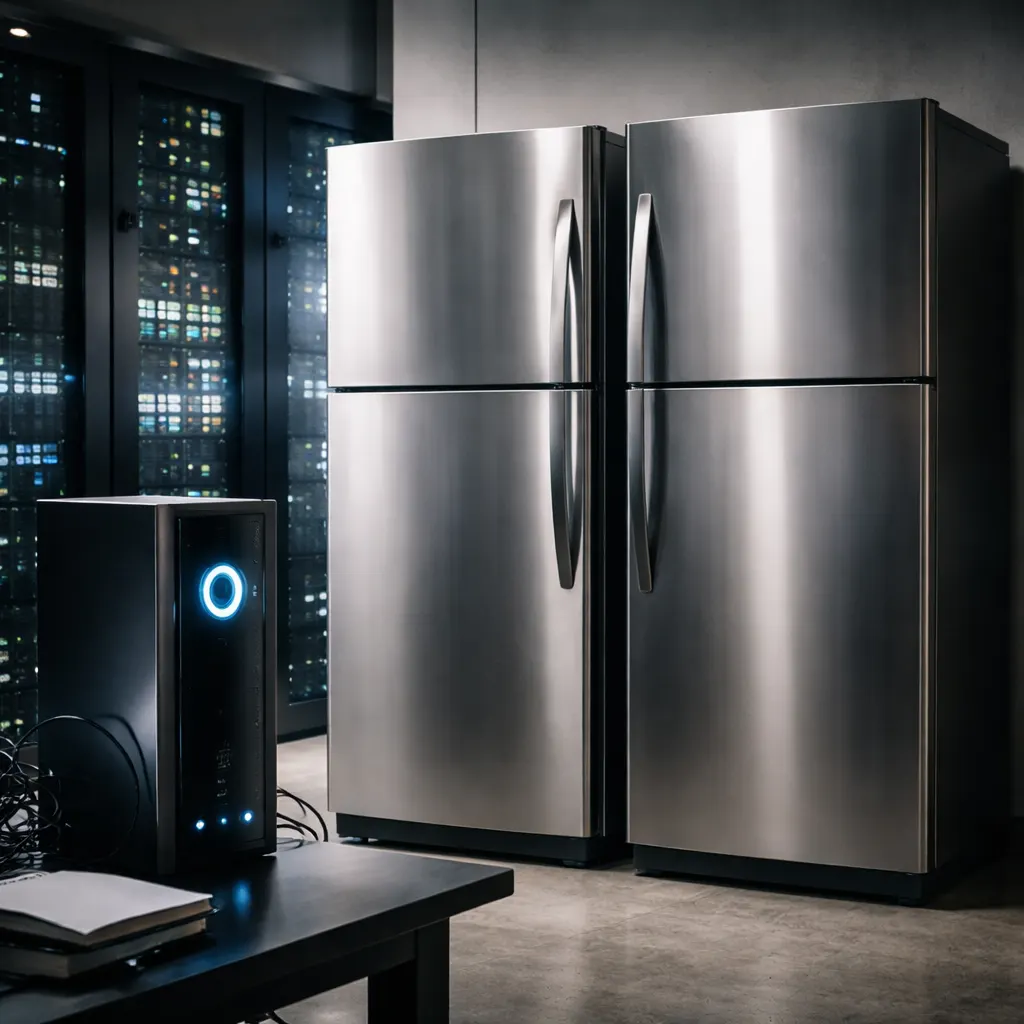
Tech companies are racing to build data centers not for simple chatbot searches, but to power AI agents—autonomous systems that can execute complex tasks by generating hundreds of self-prompts—and a new analysis published in Wired's Power Play column finds that a single user's daily agent activity can consume more electricity than running two refrigerators. The shift from basic question-and-answer AI to agents capable of working for hours on tasks like website construction or coding is driving Silicon Valley's massive power infrastructure buildout, according to the report. Unlike conventional chatbot queries, which OpenAI CEO Sam Altman has compared to a fraction of an almond's water footprint, agents represent a fundamentally different scale of energy demand.
The report highlights climate scientist Zeke Hausfather's calculation that his typical daily Claude session—which relies heavily on agents—may burn through more energy than two refrigerators need to operate. OpenAI recently deployed a swarm exceeding 10,000 agents that transmitted 2.7 million messages to tackle a longstanding mathematics problem, likely consuming tens of millions of dollars in processing power, according to the analysis. Meta's newly launched Muse personal AI agent will maintain a "dedicated computer in the cloud" for each user that operates even when they're offline, with plans to integrate the technology into AI glasses later this year. The company announced in a press release that Muse is "built to work for billions of people worldwide." Agent tasks range from simple jobs to full days of autonomous coding involving teams of parallel "helper" agents, creating a massive gulf in power consumption between applications.
According to Boris Gamazaychikov, co-founder and CEO of Sustainable AI, the energy demand from agents is "kind of decoupled from users" in ways that differ from other technology growth areas constrained by human activity like driving or streaming. The report notes that AI company leaders envision "unicorns that have one employee"—one human employee, potentially supported by hundreds or thousands of AI agents operating in the background. Hausfather writes that while his AI usage isn't catastrophic in his personal carbon footprint, it "represents a net new source of emissions, at a time when global temperatures are skyrocketing and our emissions reduction goals are increasingly off track." Private AI firms have historically been selective about disclosing environmental metrics for their products, with many CEOs pointing to individual queries as the measure of resource consumption rather than the more intensive agent operations.
The report explains that agents now sit at the core of frontier labs' AI development, and the infrastructure being proposed and constructed today is designed for technology that won't arrive for three to five years—technology that will look very different from simple chatbot interfaces. This timing helps account for why companies are taking on billions in debt and building some of the world's largest power plants, including Meta's Hyperion project in Louisiana, which will draw electricity from 10 natural gas plants. As AI companies roll out agents to billions of users who may not realize they're delegating tasks to power-hungry autonomous systems, the carbon footprint remains relatively modest compared to frequent air travel or daily beef consumption on an individual level. But the potentially limitless expansion as tasks grow more complex, combined with a major shortage of reliable information about agent energy use from the companies themselves, means the full scale of the buildout is still coming into focus. The industry's rush reflects a bet that widespread agent adoption will require infrastructure far beyond what current chatbot usage demands, transforming data centers from supporting human-initiated queries to powering autonomous digital workforces running around the clock. For business leaders weighing cloud infrastructure investments, the transition to agents introduces a new variable in capacity planning that traditional user metrics won't capture. The ambiguity around disclosure standards also means enterprises may struggle to benchmark their own AI footprints against meaningful industry baselines until researchers or regulators force greater transparency.