
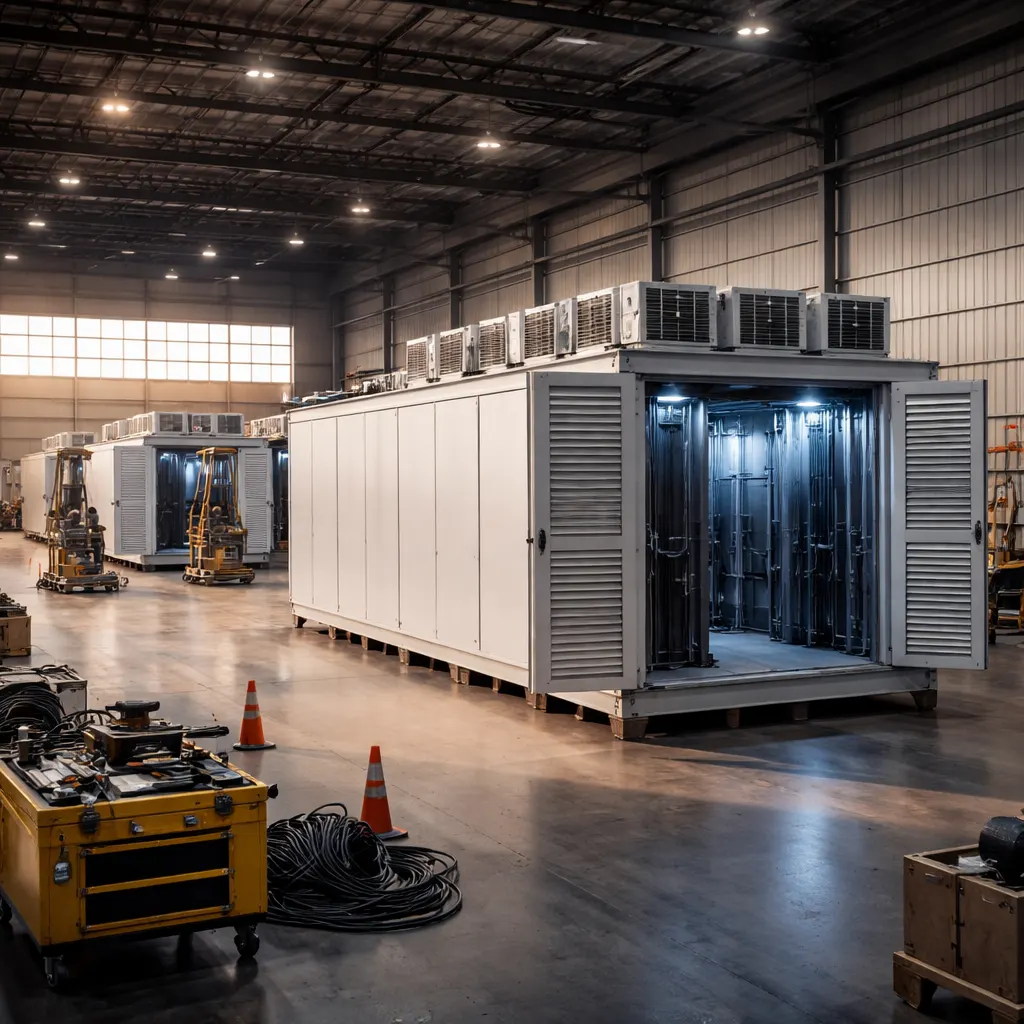
AI infrastructure company Runware has announced plans to build a factory that will mass-produce modular data centers on an assembly line, aiming to reach 30 megawatts of daily production capacity by 2028, according to a report published by TechCrunch on October 30, 2026. The Romania-based startup says it will manufacture its Sonic Inference Pods like automobiles, shipping them ready to install and bringing them online within 48 hours of delivery. The approach represents an industrywide effort to deploy AI computing infrastructure faster and more efficiently, though Runware claims it's actually built a factory rather than just designing one.
The company's production target would deliver nearly 1 gigawatt of capacity per month, which means Runware would produce roughly as much in a year as the entire U.S. was expected to add in data center power this year, about 10 gigawatts. Runware already operates two facilities: one used for several years to build the pods, and a second started earlier in 2026 that's expected to finish within months and go online early next year. The startup has raised more than $60 million to date and plans to launch the factory using the $50 million Series A it secured last December. Since beginning to offer pods to outside customers a month ago, the company claims it has received $1 billion in committed interest representing over 20 megawatts. A single pod once required three weeks to build but will soon take one day as production scales up.
Co-founder and CEO Flaviu Radulescu told TechCrunch that pod delivery times are "shorter than current GPU lead times, giving us time to adapt the infrastructure to the hardware being ordered." The 48-hour timeline covers installation and setup, not construction time, and customers can either provide their own site or have Runware find one. The pods use a closed-loop liquid cooling system with air-cooled radiators to release heat, so they don't require a water connection—only power and internet. Radulescu said the company is working with power providers on a site pipeline covering 397 megawatts, with potential to expand to 1.2 gigawatts, and that modular systems will soon become "the standard for large AI deployment."
The report notes that execution is the real test, pointing to cautionary tales like electric vehicle startup Arrival, once valued at over $13 billion, which struggled to mass-produce vehicles cost-effectively compared with traditional plants. Runware seeks to avoid that fate by maintaining what it calls a "very different" cost structure, with factory staff that's cost-effective relative to the value of deploying compute for AI, and by designing its own systems using widely available, affordable parts. The company brought in a highly experienced plant manager from the automotive industry to work alongside its chief of hardware. Sourcing components could pose challenges—while Runware designs and builds its own cooling and other pod systems with standard components, some parts like pumps and fans come from Germany, and it still depends on Nvidia for networking. The company plans to expand to the U.S. and other regions worldwide after bringing its new factory online early next year, with Radulescu saying customers should be able to plan a hyperscale data center around factory-built pods from the beginning and have it working in months instead of years. The automotive-style manufacturing model could reshape how quickly companies can deploy AI infrastructure, though the gap between ambitious timelines and operational reality will determine whether this approach becomes standard practice or joins the list of overpromised manufacturing revolutions.