
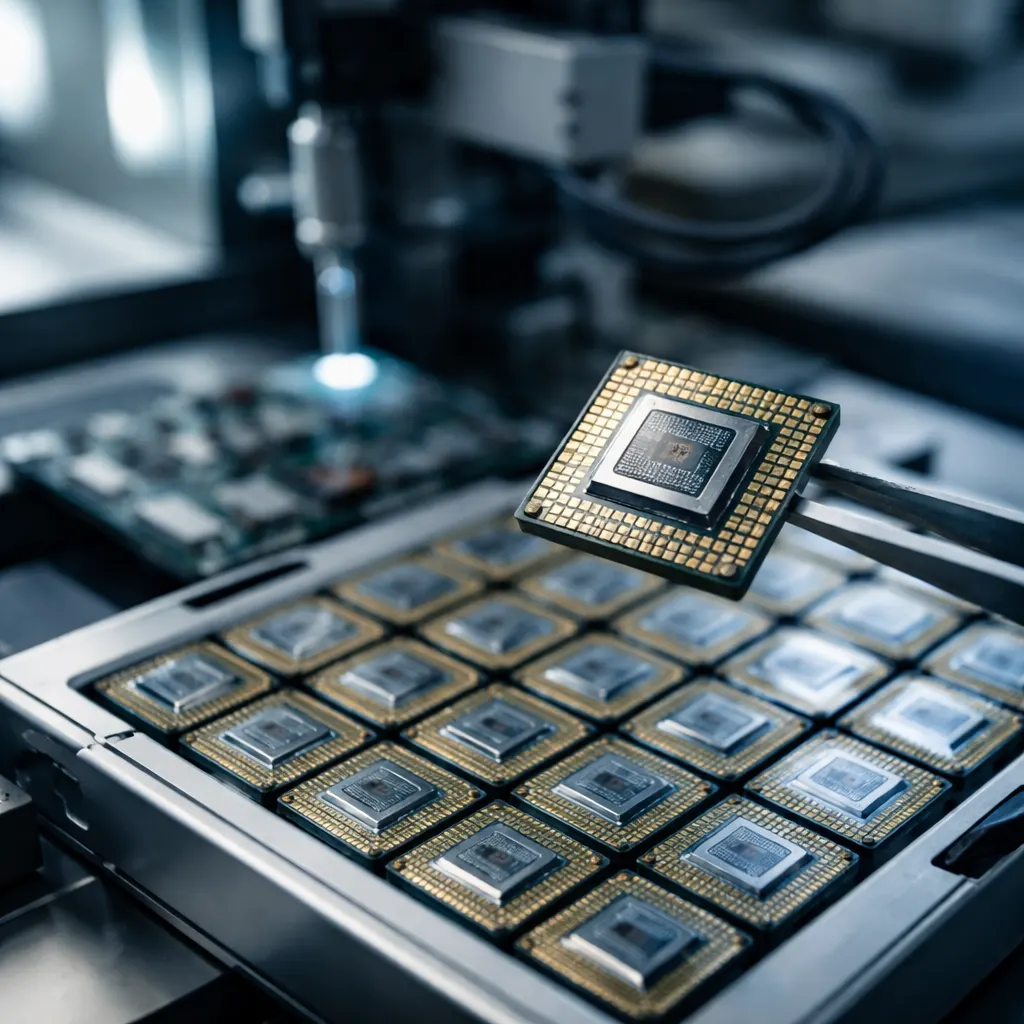
Chinese internet giant Baidu told investors it expects strong growth for its Kunlunxin chip division because domestic customers lack access to foreign alternatives, according to remarks made during the company's second-quarter earnings call. Dou Shen, executive vice president of Baidu's AI Cloud Group, said the company remains highly confident in Kunlunxin's commercial prospects and plans to take the chipmaker public soon. Kunlunxin manufactures CUDA-compatible chips designed for inferencing that Baidu deploys in its own cloud operations and sells to Chinese telecommunications equipment makers including Huawei and ZTE.
Baidu's AI infrastructure business posted revenue gains of 50 percent year-over-year to nearly $1.1 billion, while its GPU cloud service saw revenue jump 283 percent compared to the same quarter last year, outpacing the prior quarter's 184 percent expansion. The company's ERNIE assistant recorded an 83 percent year-over-year increase in daily active users, with the volume of daily conversations more than tripling during the same period. Baidu's Apollo Go autonomous vehicle service delivered over one million fully driverless rides globally in the second quarter, while overall corporate revenue grew just four percent year-over-year to $3.9 billion.
Shen cited two primary factors driving Kunlunxin's outlook: rising demand for inferencing capacity that Baidu expects to persist long-term, and China's domestic market showing "significant growth potential" because AI chip supply is "likely to remain constrained for some time." He added that "customers are increasingly seeking high performance, reliable, and cost-efficient domestic AI chips" given current conditions. The comments arrive as Nvidia reports zero revenue from China following a US policy shift that technically permits the company to resume sales there, though Beijing has granted itself veto authority over any purchases by Chinese firms.
The supply constraints Baidu references stem from trade restrictions that blocked Nvidia from the Chinese market, costing the GPU manufacturer $10.5 billion over six months before Washington reversed course. Despite that policy change, Nvidia acknowledged in its latest financial disclosure that it hasn't generated any Chinese revenue and faces uncertainty about whether imports will receive approval. Meanwhile, Beijing has actively promoted adoption of domestically produced technology to reduce reliance on American products, creating an opening for local chip suppliers like Kunlunxin. Nvidia CEO Jensen Huang has argued the Trump administration should facilitate chip sales to China to maintain US leadership in artificial intelligence, but Beijing's veto power and Baidu's assessment suggest Chinese buyers are turning to homegrown options regardless.
Baidu believes controlling its complete technology stack—from models and infrastructure through to silicon—will enable the company to offer AI services at competitive prices and capture market share, though competitor Alibaba makes similar claims and appears further advanced in model development capabilities. The company's AI cloud remains small compared to Amazon Web Services, Google, and Microsoft, and trails several Chinese rivals as well, but the division now functions as Baidu's primary growth driver while its legacy web business stagnates. For companies weighing chip strategies in fragmented markets, the choice between waiting for geopolitical clarity and committing to regional suppliers carries implications that extend well beyond immediate procurement needs. Baidu's bet suggests that in contested technology domains, control over domestic supply chains may ultimately matter more than access to cutting-edge foreign alternatives.