
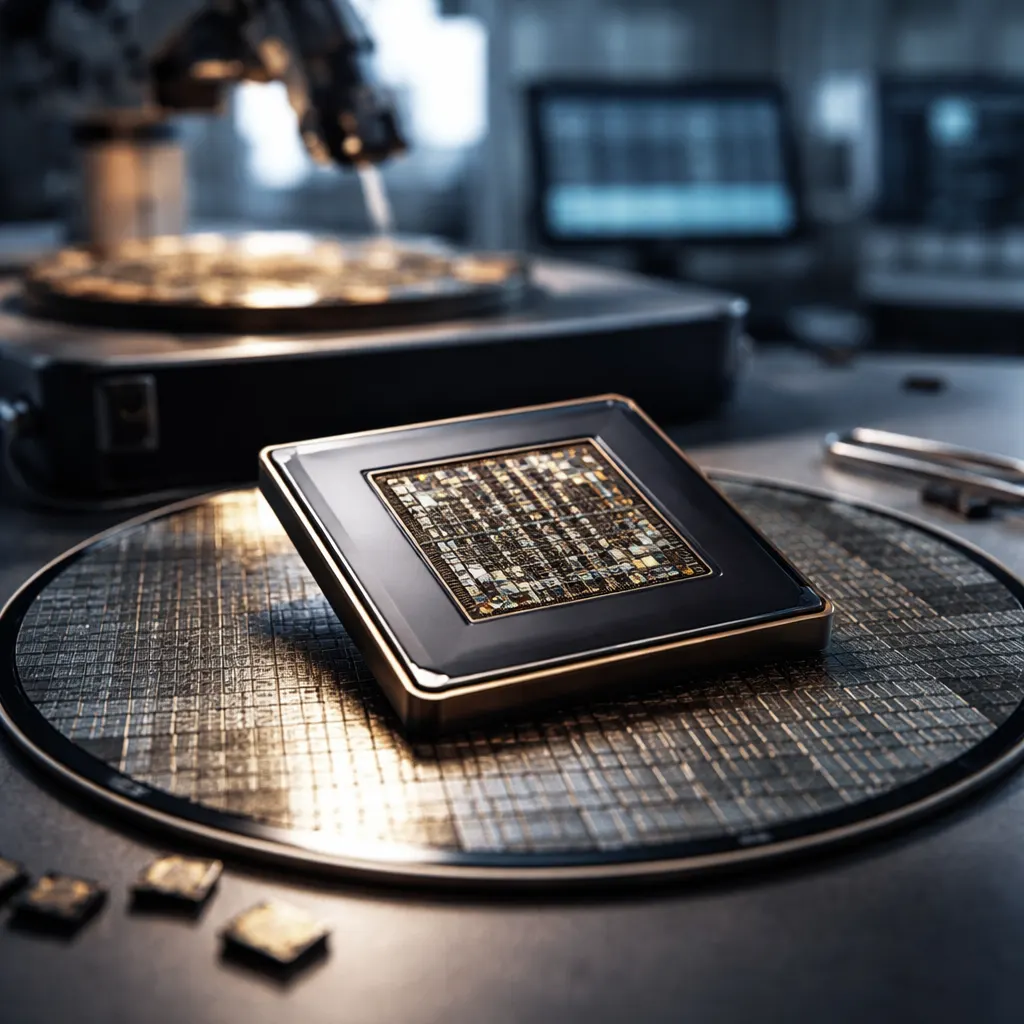
Fractile, a British startup building chips for artificial intelligence applications, has closed a $720 million Series C funding round backed by Britain's Sovereign AI Fund, according to a November 11 report from TechCrunch. The investment positions the company among the most well-capitalized startups competing to create specialized AI chips, alongside firms such as Axelera, Etched, and OLIX. The British government stated the funding aims to "ensure the U.K. has a greater stake in the hardware that will underpin its future economy."
The funding round was led by Thrive Capital, Founders Fund, Lightspeed Venture Partners, and Redpoint, the report says. The company's valuation reached "over £5 billion" according to Britain's government, which both the Financial Times and a Reuters source pegged at approximately $7 billion. Fractile isn't building chips alone—the startup has developed a full-stack approach that pairs its hardware with a machine learning compiler designed to speed up how large language models run on its chips. The company describes itself as a frontier AI company rather than strictly a hardware maker.
After a strategic shift, Fractile's hardware design now centers on DRAM—the most widespread form of RAM—stacked atop each chip in a configuration the company hopes will sidestep the typical compromise between memory and capacity, according to the report. CEO Walter Goodwin wrote in a LinkedIn post that "there is still a lot of work ahead" for Fractile, and that the fresh capital will allow the startup to "ship [its] first chips and systems next year." Purpose-built AI chips represent one of several pathways being pursued to lower the cost of inference, which means running increasingly resource-intensive AI models in real-world production settings.
The report explains that the memory-capacity trade-off has grown more acute with the emergence of agentic AI, as organizations attempt to execute longer sequences of tasks using large models without sacrificing speed. As computing power struggles to match demand, expectations are running high for AI chips, though their availability has been limited so far, the report notes. Fractile's approach of combining custom silicon with optimized software could determine whether the company can deliver on its valuation and help Britain secure a foothold in the AI hardware race. The startup's ability to ship working products next year will test whether its technical architecture can translate lab promises into deployable systems that justify investor confidence. Companies betting on specialized inference chips are wagering that the current computing bottleneck won't resolve itself through general-purpose solutions alone, forcing a choice between proprietary ecosystems and open standards as the market matures.