
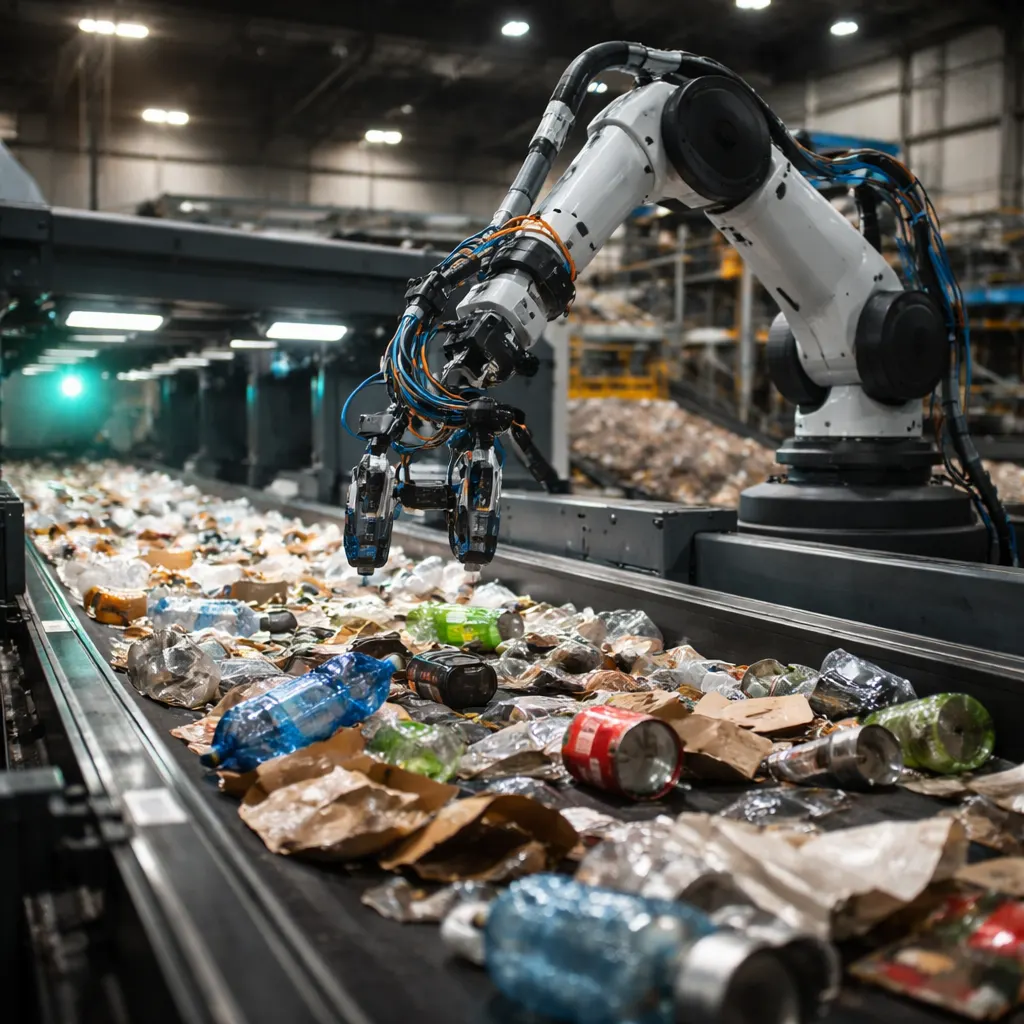
An Edinburgh-based robotics startup claims its new waste-sorting robot can generate $485,000 in additional revenue for recycling facilities while requiring just $160,000 in upfront costs and $24,000 annually in maintenance, according to a report published Thursday by TechCrunch. Danu Robotics, founded six years ago by former London bank software developer Amy Ma, is bringing its H.E.R.O. robot to market after years of development. The company has positioned itself to compete in the $20 billion recycling sorting market across Europe and North America by undercutting existing competitors on price and promising greater efficiency through continuous AI-driven software improvements.
Danu Robotics has secured $500,000 in signed contracts and holds letters of interest from two major clients, TechCrunch reports. More than 200 potential buyers are currently in the company's sales pipeline. The six-year-old firm just closed a $5 million late-seed funding round to accelerate its commercial rollout. The H.E.R.O. system distinguishes itself from rivals like Glacier and RecycleEye by using a pincer claw mechanism rather than suction technology to pick up recyclable items.
Ma's motivation to build the robot stemmed from discovering that her former employer's office recycling bins were being dumped into regular trash despite the financial institution's resources, according to TechCrunch. "I saw the technology and thought, we can do so much better," Ma told the outlet. The founder realized that recycling economics typically depend on manual human labor to separate different recyclable materials from waste streams. Danu leverages artificial intelligence to continuously improve the robot's software, a business approach Ma believes differentiates her company in an already robust market for robotic waste-pickers.
Ma explained to TechCrunch that recycling centers profit directly from the materials they successfully extract, creating immediate return on investment for effective sorting systems. The significantly lower price point compared to competitors positions Danu to prove its value quickly in an industry where financial performance is straightforward to measure. Ma's near-term development goals focus on making the robot more compact, durable, and adaptable, which would allow deployment beyond dedicated waste facilities. "Once it's smaller, it can be used as a stand-alone recycling solution for events, for shopping centers, hospitals, or airports to recycle their waste at the source," Ma told TechCrunch, "and that's the way we can really change how we're managing our packaging waste."
The company will showcase its technology at TechCrunch Disrupt's Startup Battlefield 200 in San Francisco from October 13 to 15. Ma's vision extends beyond fixed industrial installations to portable units that could handle waste sorting at the point of generation rather than centralized facilities. If Danu can achieve the revenue and cost projections Ma outlined while making the system small enough for distributed deployment, it could reshape where and how recyclable materials are separated from general waste streams. The combination of lower capital requirements and potential for broader application sites positions the startup to challenge established players whose suction-based systems currently dominate the automated sorting landscape. Whether Ma's pincer-based design and AI-enhanced software can deliver on those performance promises at scale will determine if Danu captures meaningful share of the multi-billion dollar market it's targeting.