
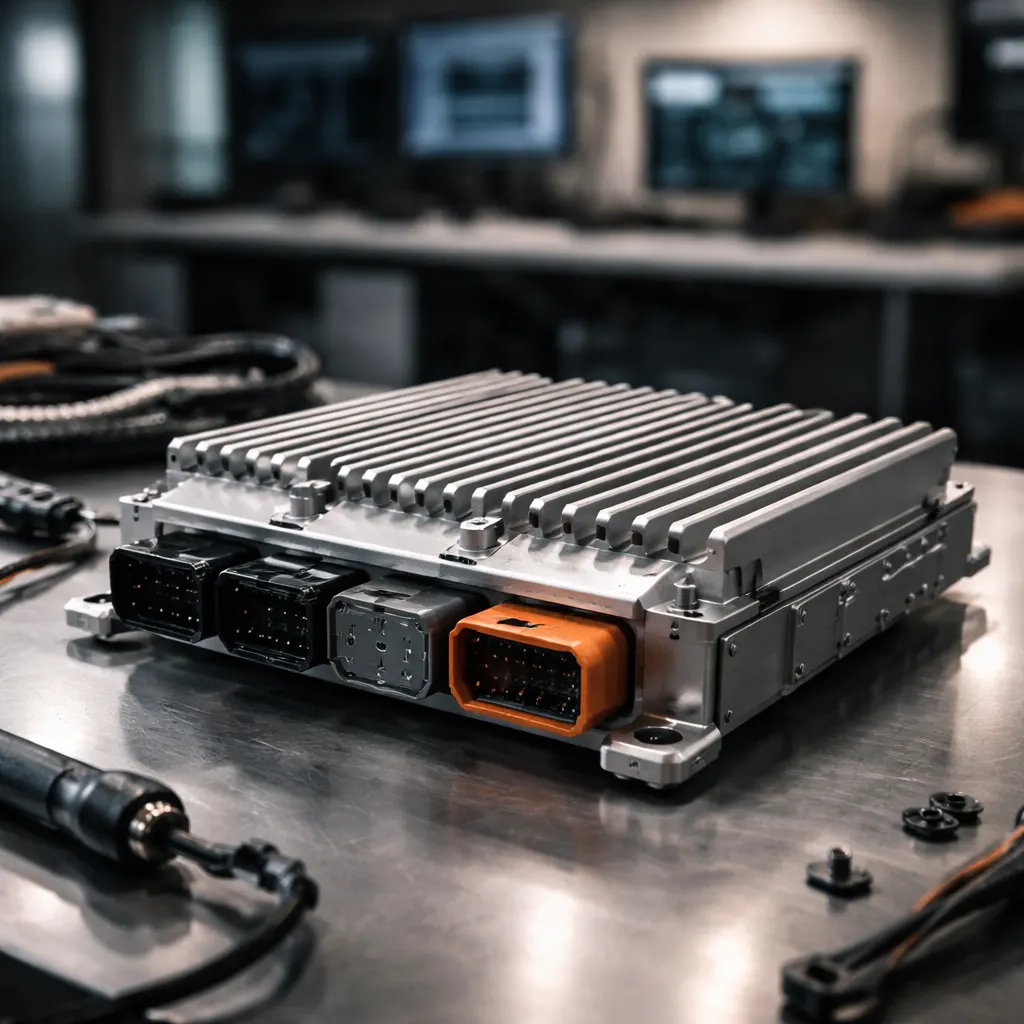
General Motors announced a fourth-generation electric vehicle platform on Wednesday that centers on a central computing unit 40 times more powerful than its current systems, marking the company's most aggressive push yet to compete through software rather than traditional automotive engineering. The announcement, made during GM's annual Forward event in New York, focused on battery technology, revamped electric motors, and a completely new central computing platform and electrical architecture that will connect every vehicle system, from acceleration and braking to active safety features and software. The overhaul will debut in 2028 with the Cadillac Escalade IQ, which will also feature an autonomous highway driving capability allowing drivers to take their hands and eyes off the road without needing to be ready to resume control.
The new central compute unit will consolidate functions previously scattered across smaller chips throughout the vehicle, allowing GM to reduce wiring by 30%, saving weight and simplifying assembly. The company's capitalized software amortization expense reached $866 million in 2025, reflecting how much it's spending even as it spreads costs over multiple years. GM has shortened its traditional four- to five-year development timeline to match the two- to three-year cadence Chinese manufacturers have achieved. Engineers evaluated 300,000 virtual designs of a new lithium-manganese-rich battery pack before building the first physical prototype, helping the concept advance to an approved program in one month.
"We think vehicles can become a more capable and helpful part of everyday life if we make them spaces that understand context, reduce friction, and give people back moments that would otherwise be consumed by the demands of the road," Sterling Anderson, executive vice president, global product, and chief product officer at GM, told TechCrunch. According to the report, the central computing unit will manage the usual propulsion and chassis controls as well as perception and active safety, paving the way for more advanced autonomy features. The company has already ditched Apple CarPlay for nearly all its EVs, replacing it with a Google-based infotainment system.
The shift reflects mounting pressure from multiple directions. Tesla has been expanding the boundaries of autonomy in part because it developed a true software-defined vehicle, while Chinese automakers have flooded markets from Europe to South America with inexpensive vehicles backed by government subsidies and cheaper labor. Chinese factories can produce far more than domestic consumers can absorb, creating a cost advantage so steep that without trade barriers, "they will pretty much demolish most other companies in the world," Elon Musk said in a 2024 earnings call. GM's embrace of enterprise AI tools across vehicle development aims to slash costs and preserve profitability amid historic industry upheaval, though the report notes that European and U.S. automakers have spent years chasing software-defined vehicles and often fallen short—Volkswagen Group struggled so much with its in-house effort that it struck a $5.8 billion joint venture with Rivian.
GM realized it didn't have the platform needed to deliver true autonomy, prompting the architectural overhaul set to roll out in 2028. The move signals a shift similar to Tesla's pivot from automotive company to AI and robotics company, with the new central computing architecture giving GM what it believes is a fighting chance in the software race. Whether the speed gains will catapult the automaker back to its former leadership position remains uncertain, especially as Chinese manufacturers continue their rapid expansion. The stakes are existential: automakers that can't match the development pace and software capabilities of Chinese rivals may find themselves demolished in a market where ride and handling are merely table stakes, and software defines what sets vehicles apart.