
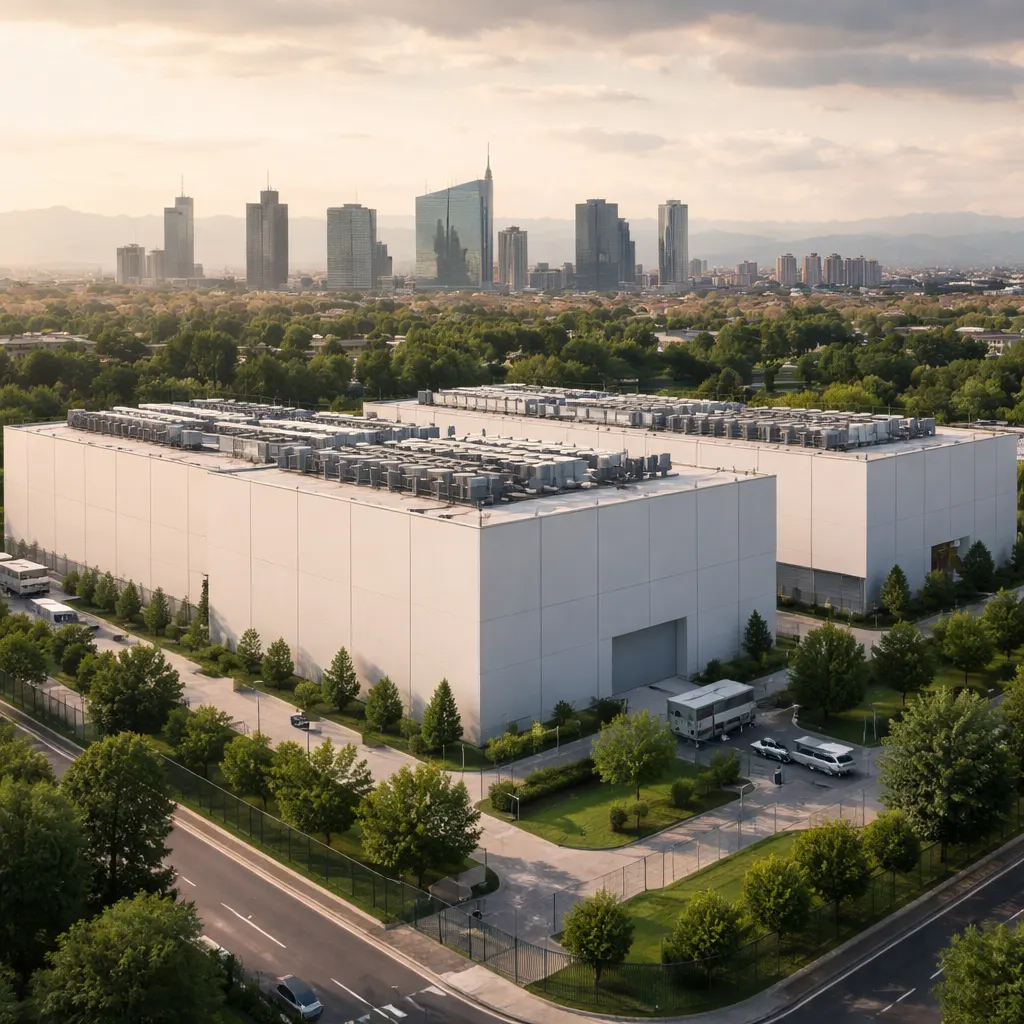
Italy is attracting another major investment in AI infrastructure. Greenfield and Finsbury Infrastructure have announced plans to build a 36MW data center east of Milan, with as much as €360 million in expected investment flowing into the project and surrounding area over the coming three years. The planned facility will support AI, cloud, and enterprise computing workloads.
Greenfield has locked in 80MW of electrical capacity for the location, more than double the anticipated IT load. The company brings 66 active projects and 5GW under development to the partnership, along with internal teams handling land acquisition, grid connection, design, legal work, and permitting. Finsbury contributes funding and know-how focused on AI-scale infrastructure, using high-density layouts with advanced cooling systems and targeting locations close to high-voltage power and dark-fiber networks. While Finsbury's larger campuses are built to exceed 100MW of compute capacity, those specifications haven't been confirmed for this collaboration.
This marks Finsbury's entry into the Italian market. Finance Director Peter Connolly said the firm anticipates further investments as the country assumes a bigger part in Europe's digital economy. Finsbury already operates in Dublin, London, and Madrid, expanding its presence into another significant European market. Greenfield contributes regional know-how, with data center developments across Lombardy, Piedmont, Lazio, and Puglia.
The report notes that managed service providers, value-added resellers, and systems integrators serving clients in Italy and neighboring European markets could gain another regional choice for AI workloads if the facility launches as scheduled. New deployments around the site may create services work beyond the underlying compute itself. Shifting customer workloads to Milan could require hybrid-cloud integration, migration assistance, managed security, and governance decisions about which data and systems relocate there. Before directing customer AI deployments to the site, partners should confirm how much compute will be accessible at launch, what hardware will run customer workloads, when production services are expected to go live, and whether capacity can be bought through partners or only via direct contracts. Partner access will determine the commercial opportunity, since a channel-friendly sales approach could unlock direct services revenue tied to the facility, while capacity sold primarily to large infrastructure buyers may leave managed service providers and integrators with more opportunity supporting customers who use it than selling the capacity directly. For businesses weighing regional infrastructure options, the balance between direct vendor relationships and partner ecosystems will increasingly shape which deployments land where.