
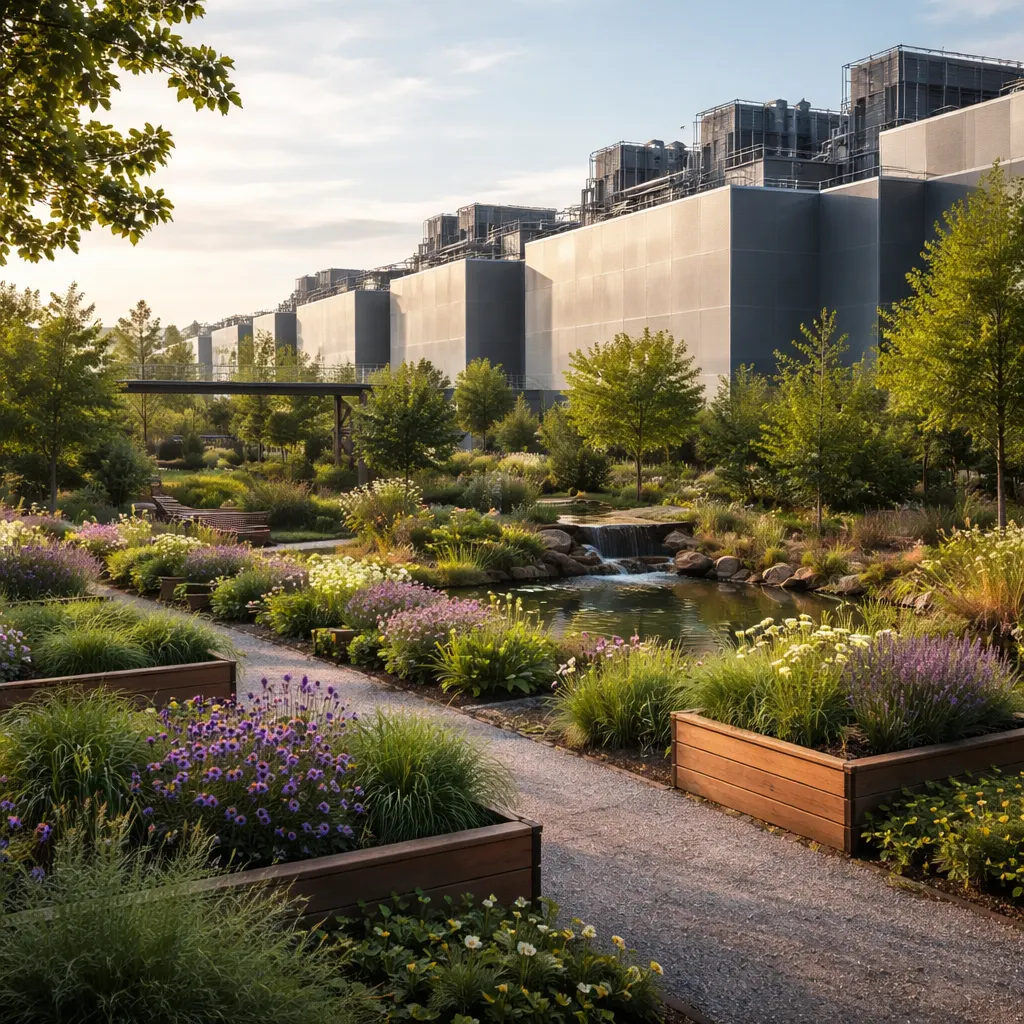
Microsoft is deploying what it calls "biomimicry" at its data centers to soften their impact on surrounding communities, according to a report published by *The Verge* on October 2, 2026. The company plans to blend facilities into their surroundings with native plants, gardens, and ecosystem restoration projects at more than 20 sites in the US and Germany, with all new US projects following suit. The initiative responds to mounting resistance from neighborhoods facing construction disruption, pollution, constant noise, and the loss of green space as hyperscale AI data centers expand rapidly across the country.
The scale of the problem is starkest in San Antonio, where City Councilmember Ric Galvan's 55-square-mile district now hosts more than a dozen data centers, with roughly 20 expected within a few years if proposed projects finish. In 2022, Microsoft upset residents by cutting down over 2,600 trees across 33 acres to build one facility. Data centers in Texas consumed approximately 25 billion gallons of water last year — about 0.4 percent of total water use — but projections suggest that share could climb to between 0.5 and 2.7 percent of annual water use by 2030. Meanwhile, Microsoft's carbon pollution jumped 25 percent in 2025, according to its latest sustainability report, as AI's energy demands grew.
Microsoft says it's customizing solutions to fit local habitats and restore what's been lost. The company points to successes in Mount Pleasant, Wisconsin, where it funded a $4.2 million project in 2023 to restore creek flow on its repurposed Foxconn factory property and equipped stormwater ponds with sediment-preventing forebays. In San Antonio, Microsoft says it's investing in projects covering more than 400 acres of woodland and pollinator prairie restoration. The company also introduced a five-point plan in January called "Community-First AI Infrastructure" intended to prevent its facilities from overwhelming local energy and water systems.
But the gap between these local projects and Microsoft's broader environmental footprint leaves some advocates unsatisfied. Adrian Shelley, Texas director at Public Citizen, calls the efforts "lipstick on a pig," citing new gas plants built to power data centers — including a 20-year agreement Microsoft signed with Chevron in June to run a West Texas AI campus with what Chevron described as among the nation's largest co-located natural gas power and data center developments. A research paper published in *Nature* in August, coauthored by a former Microsoft sustainability leader who left in 2024, found that AI ultimately causes more planet-heating emissions than it helps avoid. Texas Governor Greg Abbott imposed statewide moratoriums in August on data center projects seeking grid connections pending audits on electricity and water use, and Galvan proposed a moratorium on new San Antonio facilities the same month. The company has goals of becoming water positive and carbon negative by 2030, but when asked if there's a point where Microsoft would simply decline to build in a given location, the company's director of global land strategy said "it is an ongoing learning process to understand what that means to be a good neighbor." For tech firms chasing AI growth, the question isn't whether nature-inspired buffers can muffle some noise — it's whether local ecosystems and infrastructure can absorb the scale of demand before communities force harder limits.