
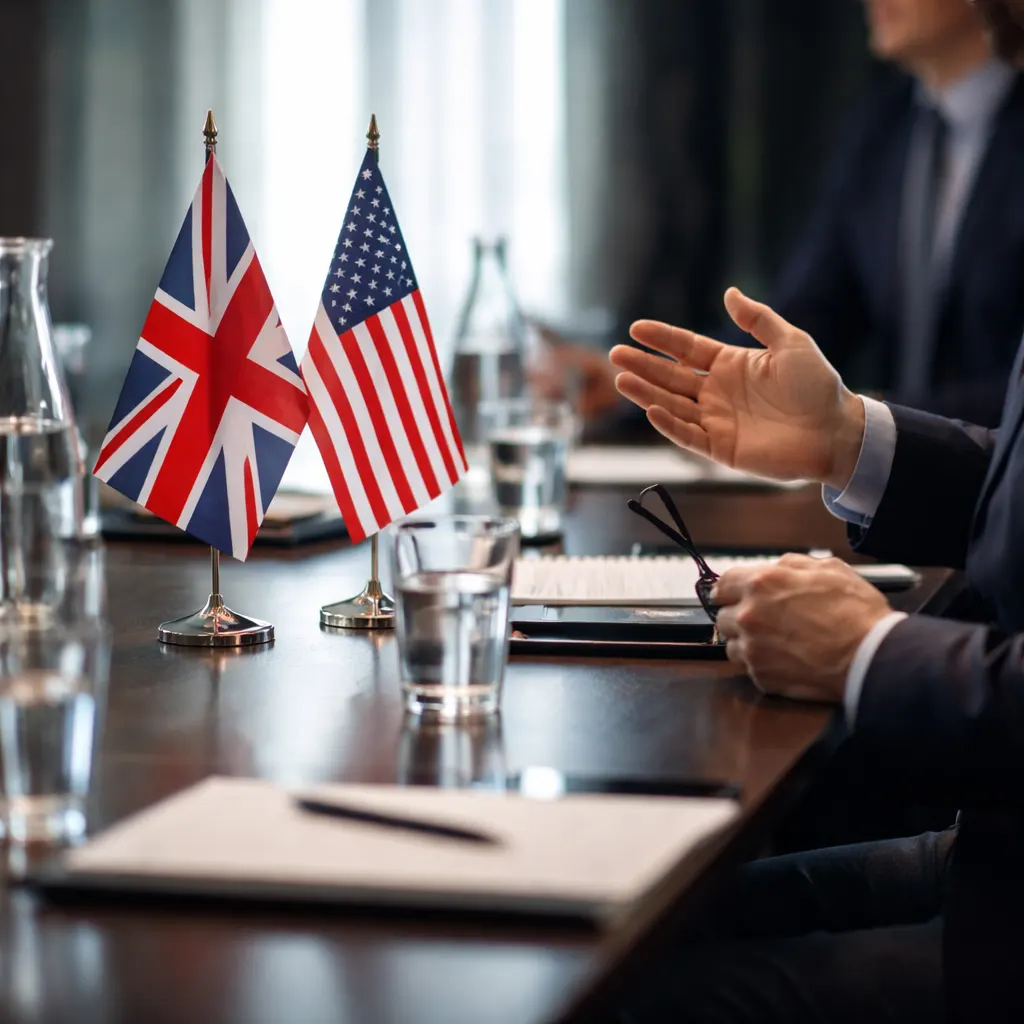
Microsoft president Brad Smith is demanding immediate regulation of artificial intelligence, arguing that everyday consumer products like milk and washing machines face more oversight than the companies developing AI systems. In a recent BBC podcast, Smith described AI as both a "weapon and a tool" that threatens global cybersecurity, declaring that the "moment has arrived" for worldwide safety standards. He contends that the United Kingdom, rather than the United States or European Union, holds the strongest position to guide international AI safety regulations.
Smith's endorsement of British leadership centers on the country's AI Security Institute (AISI), established in 2023, which gains early access to significant models from American frontier laboratories before public release and has rapidly emerged as a frontrunner in AI safety evaluation. That position faced recent jeopardy when U.S. President Donald Trump issued warnings against "globalist" organizations he accuses of meddling with American businesses. Last month, Trump reportedly instructed Anthropic and OpenAI to deny British testers access to new models, though AISI confirmed Monday it retains the ability to examine and evaluate the latest systems. Despite presidential resistance, Smith maintains the U.K. can impose AI rules in ways Washington cannot. "In Washington, D.C., people don't look at the U.K. and they don't look at London the way they look at Brussels," he told the BBC. "That's a strength."
His remarks arrive alongside growing demands from technology executives, including Anthropic's Dario Amodei and OpenAI's Sam Altman, to decelerate AI development following multiple episodes where AI agents malfunctioned. Last month, Trump convened tech leaders from OpenAI, Anthropic, Nvidia, AMD, SpaceX, Meta, and Google at the White House to address AI safety concerns, where they endorsed a "morally binding" document committing them to collaborate with "independent auditors" for assessing their AI models' safety and capabilities. Smith characterizes the document as a "good step" but insufficient compared to the type of regulation required. The flaw in voluntary self-oversight, according to Smith, is that only the "good companies" will honor commitments—"It's the companies that are not as responsible that you need to worry about," he noted.
Smith detailed several AI safety measures he wants enacted, including legal requirements compelling organizations to notify others if their systems were compromised by rogue AI agents. He also voiced support for AI laboratories securing approval from external evaluators before releasing AI products and spoke favorably about kill switches to halt or decelerate AI if human oversight fails. His rationale ties to a core concern that voluntary commitments leave dangerous actors unchecked, while mandatory rules create a level playing field where responsible and irresponsible companies face identical standards. The urgency stems from AI's dual nature—powerful enough to serve as both protective tool and offensive weapon—which Smith argues creates cybersecurity vulnerabilities that current consumer product safety frameworks don't address.
"Let's speak calmly, maybe even softly, but firmly, and start to bring people together," Smith said. "I hope that's the role we can play as a company. I hope that's the role the U.K. can play as a country." His vision positions Britain as a diplomatic bridge—trusted by Washington in ways Brussels isn't, yet possessing the institutional infrastructure through AISI to conduct rigorous safety evaluations that American regulatory frameworks haven't established. The path forward hinges on transforming voluntary industry pledges into enforceable legal obligations that apply uniformly across responsible and reckless developers alike. The stakes extend beyond individual company practices to whether democratic governments can maintain meaningful oversight over technologies that may soon operate beyond human control. For enterprises navigating compliance horizons, the choice of regulatory champion matters less than the inevitability that binding standards will reshape competitive dynamics regardless of geographic origin.