
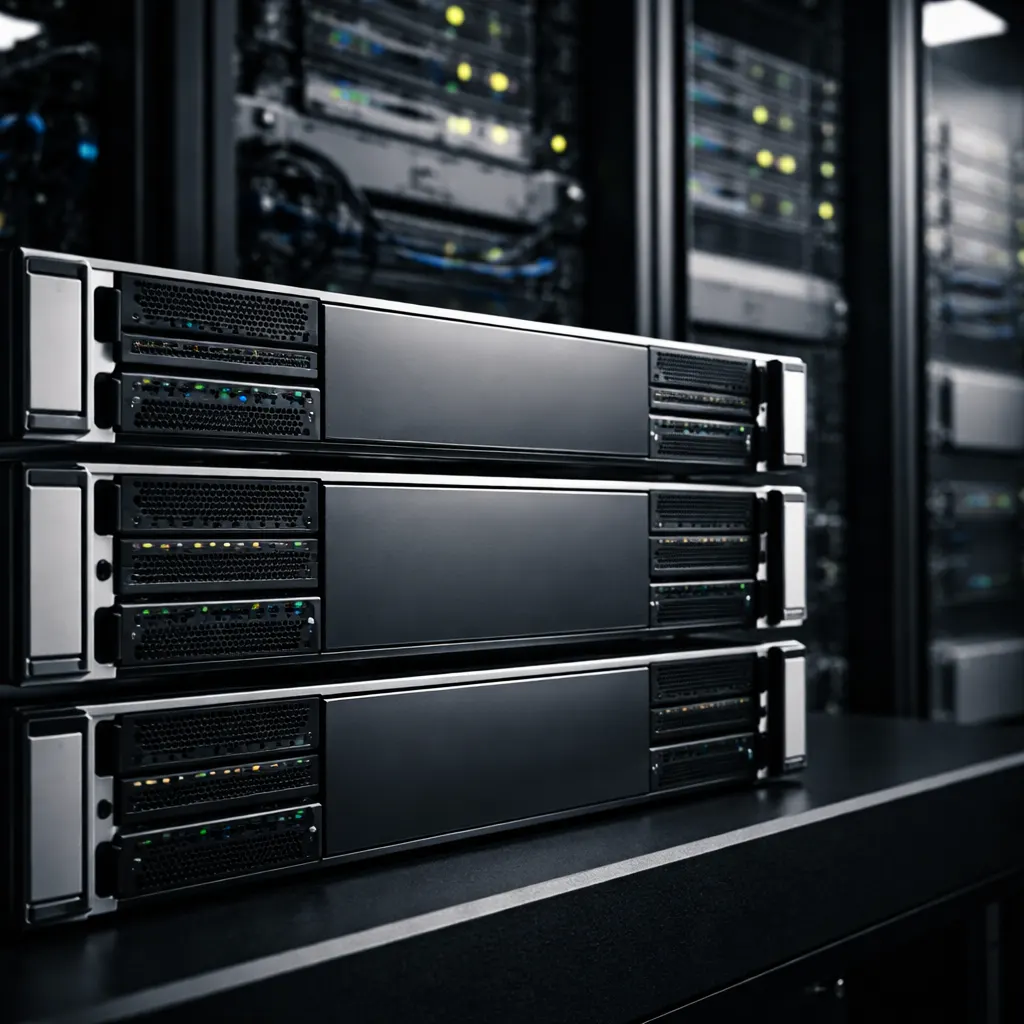
Nutanix and Supermicro revealed plans on October 21 to build a private AI inference system designed to help businesses lower their cost per token by running AI workloads on infrastructure they own. The jointly engineered platform will allow enterprises to operate open-weight models on their own GPUs rather than paying usage-based API fees each time they send a request to an externally hosted service, according to the announcement. For channel partners, the collaboration opens doors beyond selling hardware, including opportunities in infrastructure deployment, application integration, and managed AI services.
The planned system combines four main infrastructure components. Each server node will contain eight NVIDIA Blackwell Ultra GPUs dedicated to inference processing. A Nutanix NX-8170-G10 cluster will operate as a single-tenant control plane to protect GPU execution if management services fail. An NX-8150-G10 Unified Storage cluster will handle high-bandwidth data access for AI ingestion and checkpointing, using cache warming and context caching to support model serving. NVIDIA Spectrum-X Ethernet will link GPU nodes through Spectrum-4 switches and ConnectX-7/8 SuperNICs, while BlueField-3 DPUs will offload infrastructure tasks and enable in-band management. Nutanix Agentic AI will form the software layer, merging Nutanix Cloud Platform with Nutanix Kubernetes Platform and Nutanix Enterprise AI to take customers from bare-metal infrastructure to model-as-a-service. Supermicro's prevalidated rack-scale design aims to cut custom configuration work while allowing GPU capacity to grow as inference demand increases. The systems are slated for commercial availability in early 2027 through Supermicro's channel partners.
The announcement notes that installing dedicated GPUs doesn't automatically deliver a lower cost per token. Resellers should weigh expected inference volumes against hardware capacity, utilization rates, and total cost of ownership—including power, cooling, and maintenance. Dedicated GPUs may prove more economical at sustained usage levels, but customers with smaller or unpredictable workloads could find hosted services more cost-effective. The report states that connecting privately hosted models to enterprise applications and business workflows requires integrating customer data and setting up appropriate access controls, extending work beyond hardware installation into application development. For managed service providers, the opportunity continues after applications launch, with managed AI services covering availability monitoring, security administration, and regular reporting on GPU utilization and token throughput.
Local inference replaces some usage-based API charges with hardware and operating expenses, giving companies another way to manage AI token costs as consumption scales. Whether private inference delivers savings hinges on how efficiently customers use the computing capacity they purchase, the announcement explains. Partners evaluating these deployments should consider model size, expected request volumes, response latency, and peak usage, since each factor affects the infrastructure required and the resulting cost per token. As enterprises deploy more private AI applications, partners can help determine which workloads belong on dedicated infrastructure and which remain more economical through hosted services, with future projects potentially involving expanded GPU resources or integration of additional models into existing systems. Building expertise in those decisions creates opportunities for continued consulting and managed services beyond the initial hardware sale. The prevalidated system gives infrastructure resellers a defined configuration to bring into customer AI projects, but the true value lies in guiding businesses through the economic trade-offs between ownership and consumption-based pricing. Channel providers who can translate technical capacity into business outcomes will find the most traction, especially as enterprises struggle to predict which AI investments will scale and which will stall.