
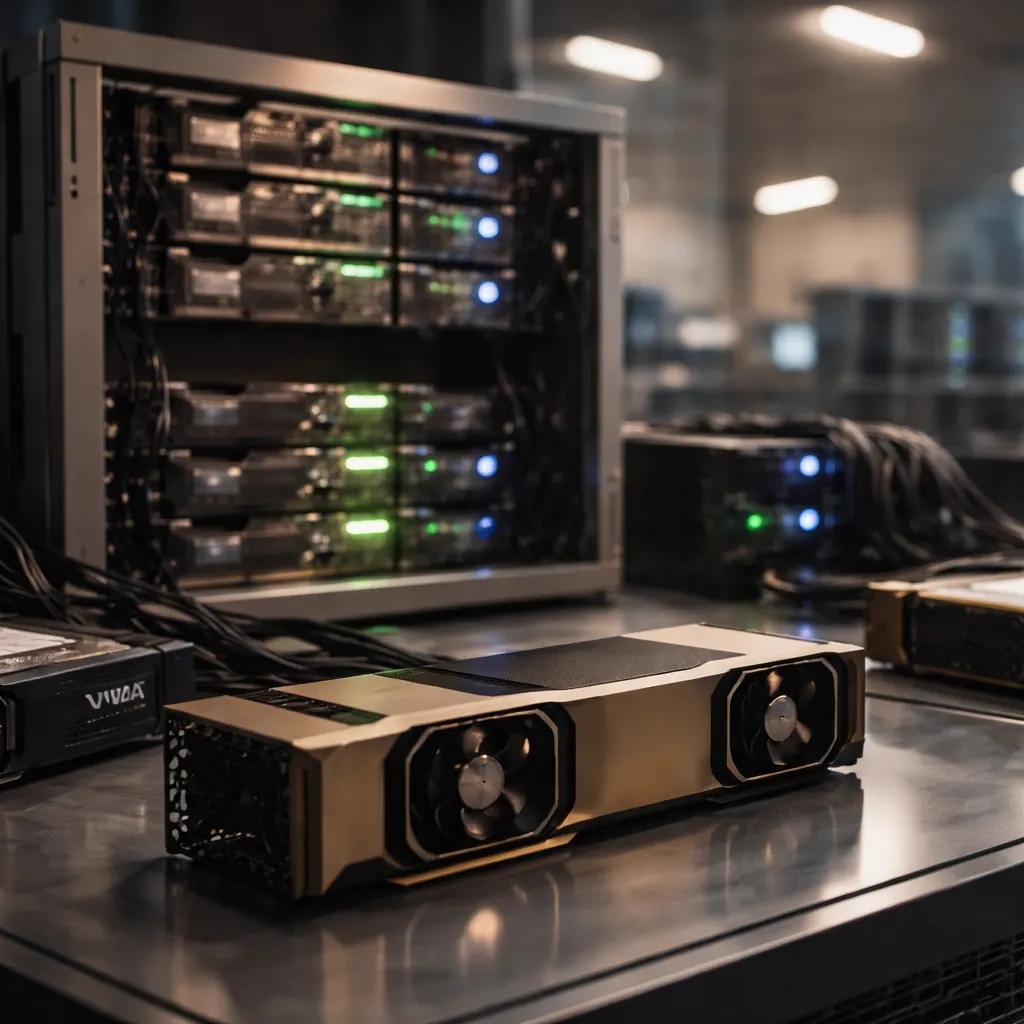
Nvidia has invested in Simplismart, an Indian startup that develops software enabling companies to operate AI models more efficiently and sometimes with fewer graphics processing units, as part of a $14 million Series B funding round announced October 27, 2024, according to TechCrunch. The chip giant participated in the all-primary round alongside Accel, Shastra VC, and Micromax, with Dallas Venture Capital leading the investment. The deal values the four-year-old Bengaluru-based company at approximately $100 million, including the new capital.
Simplismart's annualized revenue run rate has expanded 14-fold over the past six months to reach an eight-figure sum, based on recent customer usage rather than contracted recurring revenue and excluding revenue passed through to infrastructure providers, CEO Amritanshu Jain told TechCrunch. More than half of the startup's revenue originates from the United States, despite having a larger customer count in India. The company helped AI video-generation platform InVideo slash its GPU serving costs by 56% using its software, and also works with AI video companies HeyGen and Higgsfield, enterprise AI startup Ema, and Indian cloud provider Yotta, which uses Simplismart's technology to power the serverless AI inference service within its Shakti Studio platform. The startup now employs 58 people.
"Nobody actually needs the fastest or the cheapest inference," Jain said in an interview, adding that companies instead need to run AI models at speeds and costs that make sense for their specific applications. According to the report, Simplismart's software sits between AI models and the computing infrastructure they run on and adjusts how models are deployed and managed to meet customers' requirements, optimizing factors such as response speed, request volume, and computing power consumption. Jain stated that Nvidia has been collaborating with Simplismart on technical integrations, including around its Dynamo inference software, with the partnership involving Simplismart's engineers and Nvidia's solutions architects, while Nvidia has also helped introduce the startup to potential customers and partners.
The investment presents what appears to be a paradox: Nvidia, the dominant supplier of AI chips, is backing software that can help companies run some workloads with fewer GPUs. However, Jain argued that making AI inference more efficient could ultimately benefit Nvidia by making its hardware more attractive to customers and encouraging wider adoption of AI applications. Companies are spending heavily on GPUs to power AI applications, but running those models reliably and economically at scale remains a challenge, as different workloads demand distinct trade-offs between speed, cost, and performance. Simplismart's software automates much of the complex adjustments required to deploy and operate AI models to meet business requirements, tailoring how models run on existing computing infrastructure instead of requiring customers to manage those configurations themselves.
Simplismart plans to use the new funding to expand its presence in the United States, grow its team, and invest further in developing its inference software, with Jain telling TechCrunch that the U.S. remains a key market as it looks to build on its existing customer base there. The startup competes in an increasingly crowded market for AI inference software against offerings from Nvidia itself, major cloud providers including Amazon Web Services, Google Cloud, and Microsoft Azure, and a growing number of startups developing tools to make AI models faster and cheaper to run. "Where we tend to win is where people have to be more stringent on their SLAs [service-level agreements] and TCO [total cost of ownership]," Jain said, referring to demanding performance requirements and tight cost constraints, noting that unlike rivals offering preset options, Simplismart aims to find a balance tailored to each customer's needs. The strategic calculus for infrastructure providers now hinges on whether optimization software accelerates adoption enough to offset any near-term reduction in hardware purchases, while enterprises face the choice of managing inference complexity in-house or delegating it to specialized platforms.