
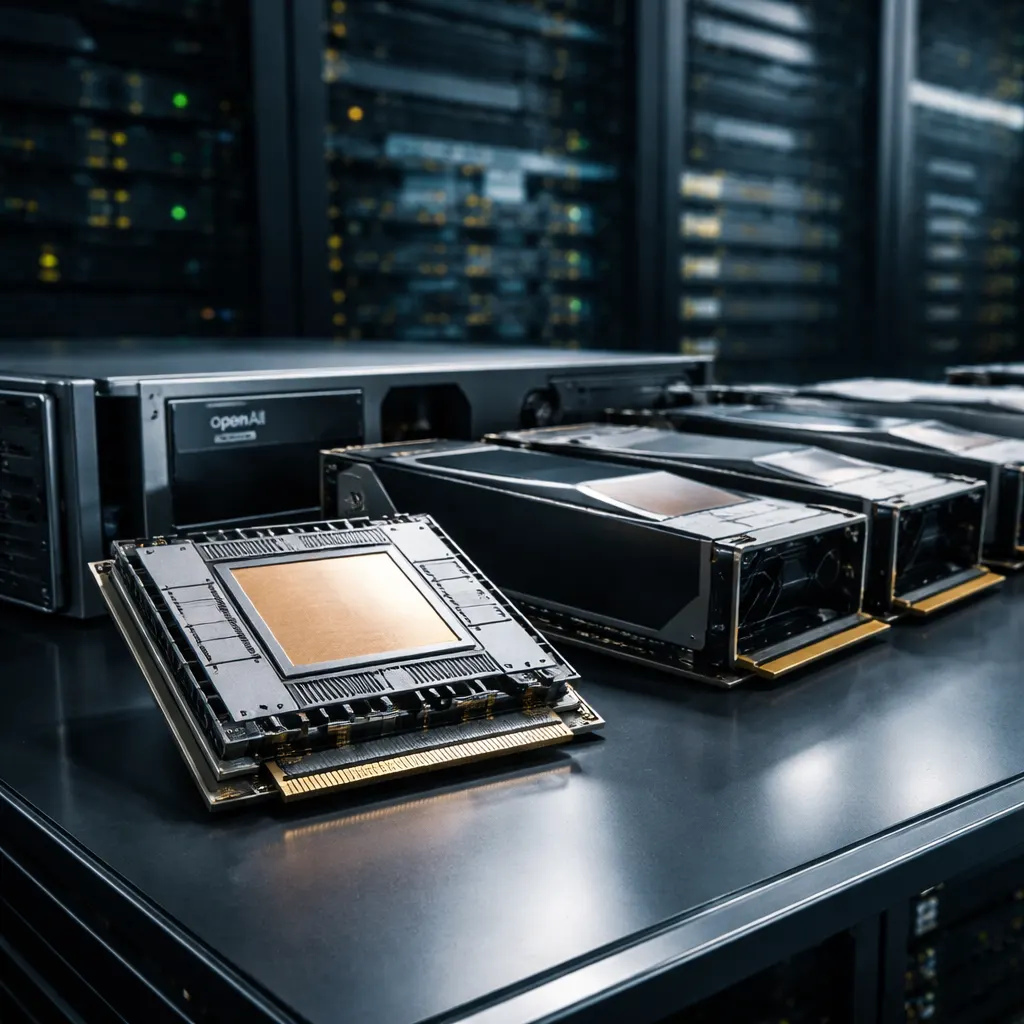
Oracle Cloud Infrastructure will become the first hyperscale cloud platform outside Google's own services to offer Google's Tensor Processing Units, according to an announcement made by the company at its Las Vegas event this week. The chips will be available for customer selection starting in 2027, with capacity ramping up over several years. Oracle is also deepening its ties with OpenAI through new ChatGPT integrations and expanding its Nvidia hardware offerings, though it didn't disclose how many TPUs will be available.
The company unveiled two new OpenAI-powered products alongside the Google chip partnership. Oracle AI Workspace is designed as a unified experience that connects OpenAI frontier models with Oracle applications, enterprise data, and cloud services through ChatGPT plugins that transform existing Oracle business platforms into ChatGPT-accessible resources. Oracle AI Security Mesh, the second offering, is a managed platform that combines frontier AI models for cybersecurity with Oracle's security expertise to find vulnerabilities, test whether they can be exploited, and recommend fixes. Oracle also struck a deal with Snowflake to bring its AI data cloud to OCI as a native service, allowing customers to purchase and use Snowflake directly from Oracle with unified billing and the ability to spend Oracle Universal Credits on the newly available platform. On the Nvidia front, the company announced general availability of Vera Rubin NVL72 systems and Vera CPUs, along with plans to introduce HGX Rubin NVL8 systems at an unspecified future date.
OCI president Mahesh Thiagarajan said that "different AI workloads have different compute needs," and bringing Google TPUs to the platform gives customers flexibility to select the right infrastructure for performance, throughput, and economics. Oracle explained that AI Workspace will make Oracle's capabilities "agent-ready and accessible to ChatGPT users," allowing people to describe business goals while plugins bring together the appropriate Oracle tools and information to accomplish them. The company posted record earnings in the quarter ending August 31, with revenue climbing 30 percent year over year as its AI investments began paying dividends.
Oracle's diversification strategy appears aimed at reducing its heavy reliance on Nvidia, with whom it has signed deals worth tens of billions of dollars to equip its datacenters, including a reportedly troubled Texas project it's planning with the GPU maker and OpenAI, according to the report. The new announcements largely involve circular spending among AI's top players as businesses continue to wait for results, with little evidence of similar returns outside the tech sector raising fresh concerns about an AI bubble that's starting to look stretched. There are already signs the AI bubble has begun to burst in China. The expanded chip options and deeper OpenAI integration position Oracle to capture more AI workload spending, but the company's success ultimately hinges on whether enterprises beyond tech giants see measurable returns from AI deployments. Offering customers more flexibility in chip selection and tighter integration with frontier models may help Oracle maintain its growth trajectory, though the broader question of AI's business value outside the technology sector remains unanswered.