
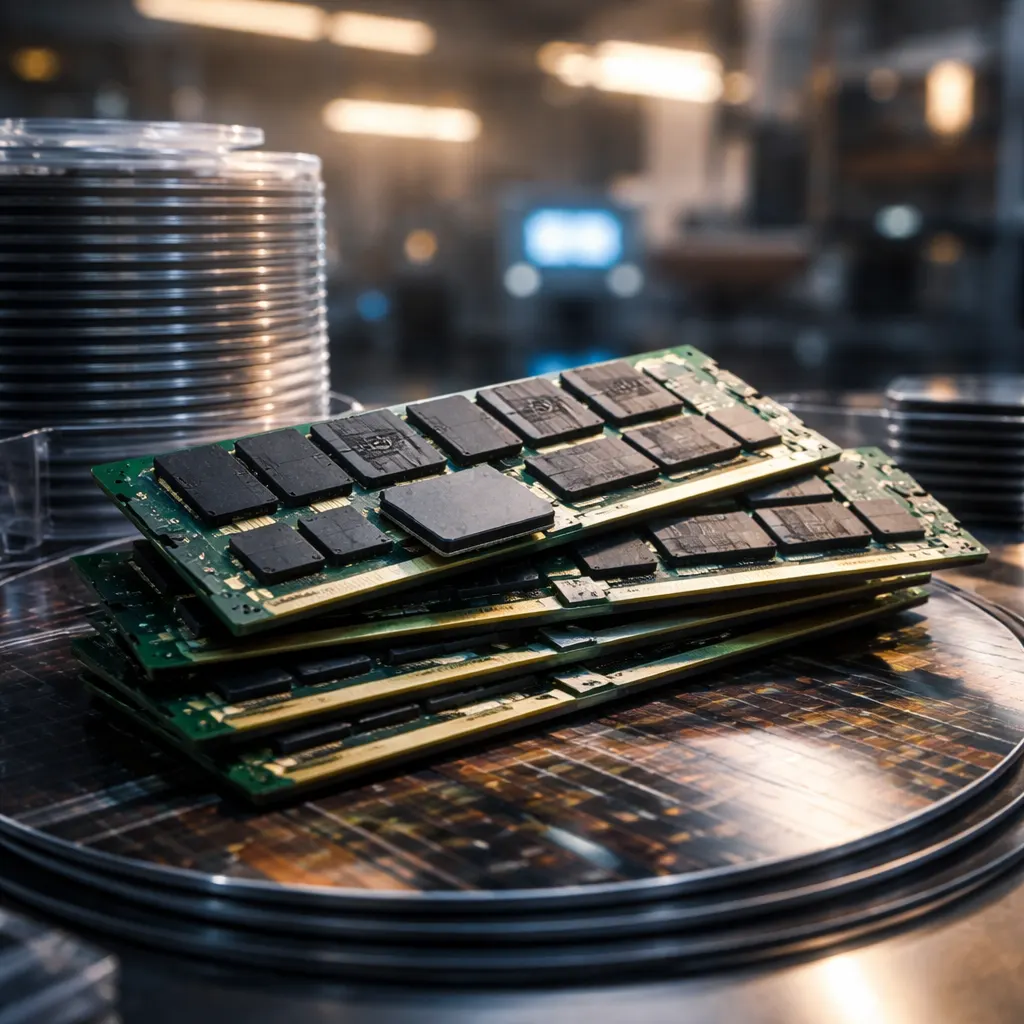
Korean chipmaker SK Hynix has forecast that memory shortages will continue until at least 2030, a prediction that will boost its own profits but squeeze consumers and device makers. In remarks released Wednesday with its quarterly earnings, the company said AI-fueled demand is outpacing its ability to build new production capacity, creating a supply crunch that won't ease for years. The bottleneck comes as new buyers, from corporations to national governments, rush to secure AI infrastructure.
SK Hynix posted quarterly revenue of ₩104.6 trillion (equivalent to $78.1 billion), climbing 328 percent compared to the same period last year and 32 percent from the previous quarter. Operating profit reached ₩87.68 trillion ($62.8 billion), jumping 486 percent year over year. The company has locked in 14 long-term supply contracts with major customers that will account for more than half its production through 2027 and 2028, with some buyers pushing to extend those agreements further. Those deals include pricing mechanisms tied to market conditions within pre-agreed ranges, giving the chipmaker what it calls stable profitability with flexibility to respond to shifts in demand.
The company told investors that "supply is not keeping pace with the growth of the market," and warned that the technical complexity of advanced manufacturing processes combined with the lengthy timelines needed to construct new facilities means "the structure in which demand exceeds supply" will persist through the end of the decade. SK Hynix described a self-reinforcing pattern where AI boosts productivity and creates new revenue in fields like software development and customer service, which drives more AI adoption and infrastructure spending. The firm expects additional demand from autonomous vehicles and the expanding robotics sector in coming years.
The tight supply will have consequences beyond SK Hynix's balance sheet. Chief financial officer Kim Woo-hyun predicted on the earnings call that "shipment volumes for PCs and mobile devices are expected to decrease due to cost burdens from rising memory prices and supply shortages." The company plans to ramp up production of HBM4 memory, which it believes will overtake HBM3E in both volume and revenue by the fourth quarter, and rapidly increase its use of 10nm-class 6th generation process technology while expanding sales of DDR5 and LPDDR5 memory modules for AI servers. SK Hynix also aims to develop NAND flash into what it calls "a core solution that enhances the throughput and economic efficiency of AI services."
Investors responded positively to the outlook, pushing the company's share price up roughly three percent in after-hours trading on signals that AI demand shows no signs of slowing. The firm told shareholders it intends to emphasize high-margin products that will "scale up revenue and profit one step further next year," cementing its position as memory scarcity becomes the norm rather than the exception. The warning underscores a fundamental tension in the technology sector: infrastructure builders will capture premium returns while consumer-facing industries absorb the costs, potentially reshaping investment priorities and product roadmaps across hardware manufacturers.