
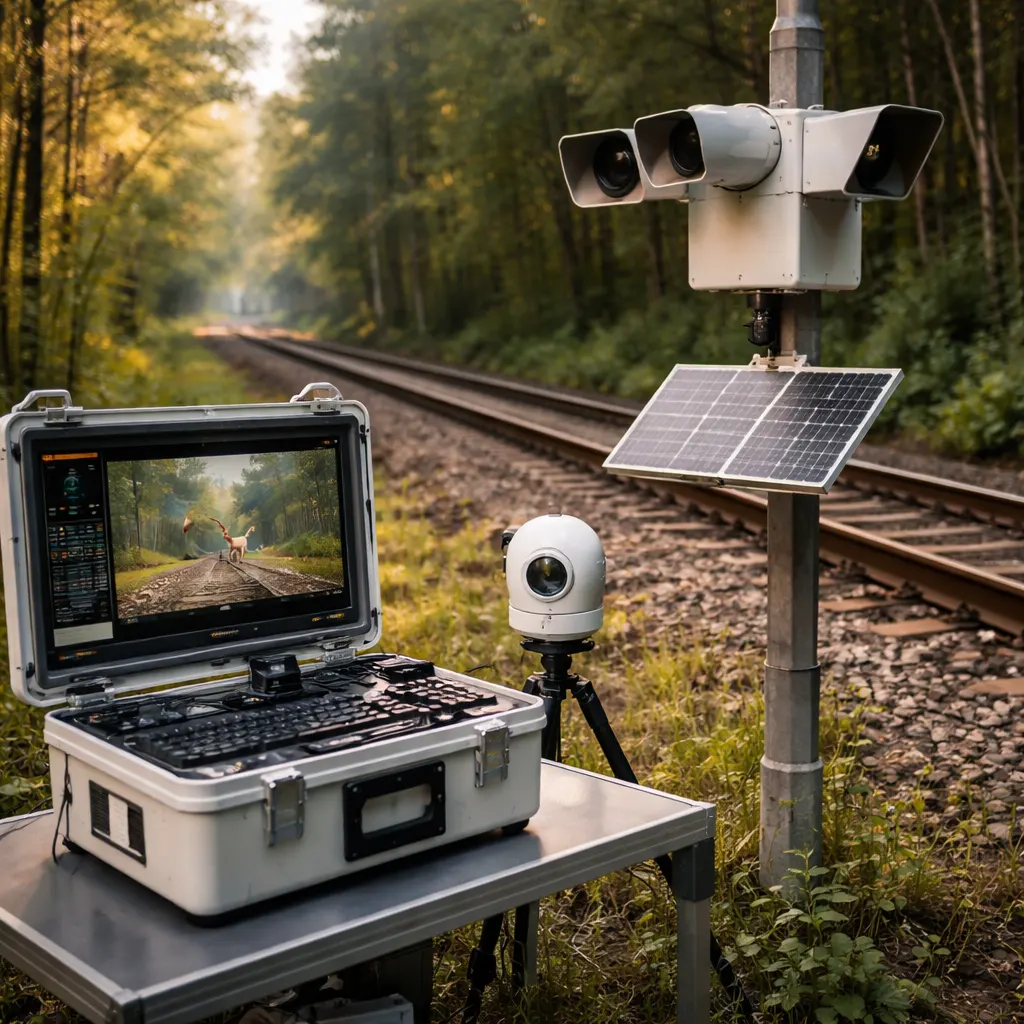
A Swedish startup has deployed around 150 edge devices across three continents that use artificial intelligence to identify nearby animals and emit species-specific sounds to drive them away from infrastructure, according to a TechCrunch profile published October 13. The company, Flox Intelligence, spun out of Stockholm's KTH Royal Institute of Technology in 2020 and is now a finalist at this year's Startup Battlefield 200 pitch competition at TechCrunch Disrupt. Founder Sara Nozkova developed the system after years in transportation and autonomous vehicles convinced her that traditional deterrents like sirens, lights, fences, and culling weren't working.
The scale of the problem is substantial. The Federal Aviation Administration calculates that wildlife strikes have cost U.S. civil aviation roughly $272 million annually on average between 1990 and 2025. In France, rail operator SNCF reports that wandering animals disrupt more than 8,000 trains nationwide each year and rank among its five top causes of delays. In the Brittany region alone, 120 trains struck animals in 2023, interrupting 660 services and generating over 15,000 minutes of delays. Flox's battery-powered devices are currently live at airfields and airport perimeters, road and rail corridors—particularly fence ends and crossings along wildlife corridors—national parks, agricultural land, urban areas, mining sites, and critical infrastructure including electrical substations in North America, Europe, and Australia.
Nozkova told TechCrunch she was "convinced the answer was not a louder deterrent." According to the profile, she observed that machines trained for controlled environments like cities, factory lines, and warehouses "quickly go blind" when stepping into nature, "because nature is complex and always alive." The company's devices process data on-site using perception systems trained on wildlife behavior: a motion sensor activates the device, a camera uses on-device models to identify the animal, and the system then broadcasts a species-appropriate sound to frighten it away. Nozkova says the system learns from experience and varies its responses to prevent animals from becoming accustomed to repeated signals. The company also provides a software platform that shows clients device locations, real-time activity, and can generate reports for regulatory compliance and biodiversity monitoring.
Flox's business model combines upfront hardware sales with annual software and AI subscriptions starting after the first year, plus OEM partnerships where companies like train manufacturer Alstom pay an annual fee to run its software on vehicles including trains. The company anticipates finishing 2026 with revenue of approximately $1.5 million and has raised roughly $5 million across pre-seed and seed rounds, with the seed led by Unconventional Ventures and Tilia Impact Ventures. It's now opening a $10 million Series A that would primarily fund expansion from about 150 devices to several thousand deployed units and extend the underlying system beyond its current wildlife applications. Nozkova argues her competitive advantage is the breadth of the system and the field data Flox has gathered, which she calls "ground truth on what actually makes a moose or a grizzly bear move safely," positioning nature intelligence as the next layer of the perception stack for any machine operating outdoors. The distinction matters because infrastructure operators face a choice between managing wildlife encounters reactively—accepting delays, repairs, and animal deaths—or investing in adaptive deterrence that evolves alongside the problem. Flox's bet is that as autonomous systems move from factories into open environments, operators will pay for software that understands behavior rather than just presence.