
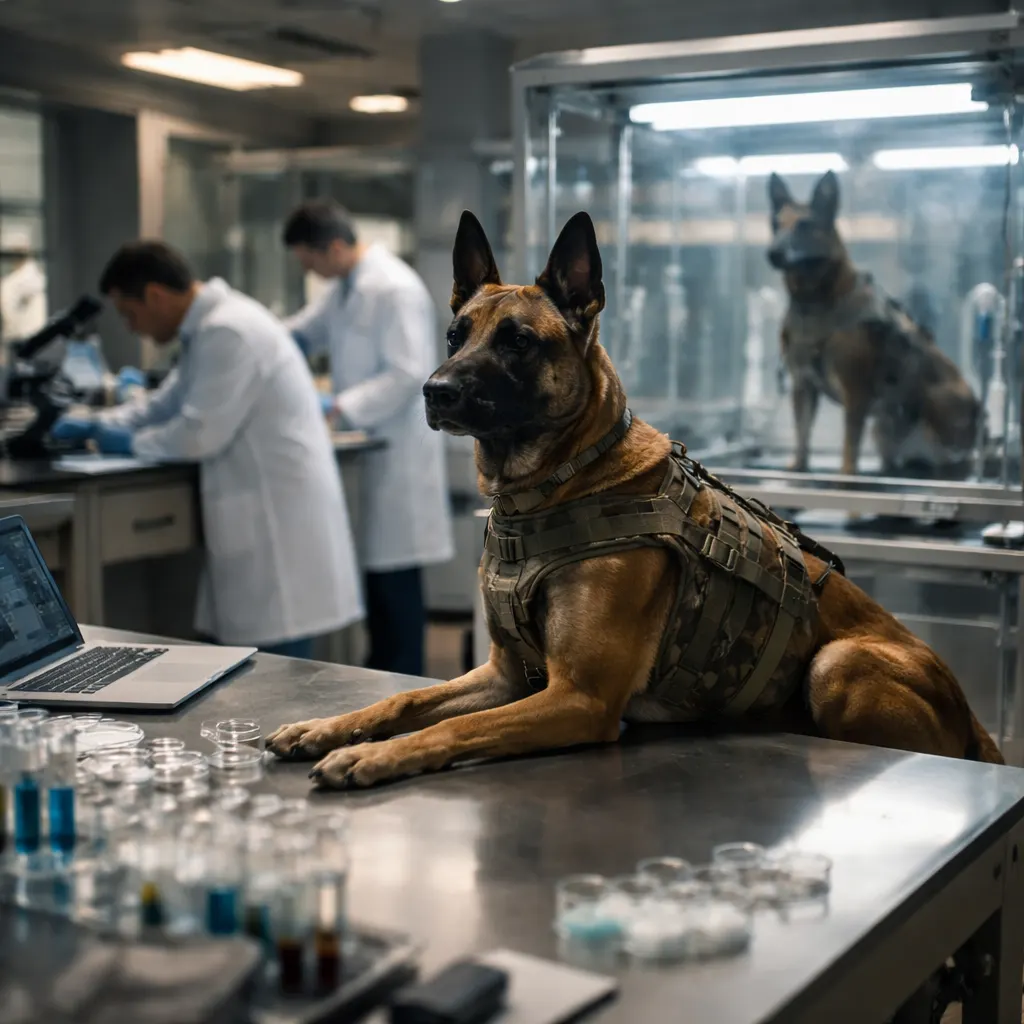
A new company called Warhound emerged from stealth Thursday with $200 million in funding to genetically engineer working dogs for the U.S. military, law enforcement, and emergency response teams, according to TechCrunch. The venture, founded by Colossal Biosciences' Ben Lamm and partnered with Anduril's Palmer Luckey, is valued at $1.2 billion after its debut round from investors including In-Q-Tel, Sequoia, and 8VC. The company plans to create dogs designed for hazardous tasks like bomb detection and specialized searches that are too risky for people or too complex for machines.
Over 80% of working dogs deployed by the U.S. military currently come from Europe, and fewer than half of those animals prove suitable for service, the company said in its launch announcement. The startup has taken cell lines from top-performing breeds—Belgian Malinois and German Shepherds—and placed them in a biobank, where genes will be edited to remove predispositions for conditions like poor eyesight, cancer, hip dysplasia, and muscle atrophy while adding traits for improved speed, agility, and olfactory capability. The first batch of cloned dogs is expected to be born early next year, with an ideal timeline for entering service within two years. Anduril will supply software and hardware enhancements including protective vests with data sensors and eye goggles to improve situational awareness and coordination between the dogs and their handlers.
Lamm told TechCrunch he connected with Luckey roughly a year ago at a conference, where the Anduril co-founder raised the idea of doing more for military working dogs in the U.S. After further research, Lamm discovered that many dogs fail to complete training because of genetic issues, which led him to believe dogs could be enhanced for health, longevity, speed, agility, and stronger olfactory sensors for tasks like bomb detection. Luckey doesn't hold equity in Warhound and serves only as a partner, while Colossal owns equity and supports the business by licensing its technology, Lamm clarified. Another Colossal-owned company, Viagen, is partnering with Warhound to handle the cloning process using technology that has shown a high success rate and is currently used in Colossal's endangered species protection program.
The venture addresses a shrinking supply of capable working dogs and growing U.S. dependence on foreign nations for animals that serve critical roles in military and law enforcement operations. Lamm explained that the goal is to make dogs safer, healthier, and better performers, which he believes will translate to improved performance in the line of duty and better protection for their human handlers—Anduril's additions are designed to enhance safety "on top of the dog, not in the dog." Warhound plans to sell to customers including first responders, the Department of Defense, military service groups, and police forces, though pricing hasn't been determined yet. The company is working under the guidance of the American Humane Society to certify its training program, and it hopes that when these genetically enhanced military dogs retire, they'll enter the society's Military Working Dog Reunification Program or another program that provides homes for retired service dogs. The approach raises questions about how commercial gene editing might reshape not just military logistics but the broader market for specialized animals, especially as other nations watch whether engineered canines deliver measurable advantages over traditional breeding pipelines.