
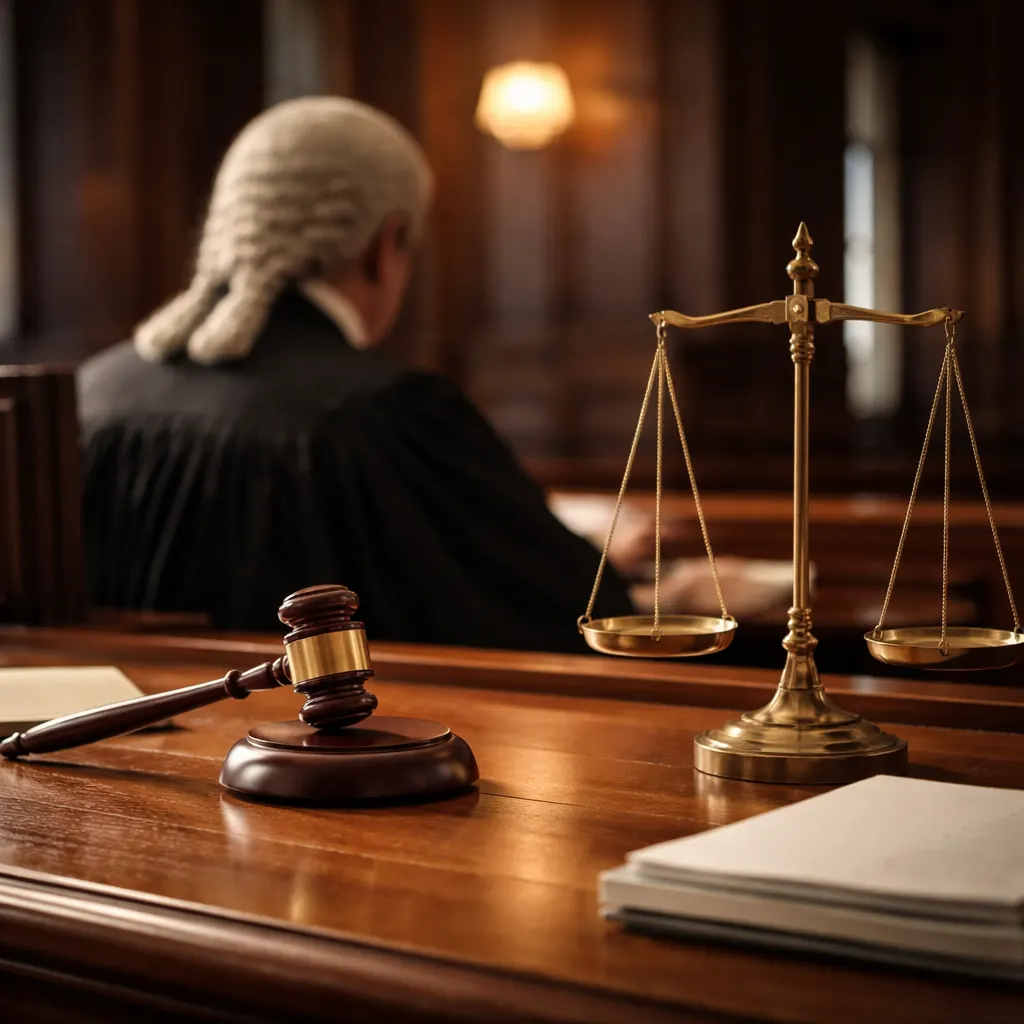
One of England's most senior judges believes artificial intelligence could adjudicate many civil disputes, according to an interview with WIRED published as Geoffrey Vos prepares to retire as Master of the Rolls, the country's top civil justice position. Vos told WIRED that personal injury claims, low-value professional negligence cases, and similar matters could easily be decided by AI, though he acknowledged the question of where to draw the line remains unresolved. After visiting a court in Shenzhen, China, where civil disputes are already being decided by judges with heavy AI assistance, Vos came away impressed and convinced that courts globally should consider following suit.
Vos reported that England is seeing a 10 percent annual rise in county court cases, a trend he attributes to people turning to chatbots like ChatGPT, Gemini, and Claude to draft legal claims and case submissions. Under current guidance, judges in England are advised to limit AI use to administrative tasks, and Vos said he uses Microsoft Copilot daily to locate documents and summarize large volumes of text. However, data on what proportion of AI-generated claims are based on sound legal principles doesn't yet exist, according to the interview. Meanwhile, multiple lawyers have been caught citing case law fabricated by AI, and in a UK first, someone recently lost their license to practice partly because they misused the technology.
According to Vos, the legal system must keep pace with the technological habits of the people it serves. "What most people desperately want in civil disputes is resolution," he told WIRED, adding that delivering justice effectively requires being on the same technological wavelength as the public. He suggested that custody and family cases, along with complex commercial disputes, would likely still require human judgment, even among younger generations. The judge emphasized that any move toward algorithmic decision-making would require either individual consent in specific cases or broader societal agreement through legislation, noting that people may find it harder to accept adverse decisions delivered by machines rather than humans.
Vos acknowledged that AI's lack of explainability presents challenges but argued the focus should be on outcomes rather than internal reasoning processes. While AI can't reveal precisely how it reached a decision, it can produce reasoning that humans can evaluate for plausibility, he said. He predicted that technology would allow more people to access justice more cheaply and quickly, representing an overall benefit for the economy and the public. Regarding concerns about AI-fabricated evidence such as deepfakes, Vos maintained there's no qualitative difference from traditional forgeries like fake wills, calling fears about false images "stuff of judging" that courts have always handled. He stressed that producing fake evidence to court constitutes perjury and carries prison sentences, just as forgery always has. The legal profession's challenge isn't whether to adopt AI but how to do so cautiously while maintaining public confidence in judicial integrity, a balance Vos said lawyers—who he described as "conservative with a lowercase c"—must strike without being backward-looking. For a system rooted in human judgment to embrace machine decision-making, the debate must happen openly and internationally, involving society, politicians, and legislators, not just judges alone.