
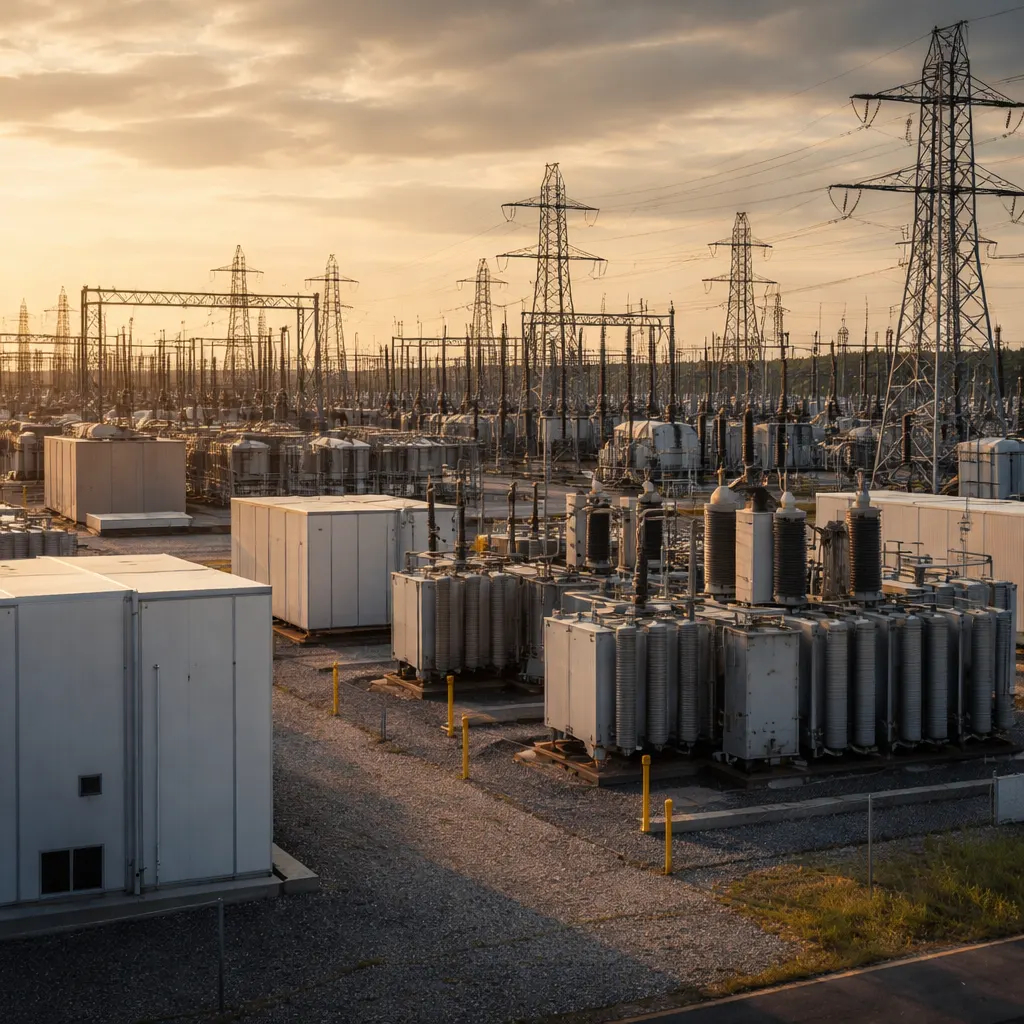
The line to connect to the UK's electricity grid has ballooned to 125 gigawatts between November 2024 and June 2025, with proposed new data centers accounting for 73 gigawatts of that total—equal to one and a half times the entire country's peak demand last year—according to a report published by Wired. The surge is driven by artificial intelligence developers chasing hundreds of billions of dollars flowing into the industry, but energy regulators believe much of the demand is illusory. The backlog of speculative projects is now delaying legitimate builds and hampering efforts to predict energy needs and plan network upgrades.
In July, Ofgem, the UK's energy watchdog, unveiled a reform package designed to flush out phantom applications from the swollen queue. The proposal, which will be finalized after an industry consultation ending in September, would require developers to post a steep, non-refundable deposit that could reach hundreds of millions of dollars for the largest facilities. Developers would also need to secure customers in advance and demonstrate they have funding to complete construction. The crowded queue is largely the result of a perverse incentive structure: because developers face multi-year waits for grid access, and it previously cost only a few thousand dollars to join the line, they might as well apply for power even without concrete plans to build.
The government has acknowledged that a substantial portion of the demand is fictitious. "It's absolutely insane," Taco Engelaar, managing director at grid optimization firm Neara, told Wired. "No one really understands … what the real grid demand will be because of these phantom projects." According to the report, the reforms are "expected to work" at eliminating speculative applications, with one industry expert predicting they will "pour water on a lot of the speculative data center applications." Nathan Macwhinnie, deputy director of strategic planning and connections at Ofgem, stated that the regulator "recognize[s] data centers are a key part of the UK's AI ambitions and future economic growth."
The core problem is that grid operators must evaluate the combined impact of all infrastructure proposals on network stability before approving individual connections, meaning phantom projects slow down viable ones. The congestion also attracts middleman developers who apply for power intending to later sell land packaged with grid access at a premium—what one researcher compared to scalping concert tickets. The report notes that Ofgem faces a delicate balancing act: the reforms must be strict enough to discourage speculators but not so harsh that they push legitimate projects to other countries, particularly since the UK is already less attractive than the US and parts of Europe due to higher energy costs and limited available land. Industry experts worry the steep new fees could exclude all but the largest data center companies, potentially blocking smaller, AI-focused operators—some of whom have pledged billions of dollars in UK investment—from entering the market.
While the reforms may not boost the UK's short-term prospects for capturing AI infrastructure spending, some analysts believe clearing the queue of phantom applications will improve the country's long-term competitiveness for the hundreds of billions of dollars pouring into the sector. Eliminating fake projects from the line will also help grid operators plan upgrades more accurately, avoiding wasted investment in network areas that don't actually need additional capacity. "It's about shaping the next five years to make sure you build the data centers in the right place, at the right size, with the right power supply," Olivier Darmouni, associate professor of finance at HEC Paris Business School, told Wired. "It's not going to be a gas pedal you can press on, and the car is going to accelerate immediately." The tension between weeding out speculation and maintaining openness to emerging players reflects a fundamental challenge for any jurisdiction trying to manage infrastructure scarcity without stifling innovation. Regulators worldwide will watch closely to see whether charging high upfront fees proves more effective than rationing access through waiting time alone.