
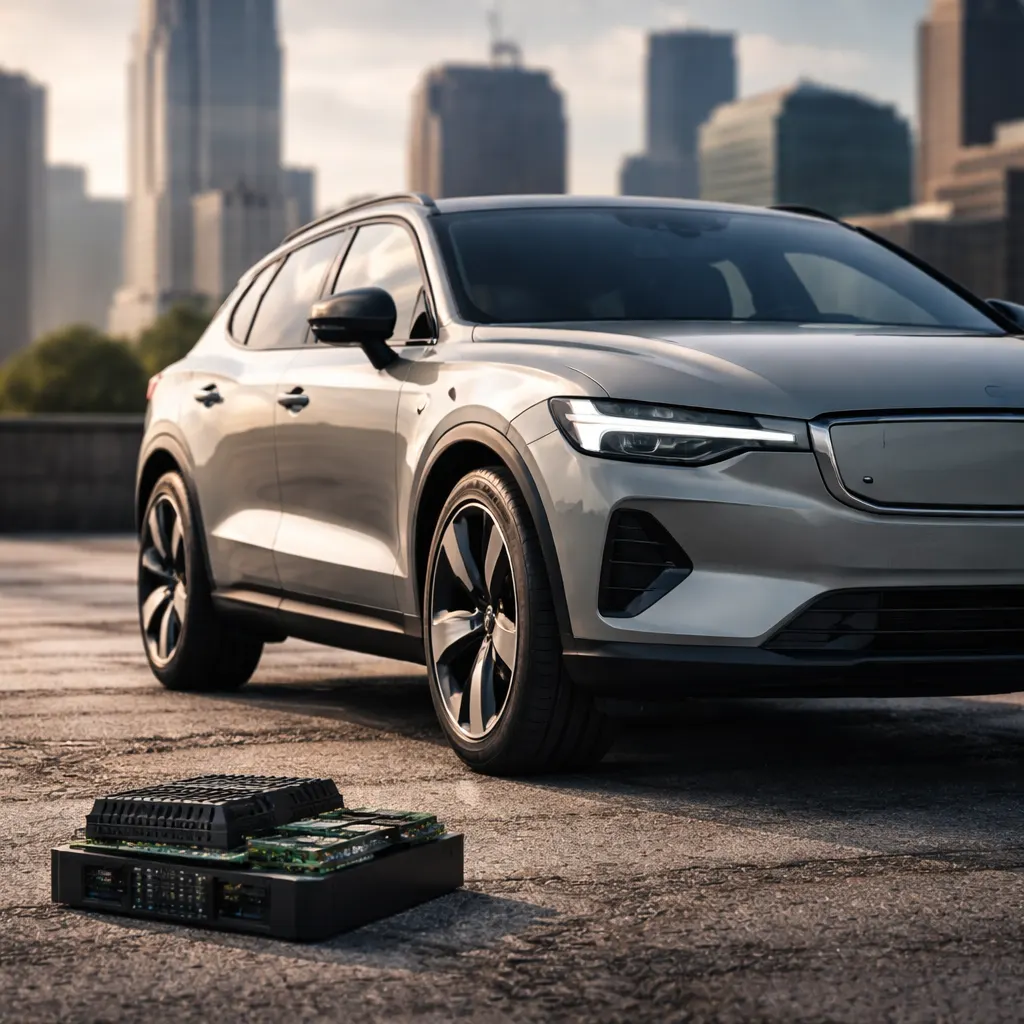
Volvo is expanding its partnership with Nvidia to bring automated driving capabilities to all of its future vehicles, not just electric models, the companies announced Thursday. The Swedish automaker will deploy three Nvidia hardware and software components — the Hyperion sensor and compute architecture, the Alpamayo driving software stack, and the Halos safety evaluation layer — to create a system capable of navigating both city streets and highways. The collaboration, which builds on a relationship that's nearly ten years old, represents Volvo's shift toward developing a complete technology platform that works across its electric, plug-in hybrid, and gasoline-powered lineup.
Under the expanded agreement, Volvo will merge its vehicle safety systems and engineering expertise with Nvidia's autonomous driving technology. The Alpamayo stack operates using a dual approach, combining AI models, datasets, simulation tools, and development resources with traditional software that relies on machine learning and sensor input from cameras and radar. Ali Kani, who leads Nvidia's automotive division, explained that "we run these two stacks at the same time, and we have multimodal sensors in our philosophy because it's a safer product that way," and noted that the open-source Alpamayo software has been downloaded by more than 650,000 developers. Volvo currently uses Nvidia's Orin computer chip in all of its battery-electric vehicles to process sensor data and support driving decisions, but the partnership will now standardize the Hyperion architecture and sensor configuration across a broader range of models.
Volvo didn't disclose financial terms of the partnership or specify which model will debut the technology first, though Alwin Bakkenes, the company's head of software development, indicated the scale of the commitment and how it reflects the automaker's transformation. "Automakers used to be very much like car-line-based development and working with various suppliers, etc. and we have completely changed and migrated into being a full-tech stack company," Bakkenes said, adding that Volvo will launch the partnership with a completely new vehicle "in the not-too-near future." According to Bakkenes, the first vehicle featuring this Nvidia technology stack will arrive within the decade, with the potential for the technology to spread beyond that initial model.
The expanded partnership signals Volvo's intent to standardize advanced driver-assistance capabilities across its entire product range rather than limiting them to premium electric vehicles. By adopting Nvidia's Hyperion platform and sensor suite more broadly, Volvo aims to create consistency in its automated driving features regardless of powertrain type. The redundant and diverse nature of the Alpamayo stack — running parallel AI and classical software systems simultaneously while drawing on multiple sensor types — addresses safety concerns that have slowed broader adoption of automated driving technology. Bakkenes emphasized that standardizing on Hyperion will "really open up the stack for the wider partnership with Nvidia," suggesting the move creates a foundation for future capability upgrades and feature rollouts across Volvo's lineup as the technology matures through the remainder of the decade. The automaker's willingness to commit to a single technology partner for automated driving represents a strategic bet that platform consolidation will accelerate development and deployment compared to the traditional approach of working with multiple suppliers on different vehicle lines. For enterprise buyers and fleet operators, this could signal more predictable feature availability and maintenance protocols across Volvo's range, though the ultimate success hinges on whether standardization delivers on its promise of faster innovation.