
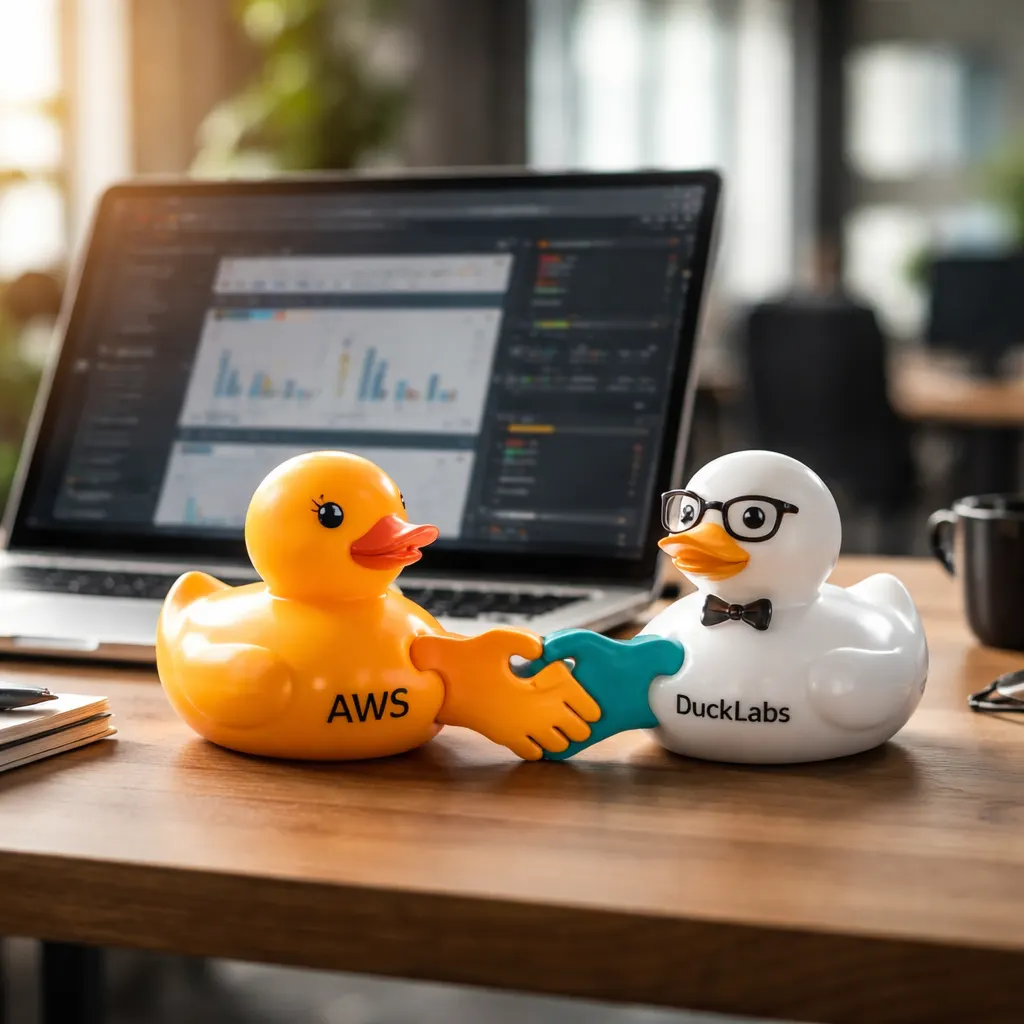
Amazon Web Services is acquiring DuckLabs, the Amsterdam-based firm behind the widely used open source analytical database DuckDB, in a transaction expected to close by early September, according to an announcement this week. AWS CEO Matt Garman said the deal will enhance database engineering capabilities and deliver faster, simpler, and more affordable analytics for customers. Financial terms weren't revealed, and the acquisition doesn't include the DuckDB, DuckLake, and Quack projects themselves, which remain open source under the independent, non-profit DuckDB Foundation with MIT licensing.
AWS generated $42.2 billion in revenue during the second quarter of 2026, giving the cloud giant an annual run rate of $169 billion. Hannes Mühleisen and Mark Raasveldt, who created DuckDB and co-founded DuckLabs, will stay on to lead the team and guide technical strategy. Justin Copie, CEO of AWS premier partner Innovative Solutions, said mid-market clients have long faced a void between basic spreadsheets and a complete Redshift cluster, and DuckDB occupies precisely that space. AWS has collaborated closely with the DuckLabs team for the past two years, according to the company.
Garman said on X Wednesday that DuckDB transformed the way developers handle data because it operates anywhere, performs quickly, and people choose it simply because it works. The co-founders wrote in a blog post that becoming part of AWS provides the resources and reach to deliver this technology to far more developers and organizations, while pursuing ideas at a scale difficult to achieve independently. According to Copie, the wisest aspect of the transaction is what AWS didn't purchase—DuckDB remains open source under an independent foundation, signaling that AWS is acquiring the talent while preserving community trust.
Copie explained that DuckDB gained popularity because customers wanted to construct rapid data warehouse prototypes and small-scale business intelligence systems to obtain real answers without deploying heavy infrastructure. That's where most mid-market customers operate, he said—they have ambitious AI plans and disorganized data, and the honest first step is rarely a major platform purchase but rather making the data usable. Andy Warfield, Amazon's vice president and distinguished engineer, said the sentiment of not just making data easy to work with but actively empowering people to ask questions, build, and truly innovate with data aligns exactly with how AWS and its customers think about data. Copie added that he'll be watching whether AWS converts this into a managed service, which would create an on-ramp for customers to start small, demonstrate value, and expand into the larger analytics stack—benefiting both AWS and partners like his firm that serve the middle market. The acquisition positions AWS to address a practical challenge many organizations face: customers want intelligent agents, but virtually no one wants to invest the time or money to clean their data, yet the fuel determines how far the rocket travels. For channel partners and their clients, the deal may signal that cloud providers now recognize the messy middle ground between spreadsheet prototyping and enterprise-scale data platforms as a strategic battleground worth owning outright.