
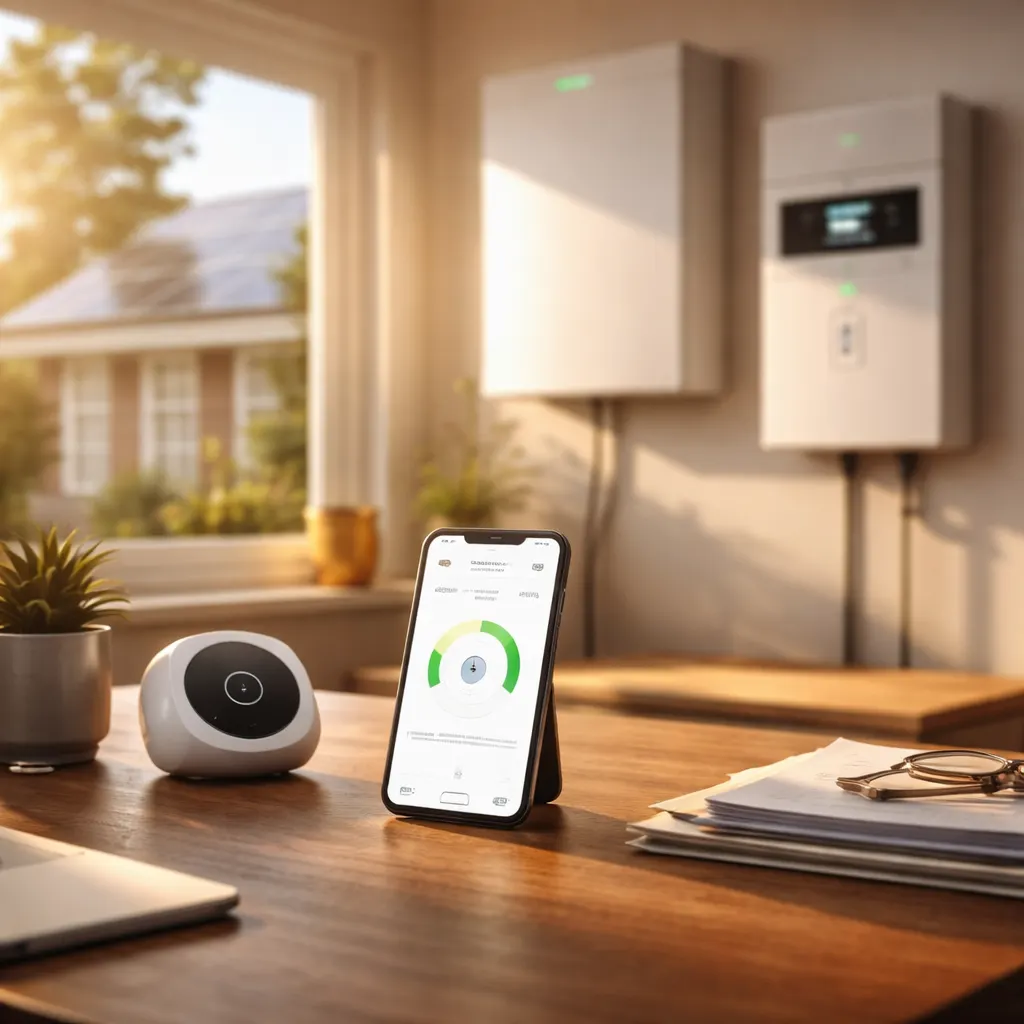
Google will compensate homes and businesses that reduce electricity consumption when grid demand spikes, the company announced Oct. 22 in an expanded partnership with energy technology firm Voltus. The arrangement creates a 1-gigawatt virtual power plant across the PJM Interconnection grid, which delivers electricity to 67 million people in 13 states and Washington, DC. Instead of building conventional generation capacity, Google is funding a coordinated network of distributed energy resources that can dial down consumption when the grid faces strain, including from electricity-intensive data center operations.
The expanded deal adds 1,070 megawatts to an original 100-megawatt commitment announced in June 2026, Voltus said. That suggests a combined 1,170 megawatts, though both firms characterize the project as 1 gigawatt; the announcement doesn't explain the discrepancy. Financial details weren't disclosed. The companies describe the project as one of the largest known distributed capacity portfolios deployed by a hyperscaler. PJM has flagged the integration of data centers and other heavy electricity users while maintaining reliability and affordability as a significant challenge.
"Expanding our initial commitment tenfold demonstrates our core effort to actively bring our own capacity to the grids that serve us," said Ellen Zuckerman, Google's head of energy market development for North and South America. According to the announcement, Voltus will orchestrate resources including batteries, smart thermostats, and industrial equipment to temporarily lower electricity use when demand climbs. A thermostat might automatically dial back cooling, while a business could adjust industrial processes or tap stored battery power. Though each change may free up limited electricity individually, aggregating them across numerous sites can deliver substantial capacity during peak periods. Participants will receive financial incentives through bill savings and direct payments funded by Google's capacity procurement.
The agreement shows how tech companies can secure electricity capacity without depending exclusively on new power generation, instead paying to optimize resources already connected to the grid. That strategy could ease pressure during high-demand windows while giving participants a financial incentive to modify their consumption. A Brattle Group study commissioned by GridLab and the Utilize Coalition—whose members include Google—estimates that better use of the US power system could save consumers more than $100 billion over the next decade, though that figure concerns broader grid improvements rather than savings from this specific deal. The arrangement reduces demand at participating sites, including through battery deployment, but doesn't provide an equivalent amount of continuous new generation. Its actual contribution depends on how much consumption participants can cut, when those reductions are available, and whether resources respond reliably when needed.
For enterprises, the starting point is identifying electricity use that can be reduced or shifted without disrupting essential operations, with participation hinging on program eligibility, available incentives, and a site's ability to respond reliably when called. Systems integrators and energy service providers could help customers evaluate that flexibility and connect building controls, battery storage, and energy management software, with potential work including configuring controls, testing responses, and monitoring performance during demand-response events. The announcement doesn't establish a new reseller program, so partners should verify participation pathways before pitching related services. Recruiting enough homes and businesses, coordinating their equipment, and securing grid operators' trust will be critical as the program scales. Partners operating in Google's expanding data center footprint will need to distinguish support for grid reliability from guaranteed power availability—this deal addresses the former, not the latter, offering no promise of faster connections for individual facilities.