
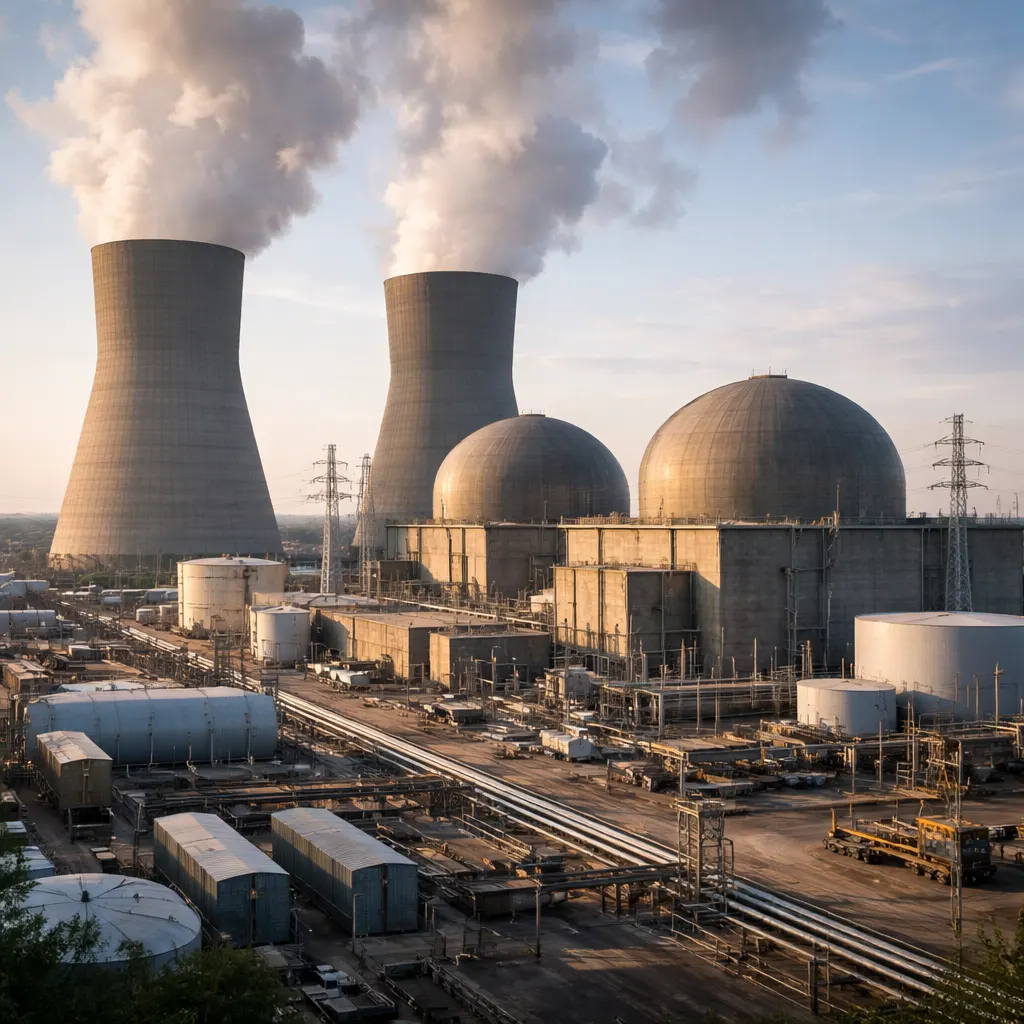
The Trump administration is providing Constellation Energy with $5 billion in loan commitments to boost nuclear generation capacity across eight power plants, according to a report published by TechCrunch on October 28, 2026. The financing will support expansion efforts totaling 1.1 gigawatts of additional capacity, with the vast majority of that new power already purchased by Google, Meta, or Amazon. The loans represent a significant federal investment in nuclear infrastructure that will primarily serve the energy-intensive data centers operated by major technology companies.
Constellation plans to "uprate" 11 existing reactors at facilities spread across three states: six plants in Illinois (Braidwood, Byron, Clinton, Dresden, La Salle, and Quad Cities), one in Maryland (Calvert Cliffs), and one in Pennsylvania (Limerick). The company has already pledged more than $7 billion of its own capital to add 1,080 megawatts of nuclear capacity specifically to supply electricity to the three tech giants. Google has secured commitments for additional power from the Pennsylvania facility and four Illinois sites, while Amazon is purchasing electricity from the Maryland location. Meta has effectively contracted for the entire output of the Clinton plant in Illinois. The uprating process involves using more highly enriched uranium and upgrading equipment to handle elevated power levels.
The Department of Energy promoted the loan Tuesday as supporting "affordable, reliable power to American homes and businesses," though the report notes there is no evidence the new nuclear capacity will reduce prices for residential ratepayers. Constellation's announcement doesn't specify whether the projects will maintain or lower electricity rates, and the company declined to confirm the government's claim when contacted. The loan commitment, which hasn't been finalized yet, "could lower financing costs" for the projects, according to Constellation's press release.
The financing addresses a critical bottleneck as hyperscalers including Google, Amazon, and Meta have been searching the grid for additional capacity to support their AI data centers. Technology companies are committing tens of billions of dollars for energy over the coming years, with power becoming a competitive advantage that likely pushes the actual spending even higher than current estimates. By reducing the cost of capital for the upgrades through federal loans, the Department of Energy's program could improve Constellation's profit margins, benefit the hyperscalers financially, or deliver gains to both parties.
The loan structure creates a direct pipeline from federal financing to private tech infrastructure, with residential electricity customers unlikely to see immediate benefits despite the government's framing. The deal reflects how deeply energy constraints now shape competition among cloud providers, and how willing Washington has become to backstage that race with public capital.
The arrangement positions nuclear uprating as a faster path to new capacity than building plants from scratch, potentially establishing a template for future public-private energy deals. For tech companies racing to secure power for AI workloads, federal loan guarantees may prove as strategic as the electricity itself. Whether taxpayers share in the upside if these projects succeed financially remains an open question that the current loan terms don't appear to address.