
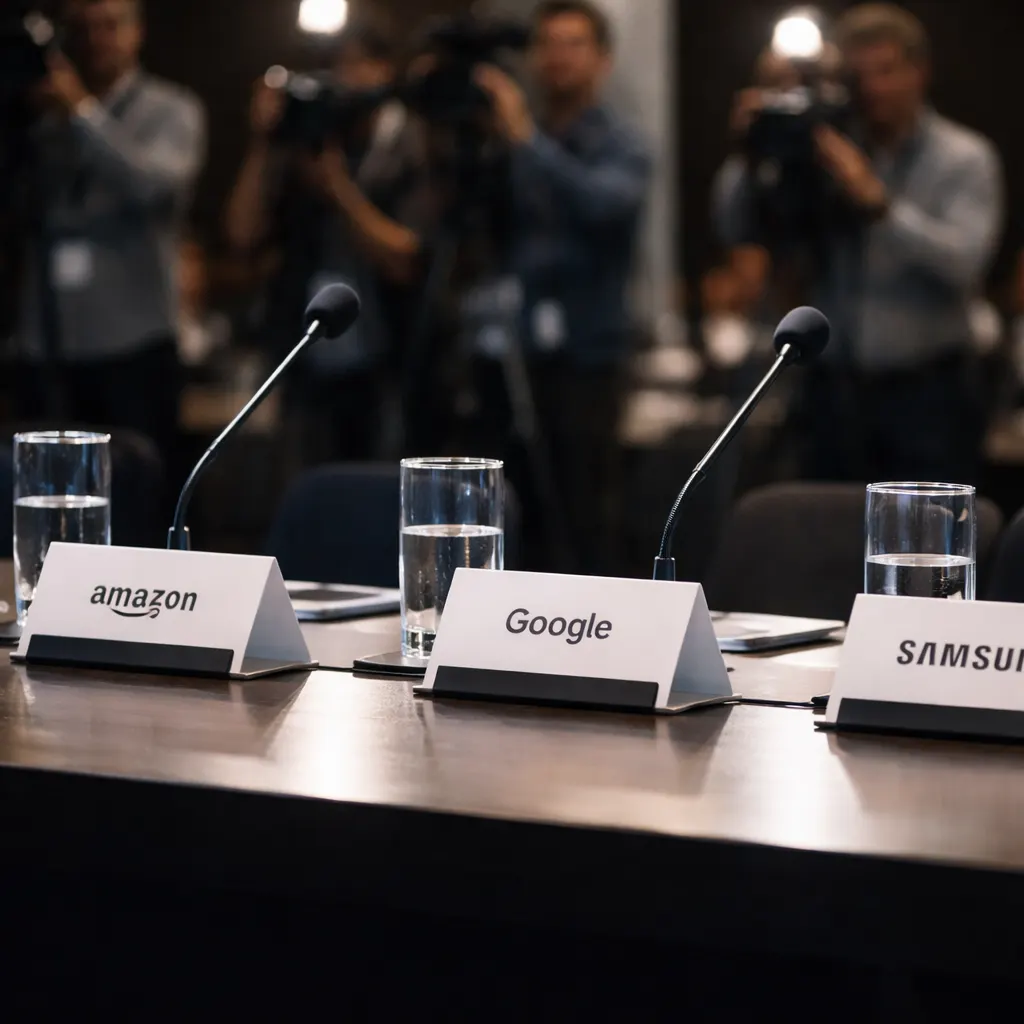
Major TV and streaming device makers have disclosed how they collect data from viewers' homes, according to a detailed survey published by *The Verge*. The investigation sent 17 yes-or-no questions to 11 companies including Amazon, Apple, Google, LG, Samsung, Roku, and TCL, asking them to explain what information their devices capture, store, and transmit. Seven companies provided answers, while Hisense ignored outreach entirely and Panasonic, Sony, and Vizio declined to answer most questions directly.
The responses reveal widespread data collection across the industry. Amazon confirmed that Fire TV devices are linked to customers' Amazon accounts and collect viewing information from third-party apps if users opt in, displaying watched shows in a Continue Watching row. Google stated that its TV platform stores viewing history, watchlists, and rental or purchase interactions, and collects navigation telemetry like button presses and app launches to assess system health. LG said its TVs transmit IP addresses and, when automatic content recognition is enabled, information about nearby Wi-Fi networks to estimate the device's approximate location. Samsung disclosed that voice commands and transcripts are stored on secure servers to process requests and improve voice assistant services, though not on the device itself. None of the responding companies allow users to opt out of all data transmission while maintaining internet connectivity, with Amazon, Google, Samsung, and TCL all stating that basic functionality requires some data exchange.
The report notes that automatic content recognition technology, which identifies everything viewers watch to tailor ads and serve recommendations, can generally be disabled even after users agree to it during setup. LG explained that its ACR system "uses audio fingerprints generated from content audio using the TV's internal soundboard" rather than collecting screenshots or recordings, and is turned off by default. Samsung and Roku both confirmed that their ACR features are opt-out by default in the U.S., requiring users to actively enable them. However, a recent Northeastern University study found that Walmart's Vizio continued sending data after an opt-out, which Vizio characterized as "routine operational data used to support the Vizio experience," not ACR, while traffic with Samsung and Roku was limited but not stopped completely.
The companies' practices around microphones and voice data vary significantly. Amazon, Apple, and Google all stated that embedded microphones or hands-free voice features listen only for wake words, with no audio stored or transmitted until the wake word is detected. Apple said that Siri processes user requests with on-device processing and extends privacy protections to the cloud through Private Cloud Compute, where "personal data is not stored nor made accessible to Apple." Roku noted that while Roku TVs don't have built-in microphones, voice commands made via voice-enabled remotes may be retained to improve features, and users can opt out through account privacy settings. TCL stated it does not collect audio data from TV or remote microphones but noted that third-party operating systems or applications control how voice features are used under their own policies. The report highlights that disconnecting a TV from the internet prevents all data transmission to company servers, though Amazon, Google, Samsung, and TCL confirmed that some diagnostic data may be stored locally while offline and transmitted once connectivity is restored.
Users can request deletion of collected data from all responding companies. Amazon, Apple, Google, LG, Roku, Samsung, and TCL each described processes for users to erase information already gathered, with Apple directing users to privacy.apple.com and Google to its My Activity portal. Samsung stated that customers can reset their device advertising ID so previous ACR data can no longer be associated with their device, and that disabling Viewing Information Services triggers deletion of previously collected ACR data from servers. The report underscores that while many data collection practices are opt-in and can be managed through privacy settings, the complexity of consent agreements during TV setup and the persistence of some data transmission even after opt-out present ongoing privacy challenges for consumers. The transparency gap from manufacturers that declined to answer—Hisense, Panasonic, Sony, and Vizio—leaves questions about industry-wide practices unresolved. For households weighing convenience against visibility, the choice now sits between accepting disclosed surveillance or severing the internet connection entirely.