
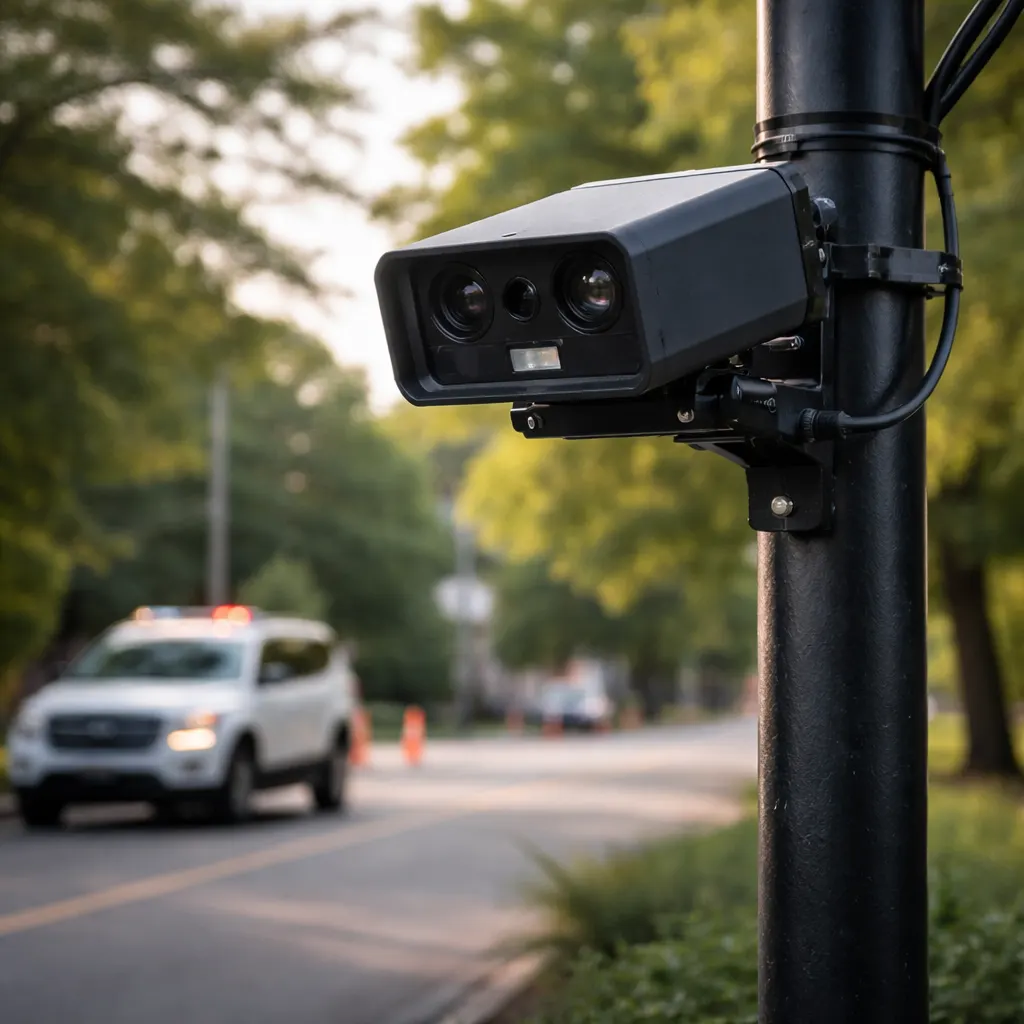
The police department in Covington, Georgia, paid surveillance technology company Flock Safety $40,000 in 2020 to maintain 20 cameras around the city. By August 2026, that figure had climbed to $201,000—a five-fold increase in just six years, according to documents obtained by WIRED through public records requests. The publication reviewed contracts from more than two dozen Flock customers nationwide, revealing how the company's surveillance deals can expand dramatically over time and leave taxpayers footing escalating bills indefinitely.
The documents show a pattern of steady cost growth across multiple cities. In Covington, the department spent $81,250 in 2022 after adding 15 new "Falcon" cameras—Flock's more advanced license plate readers—for $37,500, plus $3,750 for installation and maintenance on the original cameras. By 2024, the annual payment reached $113,225, with $87,500 dedicated to maintaining 35 existing cameras under a five-year agreement. The following year brought another jump to $159,000, covering camera maintenance and enrollment in Flock's Drone as First Responder program, which dispatches drones to emergency scenes to stream live footage to the police station. Through August 2026, Covington had already paid $201,000—$100,000 for camera maintenance, $800 to replace one unit, and $100,200 for new software products. A similar trajectory unfolded in Alpharetta, Georgia, where the police department paid $17,680 in 2020 for five Falcon cameras and access to Flock's Wing software, which extracts vehicle and license plate data from non-Flock camera footage. By 2025, Alpharetta's annual Flock bill had swelled to $381,000.
The report notes that Flock's contracts are drawing increased scrutiny amid growing backlash over the company's surveillance practices. Matthew Guariglia, a senior policy analyst at the Electronic Frontier Foundation, told WIRED that "once you let police officers try a tool, it becomes really hard to get the political will and motivation to take that tool away from them." In Alpharetta, a 2021 payment justification revealed that "several" local homeowner associations had already purchased Flock cameras and granted police access, and the city argued that "other vendors" would "not integrate with our existing Flock system."
The documents shed light on how Flock initially penetrates municipal markets by leveraging existing private camera networks. When the company launched in 2017, it sold license plate readers to private homeowner associations. After pivoting to police departments in 2019, Flock offered law enforcement a shortcut: rather than building camera networks from scratch, departments could start by accessing cameras that homeowner associations were already using. This strategy proved effective in Alpharetta, where the police department's 2021 payment justification explicitly stated the city was "looking to add more city cameras into the Flock system" and argued competing vendors couldn't integrate with the existing Flock infrastructure. The integration argument effectively locked the city into continued expansion with a single vendor, even as costs climbed year after year.
While Covington's Flock spending remains a small fraction of the police department's $12,488,733 budget for June 2025 to July 2026, the contracts reveal no clear endpoint for the expenditures. The city has committed to paying $87,500 annually for camera maintenance through at least 2029 under its 2024 agreement, and costs have continued rising with each new product offering—from advanced Falcon cameras to drone programs to software subscrades. Flock Safety did not provide a comment for the story, and the Covington Police Department did not respond to a request for comment. Municipalities that adopt surveillance tools with recurring costs and vendor lock-in may find themselves navigating budget pressures without an easy exit path, particularly when those technologies become embedded in daily operations. The incremental expansion model—adding a few cameras here, a software feature there—can obscure the cumulative financial burden until costs have multiplied several times over.