
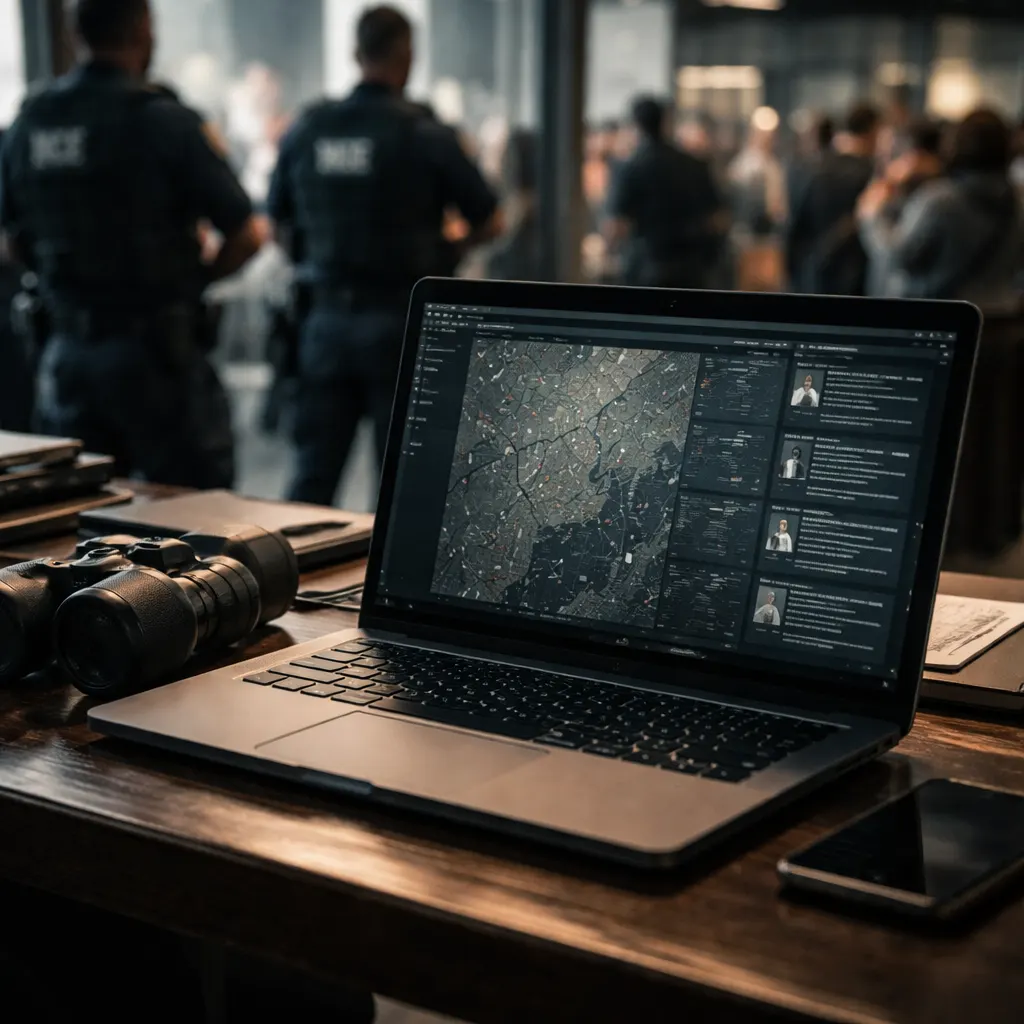
A newly unsealed court filing alleges that the US Department of Homeland Security compiled detailed files on people who observed ICE operations—including their photographs, vehicle license plates, and other personal details—and placed them in a Palantir-built system called the Investigative Case Management database. The filing, which was submitted under seal in September and released in redacted form on Friday, is part of a proposed class action lawsuit filed in federal court in Maine by four observers. The plaintiffs claim that federal agents engaged in a pattern of intimidating those who monitored immigration enforcement activities.
The filing details how one DHS agent, identified as "Agent J.C.," created ICM records on at least six observers during "Operation Catch of the Day," an immigration enforcement operation in Maine this past January. The agent allegedly tagged two individuals he filmed at a Home Depot parking lot with the label "Threat to Law Enforcement, Professional Protestor" and transmitted their photos to a US Customs and Border Protection officer for facial recognition searches using an app called Mobile Query. In one instance, after observer Polyxenia Pantos briefly watched and photographed an arrest in Portland, Maine, on January 20, J.C. ran the license plate of a vehicle parked nearby and retrieved a report on the registered owner—Carlyn Williams—from Accurint, a LexisNexis law enforcement database that listed her address, telephone numbers, and cohabitants. The agent then allegedly circulated Williams' photo to his team, asking if she was "the protestor," and told colleagues he was "adding them in ICM now" after another agent said the photo didn't match the woman at the scene. According to the filing, J.C. called Williams that afternoon and warned her that people engaging in such activities "might get added to a domestic terrorism watchlist," though government attorneys state he denied referencing such a watchlist. Williams' ICM record indicated she was the registered owner of a vehicle used to "interrupt ICE arrests" and that her driver's license photo matched video of an "aggressive woman" who "interject[ed] herself into an arrest."
"The government is treating people who exercise their First Amendment rights and seek to hold it accountable as criminal suspects, and that's what we're asking the court to stop," says JoAnna Suriani, an attorney at Protect Democracy representing the ICE observers. A DHS spokesperson calls the case "meritless" and says "the underlying lawsuit is based on the lie that there is a database of 'domestic terrorists' run by DHS." Todd Lyons, ICE's former acting director, wrote in an April letter to Rep. Maxwell Frost that ICE "does not maintain any kind of database of U.S. citizens protesting ICE activities" and that DHS isn't keeping a "separate, standalone database" of people it hasn't arrested or detained. The government's motion to dismiss contends these were isolated incidents that violated DHS policy and that J.C. made records on people he believed were "potential threats to law enforcement."
The filing explains that ICM is the system HSI agents use to create and track case files, and that ICE awarded Palantir the contract to build it in 2014 on the company's Gotham software platform. In 2022, ICE gave Palantir a new five-year ICM support contract initially valued at up to approximately $96 million, and in 2025 the agency added nearly $30 million to develop a new platform called "ImmigrationOS." According to a 2016 DHS privacy assessment, ICM automatically shares the subject records agents create with CBP's TECS system, where they function as "lookout records" for screening travelers at the border. The plaintiffs' attorneys argue that DHS's actions have had a chilling effect on First Amendment rights: Pantos stopped all ICE observation work after J.C.'s phone call to Williams, who briefly continued before also ceasing all activity. The observers are asking the court to order that Williams' records be archived, to prohibit DHS from using the collected information against the plaintiffs, and to bar agents in Maine from threatening observers with watchlists or following them to their homes. The case exposes a fundamental tension between surveillance technology built for criminal investigation and its use in contexts where constitutional protections are at stake. When law enforcement platforms designed to track suspects can be repurposed to monitor lawful civic activity, the practical boundaries of oversight become as important as the formal rules governing them.