
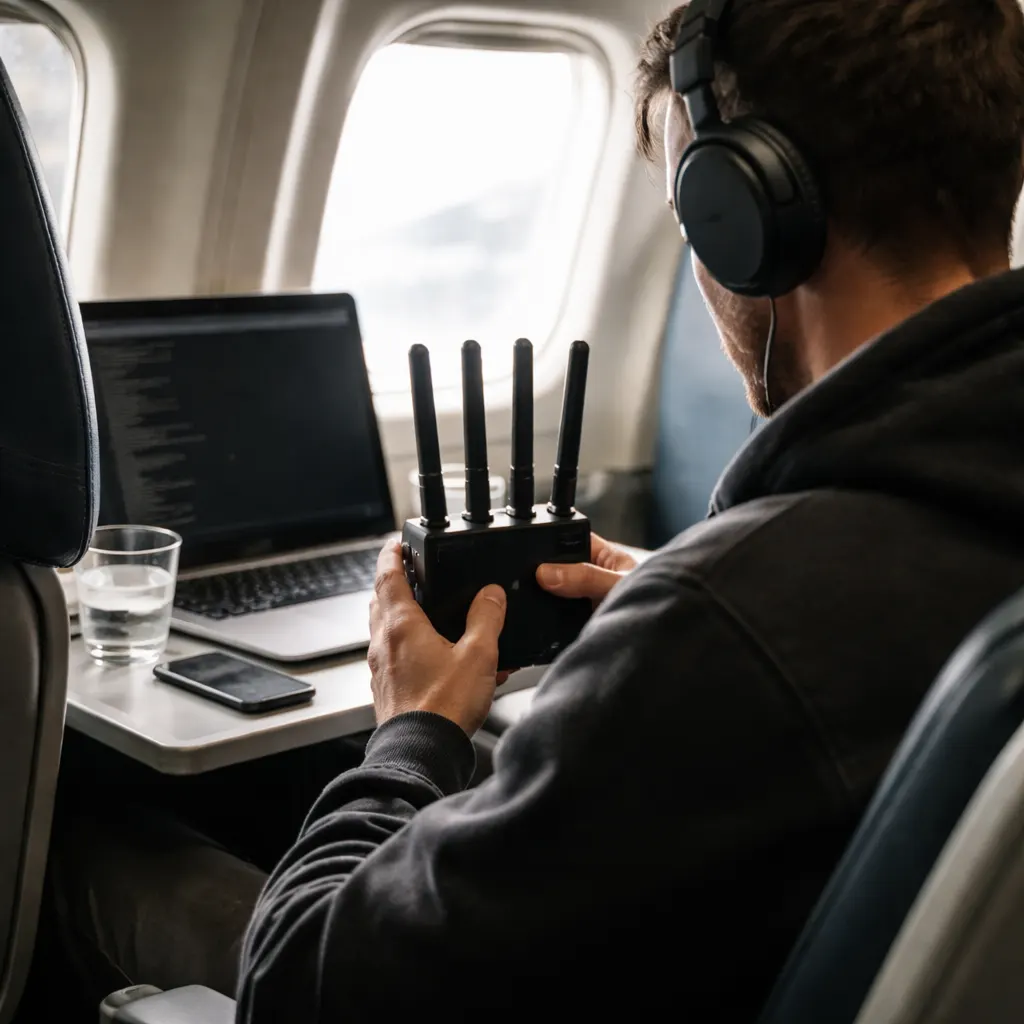
A passenger aboard a Delta Air Lines flight from Las Vegas to Atlanta following the DEF CON cybersecurity conference is suspected of interfering with the aircraft's in-flight Wi-Fi and transmitting an unauthorized network, according to a report published Monday by The Register. The incident on Delta Flight 591 could constitute a federal violation if investigators determine deliberate interference occurred. Flight crew members sent alerts to corporate security indicating they believed a traveler had set up a fraudulent network to target other passengers.
Aircraft Communications Addressing and Reporting System (ACARS) messages from the crew first noted the appearance of a fake network labeled "DELTA WIFI FAST" that they suspected was designed to deceive other travelers. A follow-up message minutes later attributed the problem to multiple passengers returning from "A CYBER CONFERENCE IN LAS" who the crew believed had disrupted the legitimate Wi-Fi service and were transmitting their own signal. Social media accounts of the incident differed on specifics, with some suggesting a credential-harvesting attempt via the fake network and others claiming a deauthentication attack forced users off the real network before presenting them with a counterfeit landing page. One commenter in an online thread claimed to have witnessed the same individual conducting similar activity against airport Wi-Fi at the Las Vegas terminal, though reports disagreed on whether law enforcement met the aircraft at the gate in Atlanta.
Delta Air Lines confirmed the incident to The Register and stated it is "fully investigating to gather a complete set of facts" in partnership with federal law enforcement and aviation regulators. The airline clarified that aircraft safety, crew, and passengers were never at risk and no aircraft systems were compromised. Delta confirmed that no breach of any company system occurred, including the in-flight Wi-Fi, though an unauthorized network did broadcast aboard the plane for a brief period, and the cabin crew disabled the legitimate Wi-Fi for approximately 30 minutes due to the situation.
If federal investigators conclude the incident involved intentional interference with authorized Wi-Fi communications, the penalties under the Communications Act could be substantial. According to Federal Communications Commission guidance, deliberate Wi-Fi blocking can violate section 333 of the Communications Act, with a willful and knowing violation carrying potential punishment of up to one year in prison and a fine reaching $10,000 upon conviction. For repeat offenders, the prison term could extend to two years. The timing of the flight departing after Black Hat and DEF CON led Delta to suggest a conference attendee made the ill-advised decision, while Atlanta Police's airport division reported no awareness of the incident and the city's Department of Aviation declined comment. Commercial aviation remains one of the most heavily regulated and monitored environments for wireless activity, making any attempt to disrupt communications particularly risky from both a safety and legal standpoint. The prospect of passengers carrying sophisticated hacking tools onto aircraft raises questions about screening protocols at major security conferences, though the line between legitimate research equipment and malicious deployment often depends entirely on intent and use rather than the devices themselves.