
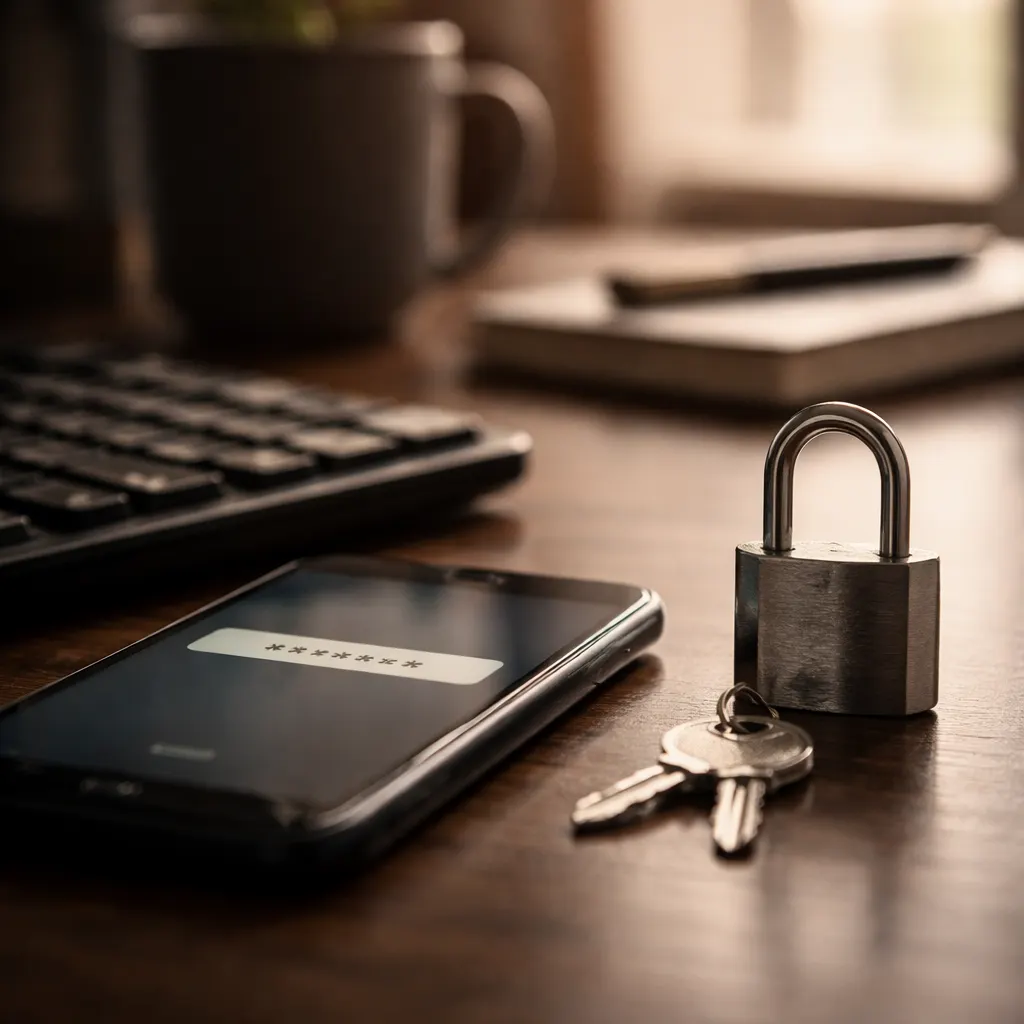
The password "123456" has claimed the top spot as the world's most commonly used password for the seventh time in eight years, according to NordPass' eighth annual report on password habits, released Monday. The findings, drawn from data breach records, reveal that global password security practices have shown virtually no improvement since the firm began tracking these patterns. Despite years of warnings and public awareness campaigns, users continue to rely on the same weak, easily cracked credentials.
The top three passwords in NordPass' ranking haven't shifted at all across the eight years the company has published its list: 123456, admin, and 12345678 remain firmly entrenched. Even in the single year when "123456" didn't take first place, it still ranked near the very top. Among the 10 most popular passwords, the only notable change was the entry of "1234" into the top 10 and the slight drop of the password "password" from sixth to seventh position. The rest of the rankings show minimal variation year over year.
NordPass concluded that "we still have a lot of work to do to spread awareness about password safety." The report also warns that passwords inspired by pop culture trends and fandoms make particularly poor choices, noting that trendy options like "minecraft" in the early 2000s or "skibiditoilet" in recent years are easy targets for password stuffing attacks. According to the report, all such culturally influenced passwords "could be cracked in seconds." NordPass' research further highlights that the firm's list of 200 most common passwords should be avoided entirely by users seeking to protect their accounts.
The urgency around password security has intensified because AI adoption has made cracking passwords easier than ever before, the report states. More credentials are being stolen in data breaches at an accelerating rate, and AI tools have made cracking hashed passwords simple as well. This means that reusing a password that's been exposed in any breach—even if only the hash was leaked—creates a much higher risk than before that another account will be compromised. The combination of faster cracking methods and larger breach datasets has fundamentally changed the threat landscape for password reuse.
NordPass recommends that users shift away from traditional passwords entirely, moving toward biometric authentication or passkeys instead, and emphasizes that enabling multi-factor authentication is essential. For situations where passwords remain necessary, the report advises avoiding trendy or culturally popular terms and ensuring each password is unique, long, complex, and randomly generated. The report acknowledges that while security-conscious users may already follow these practices, IT professionals need to enforce strong password policies for less disciplined colleagues, since the average user continues to ignore best practices despite years of repeated warnings. Organizations can't rely on individual compliance alone—systematic enforcement remains the only reliable defense against predictable human behavior.