
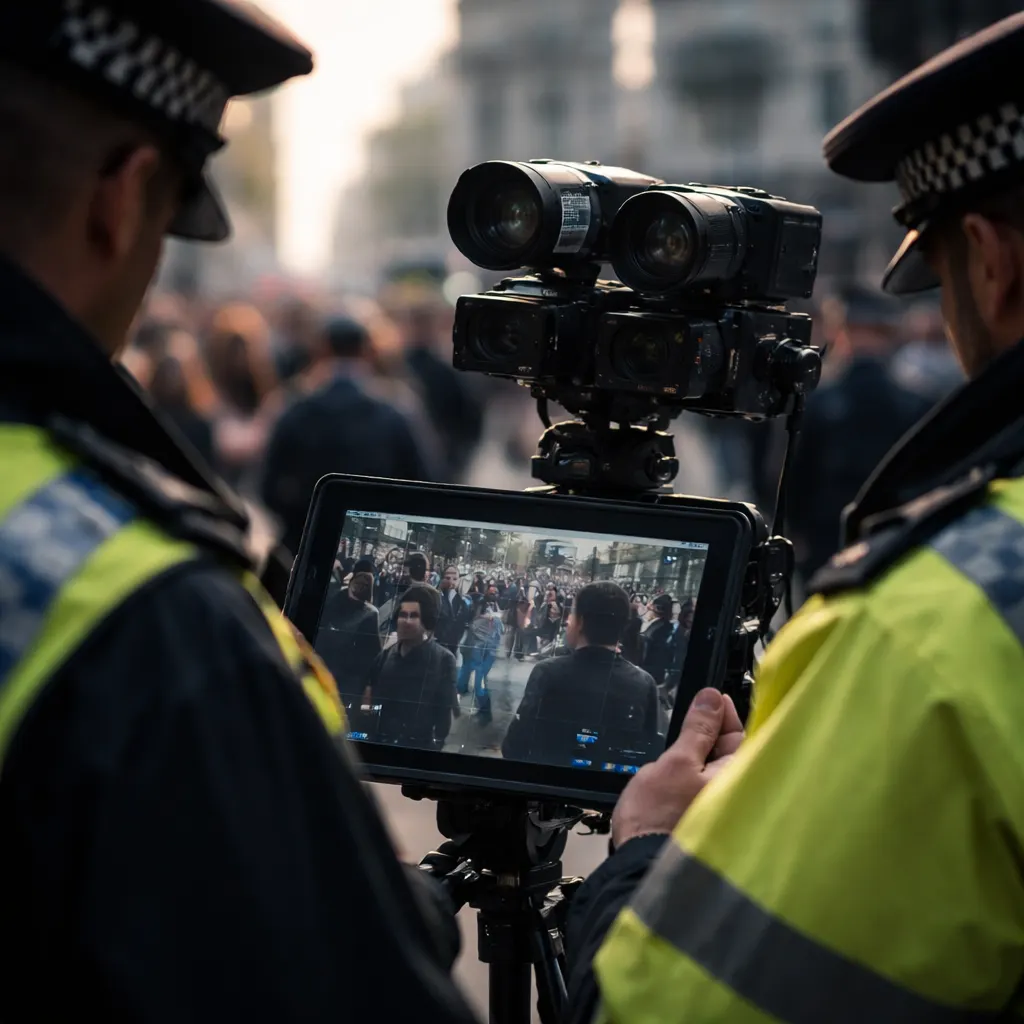
UK police forces are failing to prevent wrongful arrests stemming from retrospective facial recognition searches, according to a new report from His Majesty's Inspectorate of Constabulary and Fire & Rescue Services published Thursday. The inspectorate voiced serious reservations about how officers deploy the technology, pointing to widespread confusion about its limitations and a patchwork of governance rules that leaves practice inconsistent across forces. The watchdog called the findings "deeply concerning" and urged immediate reforms to safeguard public confidence.
The report identified a fundamental misunderstanding among individual investigators, who "often" believe that facial recognition results constitute evidence rather than intelligence, despite routine guidance from National Police Chiefs' Council representatives stating the opposite. Many officers remain unaware that matches require additional verification before enforcement action can proceed. In a handful of instances, police relied too heavily on system matches and took inappropriate investigative steps, including arrests. The inspectorate also documented systematic failures to delete custody images from the Police National Database as required, with forces retaining photographs of suspects that legal guidance mandates they remove. Meanwhile, public attitudes toward facial recognition remain broadly supportive: surveys conducted in 2025 by the Ada Lovelace Institute, the Alan Turing Institute, and King's College London Policy Institute found backing ranging from 53 percent to 91 percent, while Home Office data released Thursday showed only 4 percent of officers reporting negative experiences with the technology.
Kathryn Stone, His Majesty's Inspector at HMICFRS, acknowledged that facial recognition has revolutionized policing by enabling officers to compare images in seconds and solve crimes faster, but warned that forces "must be able to show that appropriate safeguards are in place." The report attributed the problems to "fragmented and underdeveloped" frameworks for governance and legislation, noting that existing laws haven't kept pace with the technology and that rules governing each force's use of retrospective facial recognition are mismatched. In some forces, managers actively encouraged officers to "progress investigations quickly" after obtaining a match, while acute demands on response teams reduced opportunities to carry out corroborative checks before acting. The inspectorate found that the best-performing forces operated centralized facial recognition teams, which generally delivered stronger oversight and more uniform procedures.
The watchdog emphasized that without legislative reform and consistent national standards, long-term misuse of facial recognition threatens to erode the public trust the technology currently enjoys. It called for a statutory code to be included in the forthcoming Police Reform Bill to establish nationwide standards, arguing that the lack of bespoke legislation has left forces without a uniform approach. The bill already includes provisions to group custody images with DNA and fingerprints, which would bring more rigorous requirements for retention and deletion, though a 2017 Home Office review previously concluded that automating image deletion was unworkable and manual deletion too burdensome. Jasleen Chaggar, senior legal and policy officer at Big Brother Watch, said the revelations that officers treat facial recognition as "bona fide evidence rather than a probability score" are alarming and significantly increase the risk that innocent people will be wrongfully arrested for crimes in towns they've never visited. The report recommended improvements to officer training on retrospective facial recognition use, which remains inconsistent, and urged forces to formalize procedures for how facial recognition inquiries should be conducted—steps the inspectorate said would lead to more effective and lawful deployment across the UK. Regulators appear to be betting that tighter governance can preserve the operational advantages of facial recognition while preventing the investigative shortcuts that have already led to inappropriate arrests, though the willingness of government and individual forces to implement uniform standards remains the critical uncertainty.