
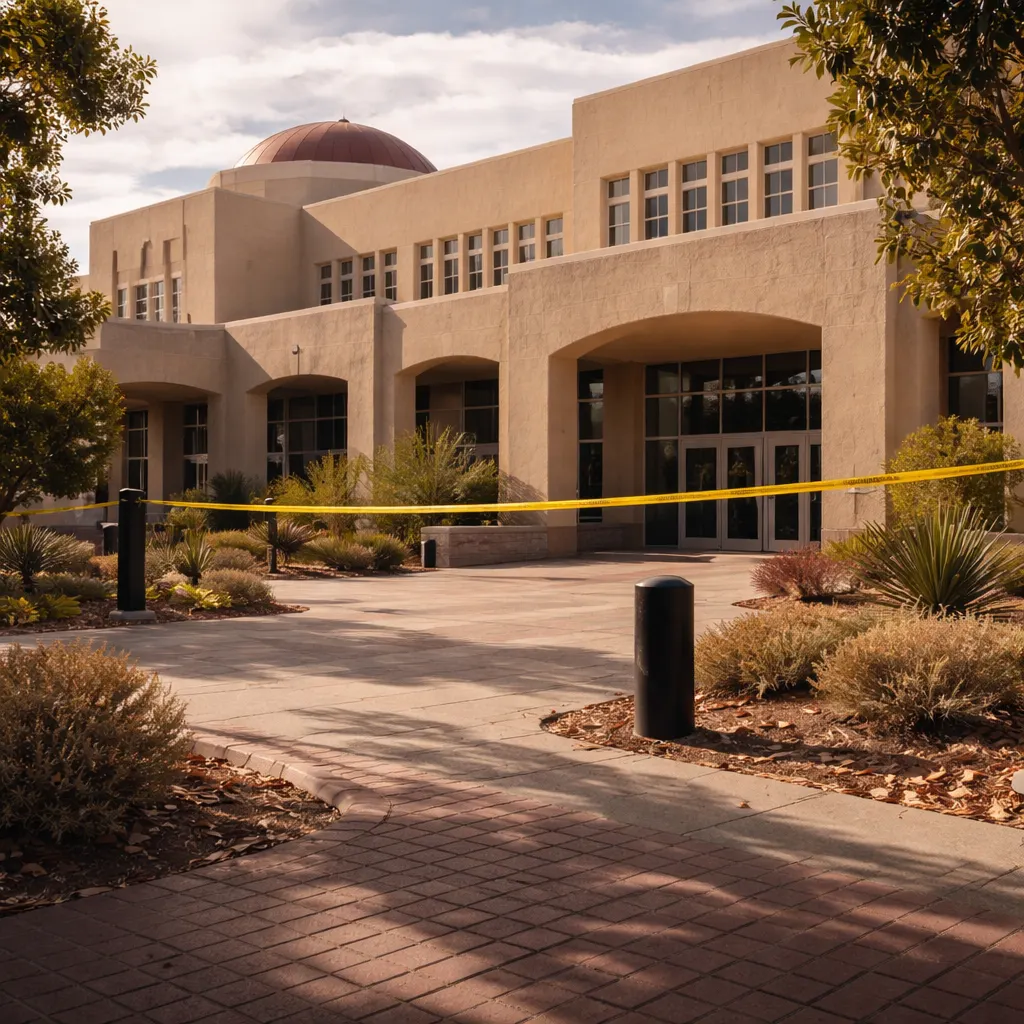
The University of New Mexico canceled classes across its medicine, nursing, and pharmacy faculties for a second consecutive day following a cyberattack on its Health Sciences Center. The incident, which occurred Monday, October 26, 2026, forced the university to shut down systems, cancel hospital appointments and clinics at UNM Health facilities, and redirect ambulances to other healthcare providers in Albuquerque and Santa Fe. The university disclosed the attack Monday at 2:30 p.m. local time, immediately canceling all remaining clinics and classes while dismissing everyone except critical and clinical staff.
A ransomware group calling itself BYOD claimed responsibility for the attack on Monday afternoon, asserting it compromised 36,000 machines, both Active Directory forests, two Oracle databases, and personal information for every student and employee, along with internal emails and other system data. The group made its debut last week by allegedly breaching Trump Mobile's customer database and leaking data for all 3,615 customers, a claim that appears to have been verified. A competing group, EndZone, had claimed a similar Trump Mobile breach one week prior, leading some security researchers to suggest the two operations might be the same entity. Hospital appointments and clinics have resumed normal operations as of Tuesday, though nonessential Health Sciences Center staff remain working from home.
According to the university's Monday evening statement, information technology security teams "immediately took steps to contain the event and protect the network" after detecting the breach. The institution also notified state and federal law enforcement and brought in external partners to help with the investigation. Leadership stood up an Emergency Operations Center to coordinate response efforts and provide direction to employees, students, and frontline healthcare providers across the UNM Health system, the statement added.
The university hasn't disclosed what type of cyberattack occurred, though security researchers have speculated about ransomware involvement based on BYOD's claim. However, the report notes that a purported ransomware group taking credit doesn't confirm they were actually responsible, nor does it prove they deployed ransomware or locker payloads during the intrusion. The report emphasizes that a cybercriminal's word can never be trusted, though BYOD's claims about the Trump Mobile breach appear credible. In May, Trump Mobile was discovered leaking thousands of people's information through a poorly secured website.
Recovery from the incident will continue in phases, with the university declining to answer additional questions beyond its public statement. The Trump Organization didn't respond to requests for comment on either the BYOD or EndZone breach claims. University officials urged patients not to visit Health Sciences Center facilities immediately following the attack disclosure, while ambulance diversions to nearby Albuquerque and Santa Fe hospitals remained in effect through Monday. Organizations facing similar attacks must balance patient safety against operational continuity, a tension that becomes acute when healthcare delivery depends on networked systems that adversaries can exploit with cascading consequences.