
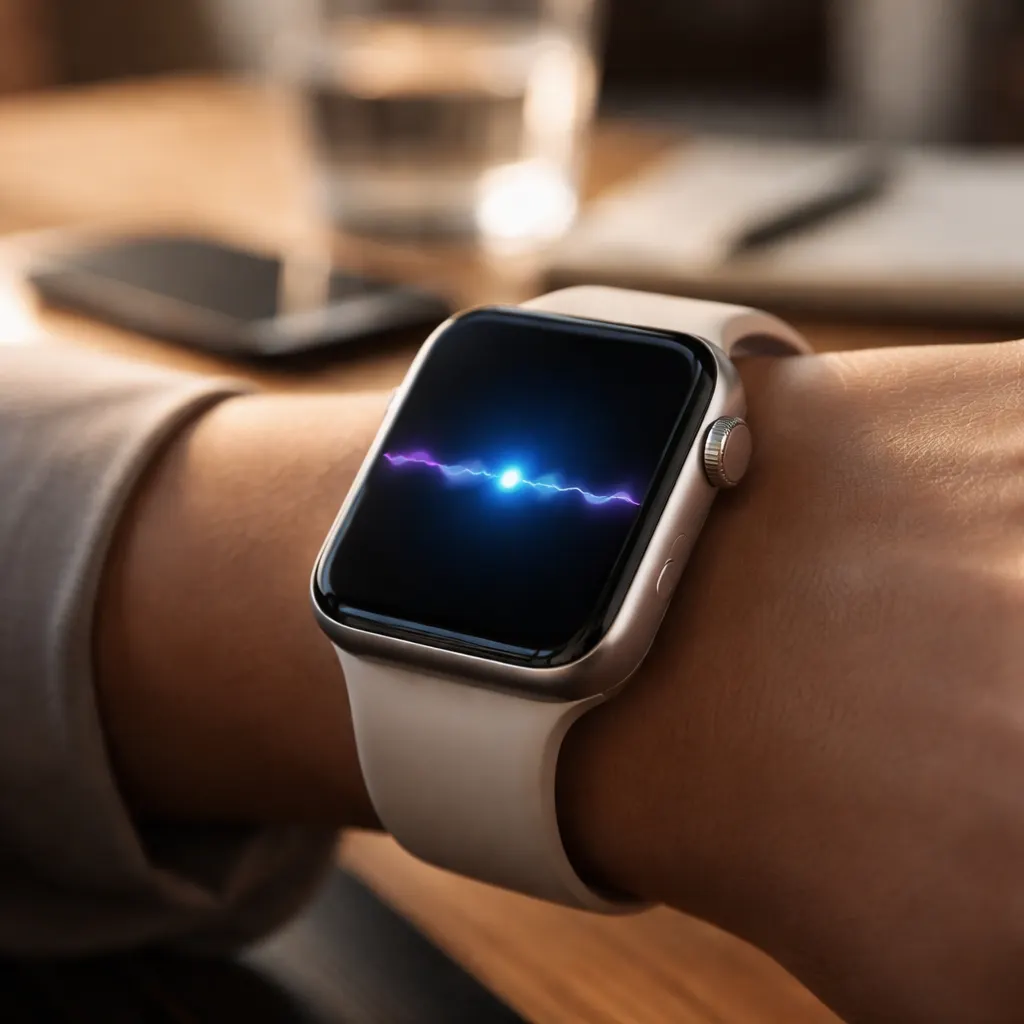
Apple began rolling out beta testing for its AI-powered "Audio Intelligence" technology on the Apple Watch on Tuesday, starting with developers in the iOS 27.3 update, according to a press release first sent from the company's communications team in India. The technology was originally unveiled at Apple's Surprise and Shine hardware event in September. It consists of four opt-in AI capabilities designed for Apple Watch Series 12 users to recognize important sounds, name songs, revisit conversations, and capture notes.
The suite includes sound recognition to help deaf and hard-of-hearing users spot important noises like sirens, alarms, or doorbells, plus song identification that uses Apple's Shazam app to detect background music and display the track name and artist. The more sensitive features are Live Rewind and Siri Recaps, both of which listen to human speech. Live Rewind lets wearers double-press the Watch's digital crown to retrieve what someone said in the past 15 seconds as a text snippet on the watch face—useful if you missed verbal directions or a long list of menu specials at a restaurant. The snippet vanishes permanently unless you save it to the standalone Siri app that launched with iOS 27, and it deletes automatically after 30 seconds if unsaved. A chime sounds and an animation appears when the digital crown is double-pressed, signaling to others that something was recorded. Siri Recaps goes further by summarizing entire conversations with a short sentence and bullet points covering key details like deadlines, pricing, or payment plans. The report notes that Apple doesn't identify speakers, store raw audio, or provide word-for-word transcripts—only condensed summaries meant to replicate a user's own note-taking without capturing emotion or tone.
Apple states that users can activate Siri Recaps manually or set a schedule, such as running only during work hours or never at night, and can disable the feature anytime from the Control Center. The recaps won't record when headphones are in use or noise cancellation is active. At day's end and again when unlocking the watch each morning, users receive a prompt to review saved Siri Recaps and decide which ones, if any, to keep in the Notes app or Journal app. Unsaved recaps delete themselves within seven days. The company explains that Siri Recaps are engineered to omit sensitive data including government-assigned identifiers, financial and authentication information, certain personal identifiers, and any language promoting self-harm. The Audio Intelligence features for the Apple Watch Series 12 and Apple Watch Ultra 4 depend on the S11 chip, built-in microphone, Apple Intelligence models running on the paired iPhone, and Apple's Private Cloud Compute infrastructure.
The technical architecture routes raw audio through a secure enclave—a hardware-protected memory space inaccessible to the rest of the operating system—on the always-on processor, so the audio is processed without anyone, including Apple, being able to access it. Lightweight AI models on the S11 chip detect whether the wearer is part of a conversation, then transfer that audio to the secure enclave on the paired iPhone. On-device processing on the iPhone converts the audio into condensed text by removing filler words, encrypts that text, and sends it to Apple's Private Cloud Compute to generate the recap, which is immediately deleted from PCC afterward. The recaps accessible on the iPhone are encrypted when synced across multiple Apple devices and remain inaccessible to Apple. According to the announcement, none of these features should affect battery life on the watch or phone, and the update will later expand to public beta testing before full availability. Apple's approach attempts to balance utility for Watch owners with privacy concerns raised by AI recording devices like Meta's AI glasses and other AI wearables, carving out a space where ambient listening can assist users without intruding on those around them. Wearable AI that captures human speech remains a flashpoint for privacy advocates, and Apple's bet on visible cues and automatic deletion may determine whether mainstream consumers accept always-listening devices on their wrists.