
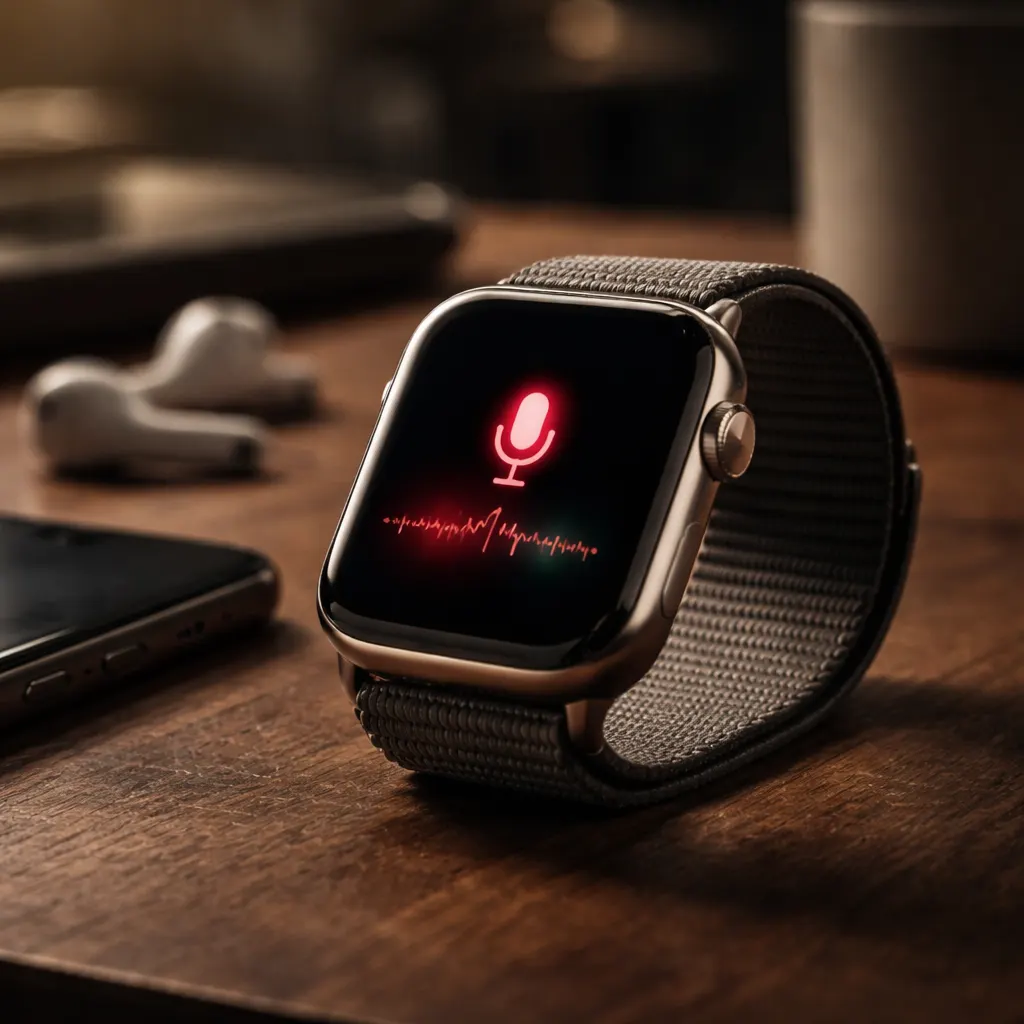
Apple's newly released Apple Watch Series 12 can capture snippets of nearby conversations without obtaining consent from everyone being recorded, according to a report published by The Register on September 10, 2026. The device's Audio Intelligence features allow wearers to record and transcribe the last 15 seconds of any conversation with a double-press of a button, even when bystanders haven't agreed to the recording. The feature raises legal questions in states that require all-party consent for audio recording.
The Watch's Live Rewind feature captures audio through the device's microphone, processes it on the S11 chip's Secure Exclave, and sends the data to a paired iPhone where a speech-to-text algorithm converts the 15-second audio segment into text. The wearer's Watch emits an audible tone and displays a visual cue during recording, even in silent mode. However, bystanders who hear the tone and recognize its meaning still haven't consented to being recorded, which violates legal requirements in 11 US states with all-party consent laws. A second feature, Siri Recap, summarizes conversations throughout the wearer's day and generates high-level notes without creating verbatim transcripts or identifying individual speakers.
Apple defends its implementation in a technical summary titled "How Live Rewind respects those around you," pointing to the audible chime and on-screen animation as privacy safeguards. The company states that Siri Recap "does not create a recording, does not produce a verbatim transcript, and does not identify and attribute speakers," characterizing the output as comparable to notes someone might write after a conversation. According to Apple's technical documentation, there's no way to reconstruct the original audio from a Siri Recap or share raw audio with anyone, which is why the feature doesn't produce an audible alert.
The feature's release has drawn criticism from privacy advocates who argue that non-consensual recording threatens conversational freedom. Electronic Frontier Foundation privacy litigation director Adam Schwartz told The Register that "our right to conversational privacy must include freedom from other people, without our clear opt-in consent, using technology to document what we are saying." Schwartz warned that without practical means for bystanders to consent or decline recording, people will self-censor and conversation will lose its spontaneity and intimacy. The EFF's concern centers on the broader impact of always-on monitoring, which Schwartz described as "an unacceptable burden on our conversational privacy," regardless of whether Apple's implementation is less invasive than competing products like Meta's AI Glasses.
The EFF recommends that people think twice before using this technology out of respect for others' conversational privacy, while noting that it remains unclear how state eavesdropping laws will apply to Audio Intelligence. Apple's approach reflects a growing tension between tech companies' push toward ambient AI recording and legal frameworks designed to protect consent in two-party conversations. The question facing regulators and users alike is whether an audible tone and visual cue constitute sufficient notice when the technology allows one person to unilaterally decide to document a shared conversation. As wearable AI continues to blur the line between personal assistance and public surveillance, companies may find that technical safeguards alone can't resolve the fundamental ethics of recording without permission.