
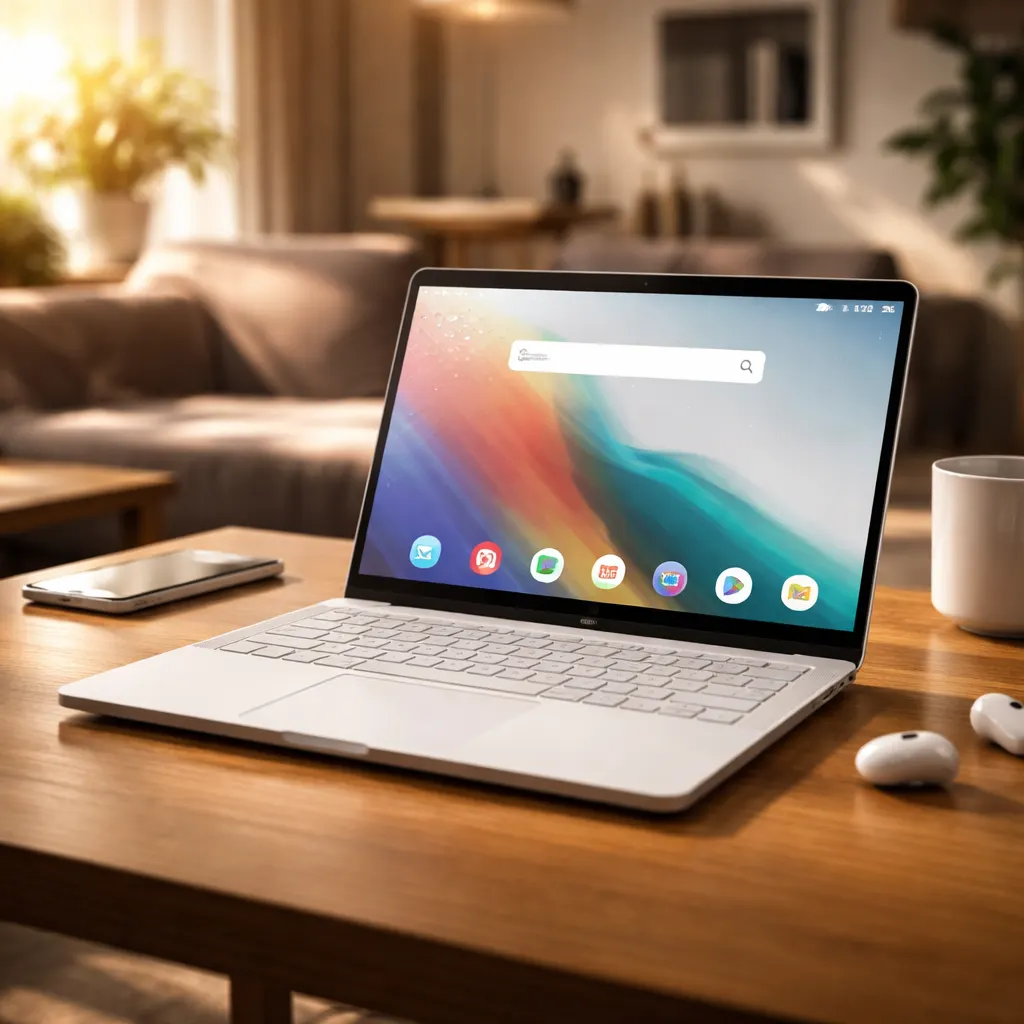
Google has unveiled Googlebook OS, a new laptop operating system that replaces Chrome OS with Android as the foundation for its computing hardware, according to a report published by The Verge. The shift marks the end of Google's 16-year experiment with web-first laptops and represents what the company's hardware chief Rick Osterloh calls "the ultimate focusing move" — consolidating two separate operating systems into one platform. Five new Googlebook devices from Acer, Asus, Dell, HP, and Lenovo are launching now, priced between $899 and $1,299, with specs including 16 gigabytes of RAM and cutting-edge Qualcomm processors.
The Googlebook project started in earnest roughly two years ago, though ideas about merging Chrome OS and Android have circulated for more than ten years. In early 2024, Google engineers posed a new question: rather than attempting to port Android applications to Chrome OS, why not bring Chrome OS's best features to Android instead? The timing proved crucial because Android had finally matured into a truly cross-platform system, serving phones, wearables, televisions, and automobiles through what Prajakta Gudadhe, Google's VP of engineering for laptops and tablets, describes as "a much more modular stack." The resulting devices combine Android's app ecosystem with Chrome OS features like excellent multitasking, fast boot times, and easy updates. A signature feature called Magic Pointer allows users to summon AI assistance by wiggling their cursor over images or text, eliminating the need to copy and paste into separate chatbot windows.
According to Alexander Kuscher, Google's senior director of product management for laptops and tablets, the project is fundamentally "about the whole Google experience" — connecting phones, cars, and laptops into a unified ecosystem. The report states that Osterloh greenlit the initiative partly because maintaining two operating systems had become inefficient, with Chrome OS confined to laptops while Android conquered every other device category. The company became convinced that artificial intelligence might transform how people use computers without necessarily changing the physical form factor, with Osterloh noting that "laptops are one of those resonant form factors" that remain incredibly useful for productivity. The report notes that Google wanted Android device users — who now begin their computing journey on phones — to find familiar widgets, homescreens, notification shades, and customization options when they opened a laptop.
The shift to premium hardware represents a philosophical reversal for Google, which spent years marketing Chromebooks as disposable devices that users could light on fire or throw in rivers because everything lived in the cloud. Early Chromebook commercials were explicitly anti-hardware, and even excellent devices like the Pixelbook failed to convince buyers they were worth premium prices. The report explains that Chromebooks never truly caught on as personal computers because Google never successfully persuaded people that a web browser was all they needed, and because the company and its partners spent years making and marketing low-quality machines. Osterloh now argues that the rise of AI has made consumers more willing to purchase high-end computers, and that laptops remain central to computing as "the thing that connects you to networks, that has the primary brain, the important screen for entertainment and productivity." Google is already fielding requests from additional hardware partners eager to build Googlebooks, with Osterloh noting the first five devices are merely the ones ready now, and Google's own Pixel team may eventually join. The company won't get a third chance to convince users it's right about laptops, but it's betting that an Android-powered, AI-integrated ecosystem can succeed where Chrome OS couldn't. For an industry that's long sought meaningful Windows competition, the question is whether deep mobile integration matters enough to overcome years of Chromebook skepticism. The cursor may wiggle differently, but the real test is whether users will pay flagship prices for Google's vision this time around.