
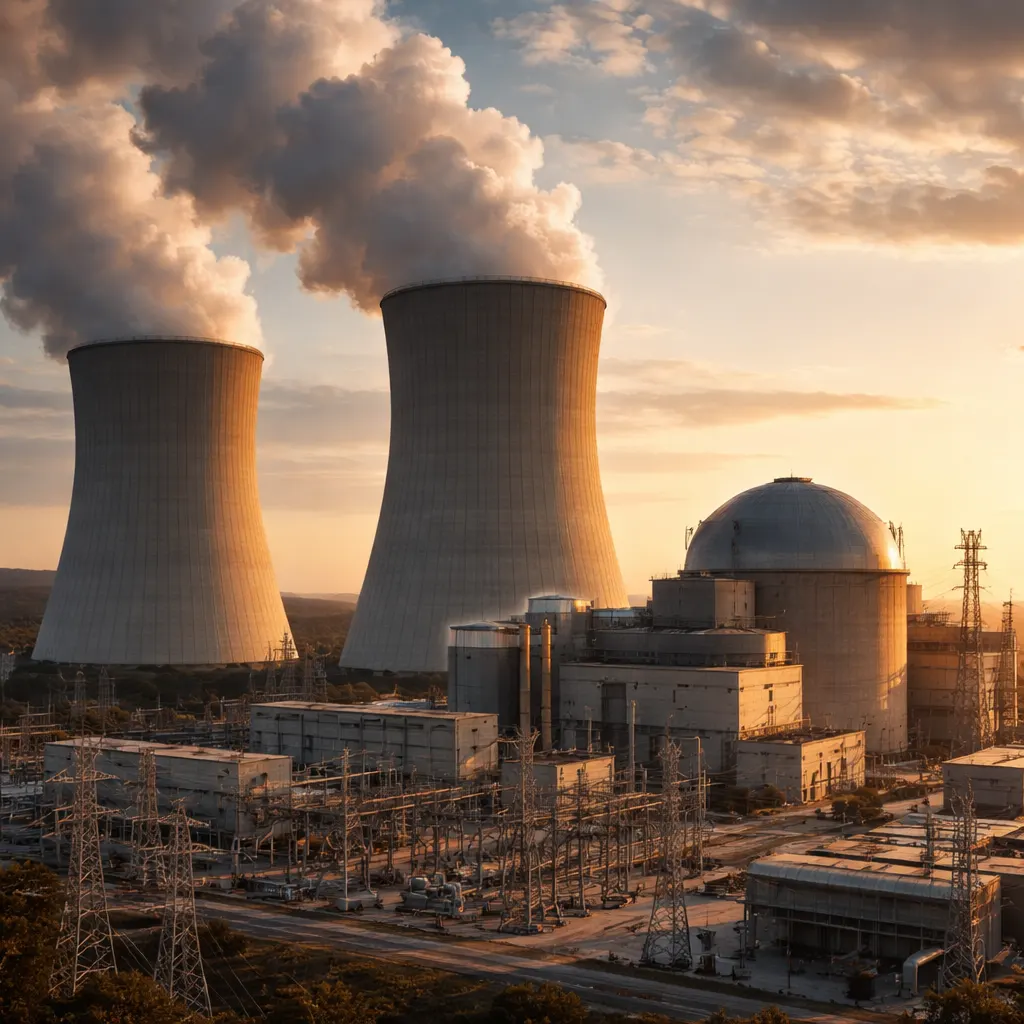
Constellation, the biggest nuclear operator in the United States, announced plans to add nearly a gigawatt of fresh capacity across 11 existing nuclear reactors at six plants, according to a report published October 15 by MIT Technology Review. The expansion comes as rising electricity demand from artificial intelligence pushes operators to extract maximum output from current facilities. Google agreed to purchase electricity from these plants under a 20-year contract, providing the financial backing needed to make the upgrades happen.
The expansion effort extends beyond Constellation. On October 5, the Department of Energy committed a $4.2 billion loan to Vistra for previously announced improvements at three plants across Pennsylvania and Ohio, which will deliver 433 megawatts of additional power capacity. Meta has already signed a long-term agreement to buy electricity from those facilities. The US Nuclear Regulatory Commission approved over 80 uprates between 2001 and 2010, but that number fell to 33 between 2011 and 2020 as electricity demand flattened and cheap natural gas squeezed nuclear economics. The most recent major uprate in the country happened at Alabama's Browns Ferry nuclear power plant, where a $475 million project expanded power capacity by 14% between 2018 and 2019. Today, the US nuclear fleet operates at roughly 98 gigawatts of total power capacity, with somewhere between three and eight additional gigawatts potentially available from uprates.
The report notes that Constellation's CEO Joe Dominguez told the New York Times these are "capital intensive, labor intensive projects that require a different price point than the market trades at, frankly." The NRC already expects applications to add 2.4 gigawatts of power to reactors through 2032, meaning a substantial portion of potential uprates nationwide is already in motion. The additional electricity from Constellation's $4.3 billion investment will be sufficient to power roughly 700,000 US homes, according to the report.
The technology behind uprates involves using fuel that's more highly enriched or a larger volume of fresh fuel inside the nuclear reactor, which helps produce more steam to turn a turbine and generate electricity. To manage that additional energy, operators upgrade main turbines and equipment including pumps, motors, generators, and transformers. Major overhauls can boost reactor power by as much as 20%, though some uprates are minor adjustments to instrument setpoints or calculations. The process, called a power uprate, has been used in the US since the 1970s but became less common in recent years when some plants closed and investing more money to produce more electricity didn't make economic sense at others. The surge in AI-driven electricity demand has reversed that trend, prompting shuttered plants like Palisades and Three Mile Island to race toward reopening while existing facilities look to uprate again.
The report emphasizes these uprates won't come close to meeting projected demand. PJM, the grid operator covering much of the East Coast, expects about 30 gigawatts of additional peak demand from AI by 2030—all possible nationwide nuclear uprates would cover just a fraction of that need. On a per-kilowatt basis, the Constellation project costs less than building a new reactor but remains more expensive than constructing a new utility-scale solar farm with energy storage or a combined-cycle natural-gas plant. Making the most of existing nuclear reactors represents a relatively easy win when zero-emissions power is urgently needed, but eventually meeting demand will require actually building new reactors, the report concludes. Tech companies are securing power by writing checks operators couldn't refuse, but the financial model only works because these deals lock in prices above what wholesale markets currently offer. That creates a two-tier electricity economy where hyperscalers pay premium rates for guaranteed capacity while everyone else competes for whatever's left at spot prices.