
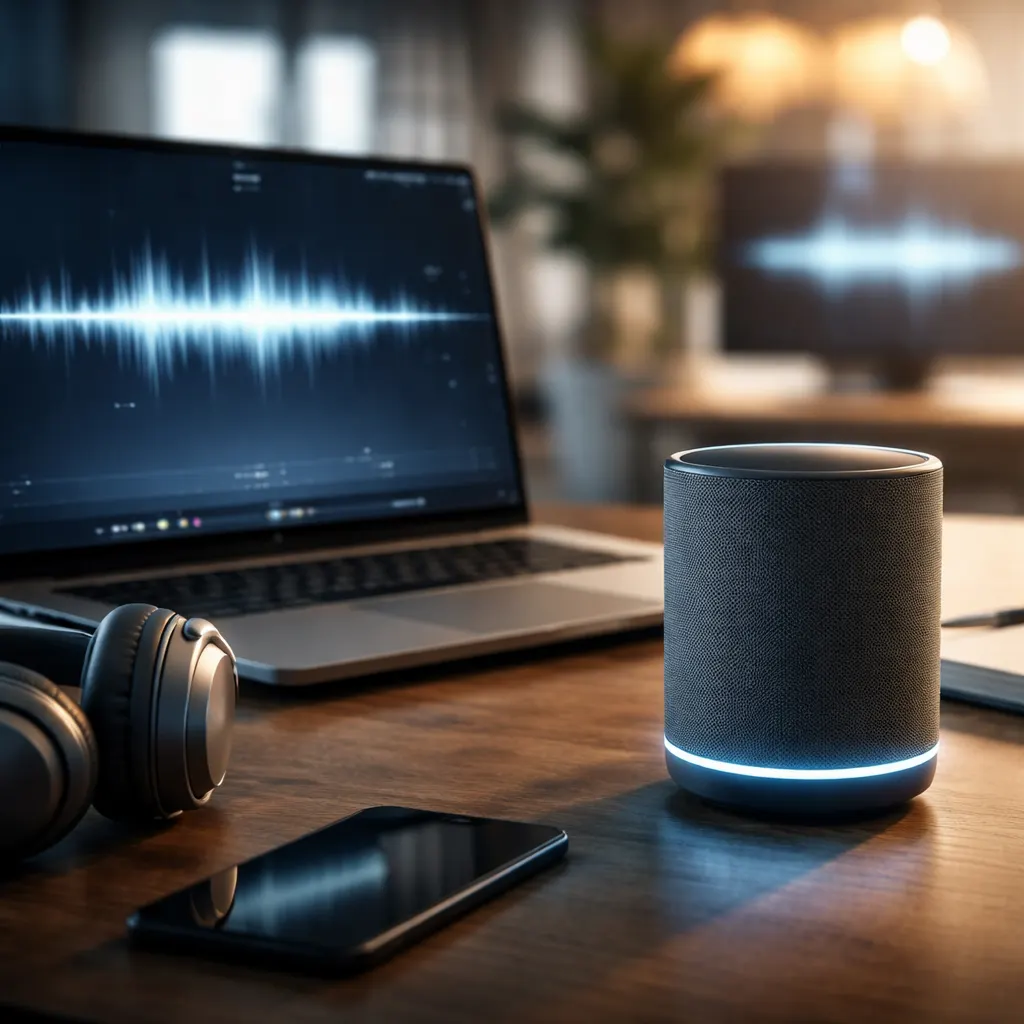
Microsoft has launched three new AI models designed to eliminate the awkward pauses that plague automated voice systems, according to a blog post published October 1 by Naomi Moneypenny, senior director of product development at Microsoft Foundry Models division. The models—MAI-Transcribe-2-Streaming, MAI-Voice-2.1, and MAI-Voice-2.1-Flash—are now available in Microsoft Foundry, the company's catalog and platform for apps and agent models. The release aims to make voice agents capable of listening, reasoning, using tools, and speaking simultaneously, rather than forcing callers into what Moneypenny describes as "a series of awkward pauses."
MAI-Transcribe-2-Streaming converts live speech to text as words are spoken, producing initial hypotheses—called partials in the field of incremental speech recognition—within the low hundreds of milliseconds after receiving audio. The technology includes automatic language detection and refines these partials as additional context becomes available, committing to a stable transcript when an utterance concludes. MAI-Voice-2.1 offers expressive multilingual text-to-speech capabilities, while MAI-Voice-2.1-Flash is optimized for responsive, high-volume voice applications. The transcription model achieved the top position for accuracy on both partial and final transcripts on the Artificial Analysis leaderboard, according to the post.
Moneypenny writes that the streaming capability matters when applications need to respond while someone is still talking. "A customer-service agent can begin identifying a caller's request before the sentence is complete," she notes, adding that voice assistants can start reasoning or preparing a tool call sooner. The report suggests developers should select MAI-Voice-2.1 when expressive fidelity is the priority, or Flash when they need to balance natural speech with responsiveness and cost at scale. Microsoft positions Flash as a natural fit for live support agents, voice assistants, and other applications that generate spoken responses.
Industry practitioners from voice-agent platform company Phonely identified practical challenges that extend beyond the models themselves. Will Bodewes, the company's CEO, told The New Stack that in earlier cloud-based speech API eras—from the mid-2010s onward—a speech request to a hosted model could wait behind a thousand others for 30 seconds, long enough for callers to hang up. Machine learning researcher Amit Kiran Rege from Phonely explained that the hardest part isn't the speech input and output, but rather "the silence in the middle where the model is deciding whether a caller is done or taking a breath before the next word." Rege noted that when Phonely scaled to millions of calls, faster data pipelines caused agents to interrupt callers more frequently—two-thirds of the time their agent jumped in too early, though callers didn't hear it because they resumed speaking before the first syllable and the system canceled the reply. Cutting latency in half turned these into audible interruptions, demonstrating that latency and turn-taking must improve together.
Microsoft states that developers can use these models to build customer-service agents, multilingual assistants that recognize spoken language and respond in a consistent voice, interactive learning experiences that shift between languages and speakers, and live captions with voice-driven interfaces. The company is betting that voice AI is ready for widespread deployment across contact centers and consumer applications, building on years of work with Azure Speech services that now ship the new MAI models. For businesses evaluating voice automation, the technology's maturation hinges less on whether models can transcribe quickly and more on whether complete systems can navigate the subtle rhythms of human conversation without frustrating callers into demanding a representative.