
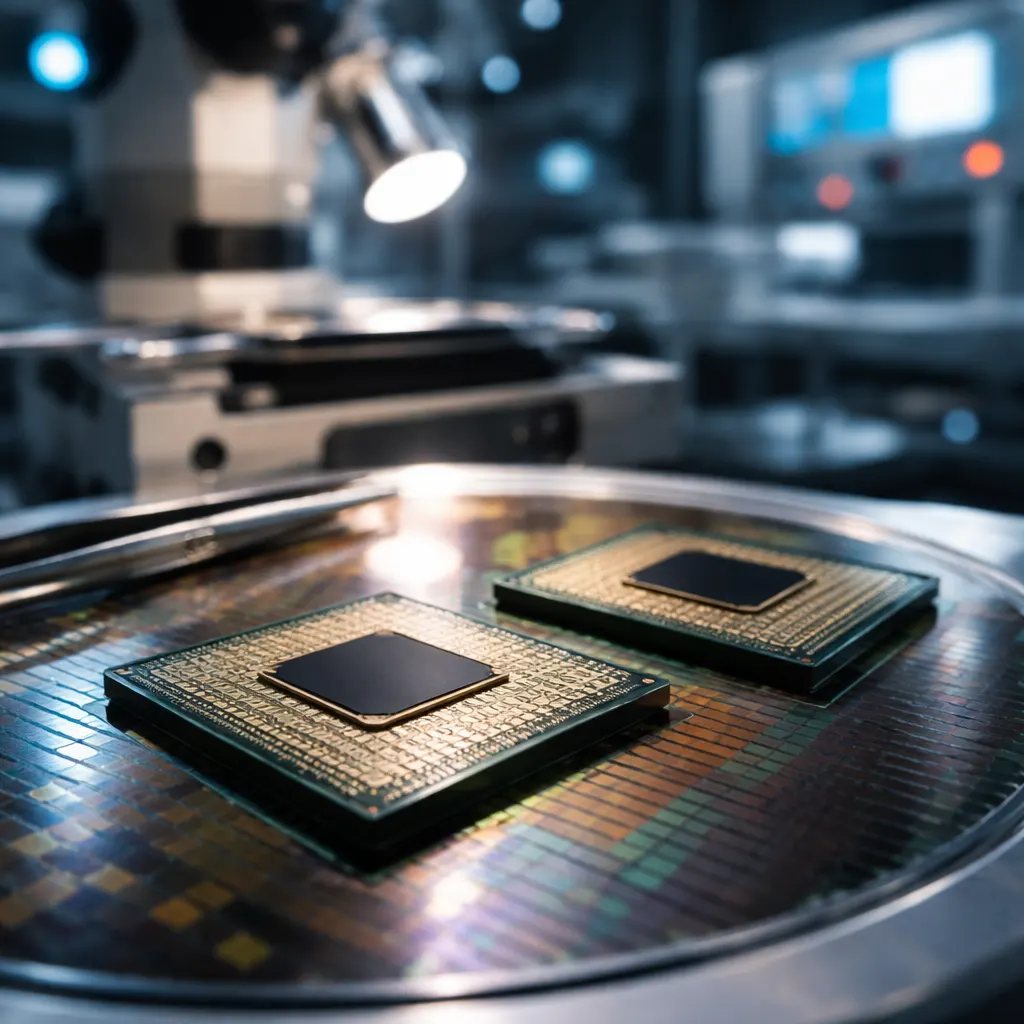
Commonwealth Fusion Systems (CFS) announced Thursday that it will receive $85 million from the U.S. government to create advanced semiconductors tailored for the fusion power sector. The CHIPS Act funding from the Department of Commerce will support research, development, and manufacturing capacity for specialized chips needed to operate commercial fusion plants. The award also grants the federal government an ownership stake in the company.
The $85 million will support five separate development programs. CFS will work on silicon carbide power electronics, which manage high voltages and are already used in LEDs, electric vehicles, cell phone towers, and data centers. The company will also develop next-generation radio-frequency power generators used to heat fusion fuel, along with advanced electronics designed to speed up reactor control systems. Another portion of the funding will go toward creating radiation-hardened electronics that can withstand the harsh environment inside a fusion plant. Finally, CFS plans to adapt artificial intelligence hardware like GPUs and TPUs for power plant applications.
According to co-founder and chief science officer Brandon Sorbom, the investment will result in "a more capable, economical power plant and a stronger U.S. supply chain to build it." He added that "the funding would help improve the U.S. chip and power electronics industries at the same time it accelerates fusion energy's progress toward the electrical grid." CFS is racing to activate its Sparc reactor sometime in 2027, but the company acknowledges that a single demonstration device is merely a proof point.
The push for more durable electronics addresses a critical barrier to scaling fusion power. Silicon carbide semiconductors drive the superconducting magnets that confine plasma inside reactors by managing intense bursts of electricity. Radiation-hardened electronics could extend the lifespan of components inside a fusion power plant, cutting operating costs over time. If fusion startups want to construct dozens of commercial facilities, they'll need both tougher power electronics and a reliable supply chain—two gaps this award aims to close.
The CHIPS Act funding positions CFS to address supply chain vulnerabilities while advancing toward commercial-scale fusion energy. Building out domestic semiconductor manufacturing capacity strengthens U.S. control over critical components needed for future power plants. The company's timeline calls for turning on its demonstration reactor next year, setting the stage for the transition from proof-of-concept to full commercial deployment. For fusion to move beyond laboratory milestones, the industry will need components engineered for decades of extreme conditions—not just systems designed to validate the science. Whether fusion achieves grid-scale viability will depend as much on supply chain resilience and component durability as on plasma physics breakthroughs.