
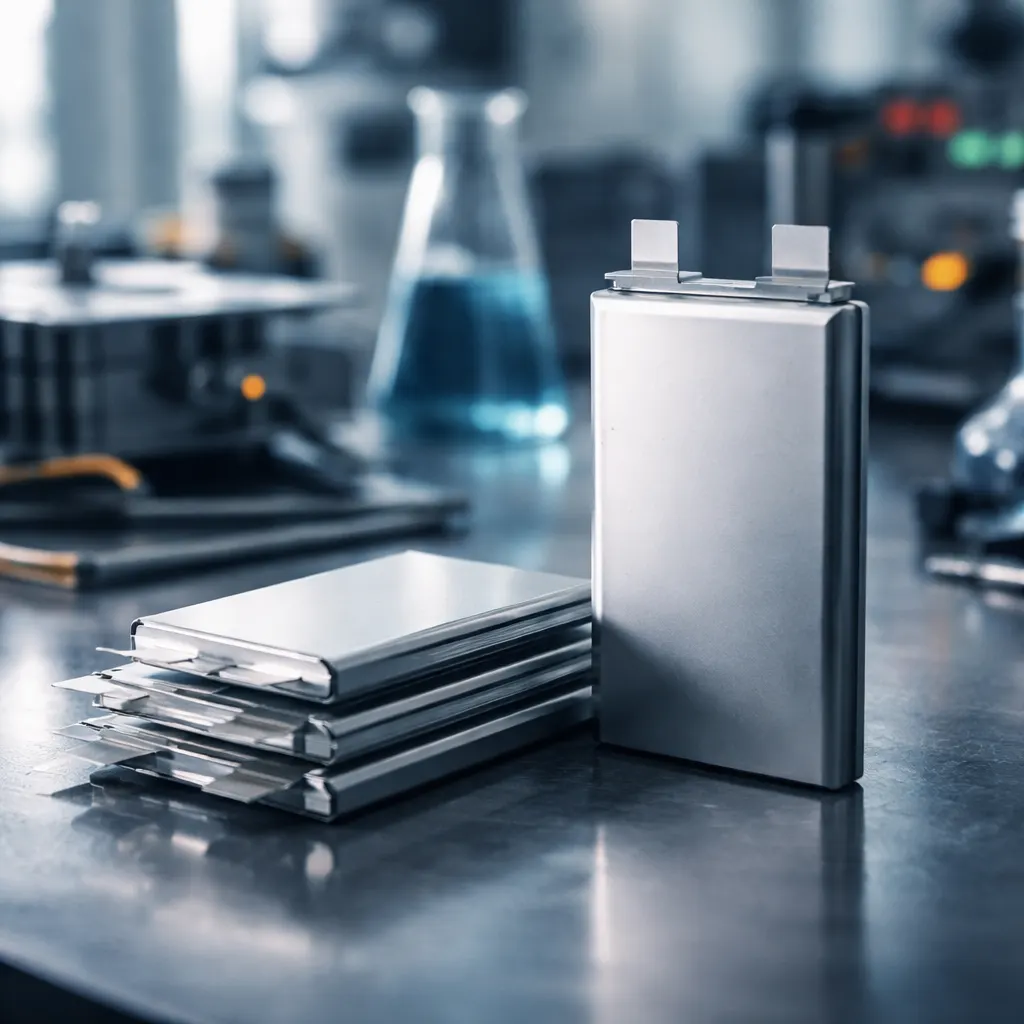
One of America's most advanced solid-state battery companies says it's nearing the ability to bring its product to market, according to a report published by MIT Technology Review on October 21, 2026. The breakthrough comes after more than a decade of solid-state batteries remaining perpetually "just a few years away" from commercial availability. If successful, the technology could substantially ease the transition away from fossil fuels by delivering power packs that charge faster, last longer, pack more energy into smaller spaces, and run cooler than today's lithium-ion batteries.
The challenges holding back solid-state batteries have centered on two core problems. In designs pairing a solid electrolyte with a lithium-metal anode, needlelike filaments called dendrites grow during charging and eventually push through the electrolyte, shorting the cell—many solid electrolytes crack as these treelike projections break through like roots splitting a concrete foundation. Manufacturing at scale poses another hurdle, requiring large quantities of defect-free ceramic-like sheets for electrolytes and dry assembly rooms, since the materials react with water. Most manufacturers expect solid-state battery prices to align with lithium-ion packs sometime in the mid-2030s.
Bill Gates–backed QuantumScape, which launched in Silicon Valley in 2010, built its battery around ceramic materials it says are compatible with lithium, avoiding dendrite formation. The company spent roughly a decade learning to process the material to meet all other requirements, according to cofounder and chief technology officer Tim Holme. In 2025, the startup announced a proprietary large-scale manufacturing method for rapidly producing and heat-treating ceramic electrolytes. "We figured out a way to shorten that down to several minutes," Holme says, referring to a ceramic production process that has traditionally taken days over 10,000 years of human history. Toyota partnered with energy company Idemitsu Kosan on a pilot plant, promising cars that can travel up to 745 miles after charging 10 minutes or less. China's CATL, which controls roughly 40% of the global battery market, pumped nearly $2.6 billion into a solid-state research program in 2024 alone, while Mercedes equipped one of its EQS sedans with solid-state batteries last fall and drove nonstop for 750 miles with range to spare.
The report notes that investing in vehicle batteries makes sense given the size of the potential market, but the first solid-state EV batteries will inevitably cost more, with any uptick typically passed to buyers. Grid storage purchasers working to meet rising demands from data centers may also hesitate to buy new technologies that haven't come down the cost curve, though the promise of energy storage lasting longer than lithium-ion's typical eight hours could make them easier to persuade. Some companies are borrowing a strategy from fusion developers by targeting near-term markets with better margins to fund development and reduce costs—California-based Solid Energies and Arizona-headquartered Sion Power are looking at aviation and military sales. "Those are sectors that are less sensitive to cost, and they typically require lower volumes as well," says Evelina Stoikou, head analyst for battery technologies and supply chains at consultancy BloombergNEF, calling it "a good way to prove your concept."
The report assigns a progress meter score of 7 out of 10, concluding that the technology works, capital exists, and demand follows close behind—though unknown unknowns remain in manufacturing, as with any industrial-scale production. Companies banking on near-term niche markets to validate the technology and drive down costs face a familiar chicken-and-egg problem: proving commercial viability requires scale, but achieving scale requires proving commercial viability first. Whether the convergence of advances from QuantumScape, Toyota, CATL, and others can finally break the decade-long cycle depends on solving manufacturing puzzles that have stumped the industry since long before today's electric vehicle boom began.