
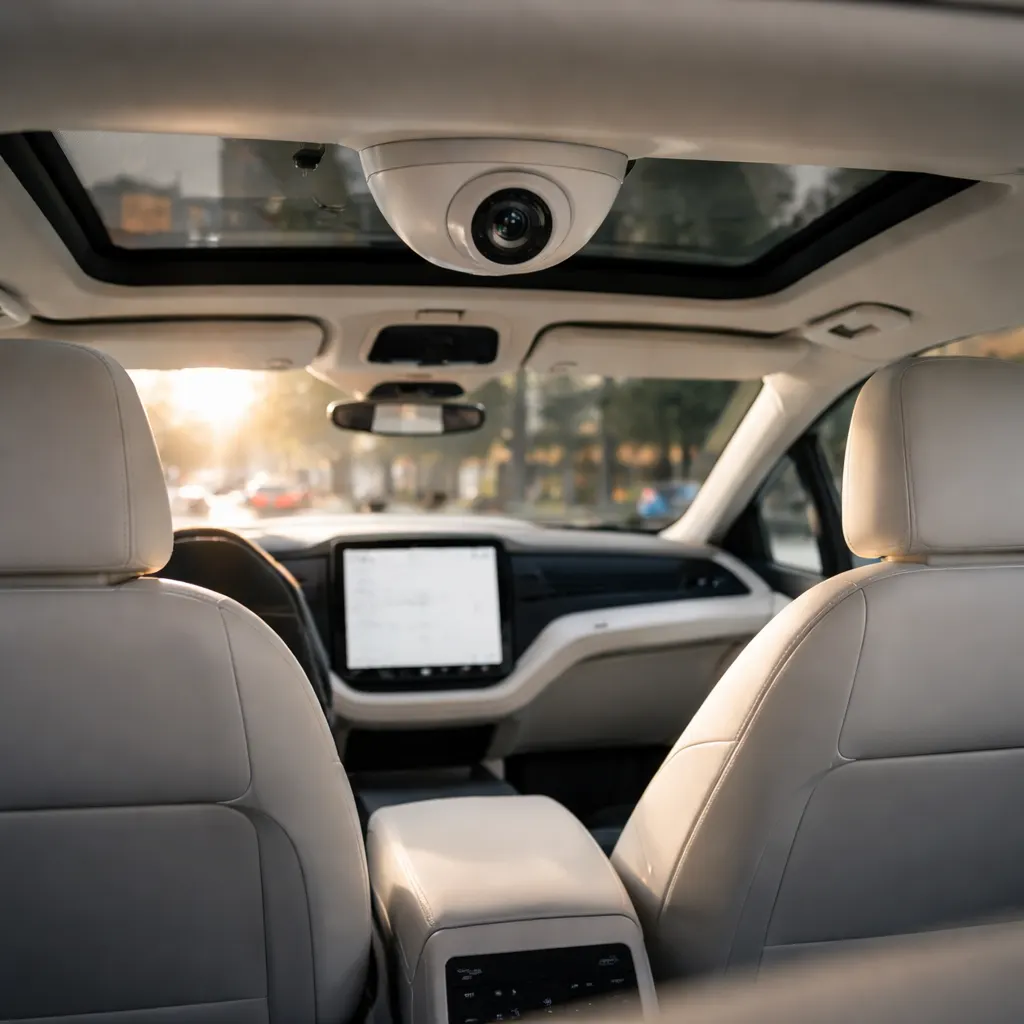
Self-driving vehicles from companies like Waymo are equipped with interior cameras that monitor passengers throughout their rides, sometimes using automated systems to flag potential rule violations including the presence of firearms, according to a report published by WIRED. The article highlights a summer incident in San Mateo County, California, where Waymo staff monitoring cabin cameras called 911 after seeing what appeared to be teens firing a handgun from a parked robotaxi—which turned out to be a toy gun shooting water-filled Orbeez. The incident drew attention to how extensively these vehicles surveil their passengers, and how few regulations govern what companies can do with the footage they collect.
Waymo's privacy policies indicate the company deploys automated technology to spot potential violations, and holds a 2025 patent describing systems that conduct automated "predetermined ride checklists" before, during, and after trips. Zoox, owned by Amazon, states on its website that interior cameras "record the entirety of your ride," with footage potentially used to operate rides and to develop or improve the company's products. Tesla's robotaxi service shows riders a green indicator when cameras activate, and passengers can choose whether to share in-cabin video and audio—though those in the company's "early access" program are automatically opted in to data sharing. Earlier this year, California passengers told WIRED that Waymo employees took over vehicle intercoms mid-ride to verify their ages, with one 35-year-old reporting he believed his backpack triggered the intervention.
According to Matthew Guariglia, a senior policy analyst at the Electronic Frontier Foundation who focuses on surveillance issues, "We are being essentially abandoned by our lawmakers when it comes to consumer privacy and what companies can do with information after they've collected it." His recommendation? "Just because you're alone in the car doesn't mean you're alone in the car. You should behave as if there's a jumpy person in the front seat." Justin Brookman, who leads technology policy at Consumer Reports, acknowledged that cabin cameras serve a clear purpose—"You need some kind of check on what people do in a car with no driver"—but noted that "these vehicles are relatively new, so there are no expectations around what's appropriate."
The report points to broader concerns about automotive data practices. In 2023, Reuters reported that Tesla employees had shared sensitive recordings from owners' cars over several years, including footage of a naked man approaching a vehicle and a collision involving a child on a bike. Earlier this year, General Motors paid California drivers nearly $13 million in penalties after selling driving data to brokers and insurers without consent. Robotaxi companies including Waymo, Zoox, and Tesla say human staff view interior cameras only when necessary, and all indicate personal data may be shared with law enforcement or regulators following valid legal processes. But privacy policies remain broad, with catch-all terms like "improve their products or services" potentially covering many uses, and riders typically must agree to lengthy terms of service before using ride-hailing apps.
Guariglia's central worry is that automakers are eager to gather information, and autonomous vehicles generate even more of it. "The more data they collect, the more they're going to find reasons to sell it," he said. Until clearer regulations emerge, passengers should assume they're being watched whenever they enter a robotaxi. As autonomous vehicles expand from early pilot programs into broader public use, the intersection of rider convenience and corporate surveillance will likely demand regulatory attention—but for now, riders are left to trust companies are handling their footage responsibly, with little legal framework to enforce those expectations. The autonomy paradox is becoming clear: driverless cars may offer freedom from human operators, yet they tether passengers to a surveillance apparatus with few boundaries and even fewer oversight mechanisms.