
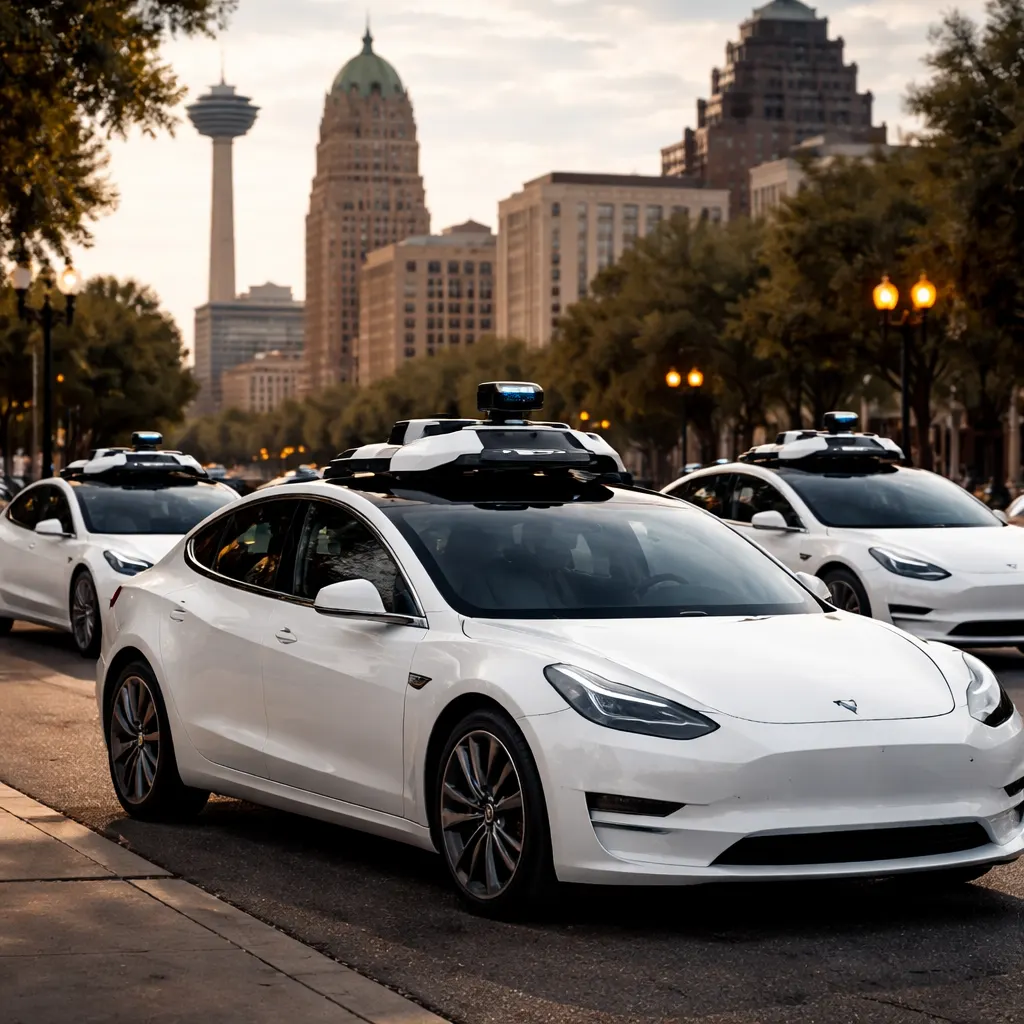
Tesla announced it will launch its robotaxi service in San Antonio starting at 5 a.m. local time on Monday, according to a post the company made on X. The expansion marks another step in the electric vehicle maker's effort to compete with Waymo and establish itself as more than just a car manufacturer. The company didn't disclose additional details about the service, including operating hours, whether the fleet will include both its gold, two-seater Cybercab and modified Model Y vehicles, or if human safety monitors will be present.
If Tesla follows the pattern of previous launches, it will begin with a small number of vehicles operating in a restricted service area and grow gradually from there, the report notes. Tesla CEO Elon Musk spent a decade promising autonomous vehicles before the company finally launched a robotaxi service in Austin in June 2025. Since that initial Austin launch—which was limited and supported by human safety operators on board—Tesla has slowly expanded. The company removed safety monitors from its Austin robotaxis in January, officially starting a true driverless service, and has spent the last 11 months expanding within the city and to new cities in Florida and Texas. It now operates robotaxis in limited areas of Miami and Orlando as well as Dallas, Fort Worth, and Houston. Meanwhile, its rival Waymo also operates a robotaxi service using a mix of driverless Jaguar I-Pace and Zeekr RT vehicles, branded Ojai, in Austin, Dallas, Houston, and San Antonio.
While Tesla has more than 400 autonomous vehicles registered in its Austin fleet, its fleets in other cities have numbered between a handful and a few dozen, according to Texas vehicle registration data and the Robotaxi Tracker website. For example, Tesla has just 24 vehicles in Fort Worth and five in Miami, according to the tracker. The company also operates a ride-hailing service in the San Francisco Bay Area under a transportation charter permit, but those vehicles are driven by a human behind the wheel—Tesla currently doesn't have the required permits to operate a driverless ride-hailing service in California. In spite of this expansion push, the company released data this summer showing its robotaxi network drove fewer miles with paying customers in the second quarter than it did in the first, TechCrunch reported in July.
The Austin launch in June 2025 represented a critical milestone for Tesla and a test of whether self-driving cars could be safely deployed using just cameras and end-to-end AI, the report explains. This approach differs from competitors who use additional sensors like lidar. The company's rival Waymo recently restarted services in San Antonio after a five-month pause following incidents in which its vehicles got stuck after entering flooded roadways. Tesla's expansion to San Antonio puts it in direct competition with Waymo in yet another Texas market, as both companies race to establish autonomous ride-hailing networks across major cities. The gradual rollout strategy—starting with limited vehicles and confined areas—suggests Tesla is prioritizing safety and operational learning over rapid scale. For business leaders watching the autonomous vehicle space, the contrast between Tesla's camera-based approach and competitors' sensor-heavy systems will continue to play out in real-world deployments across these expanding markets. The question isn't just whether robotaxis work, but which technical philosophy proves more scalable when capital efficiency and regulatory approval intersect.