
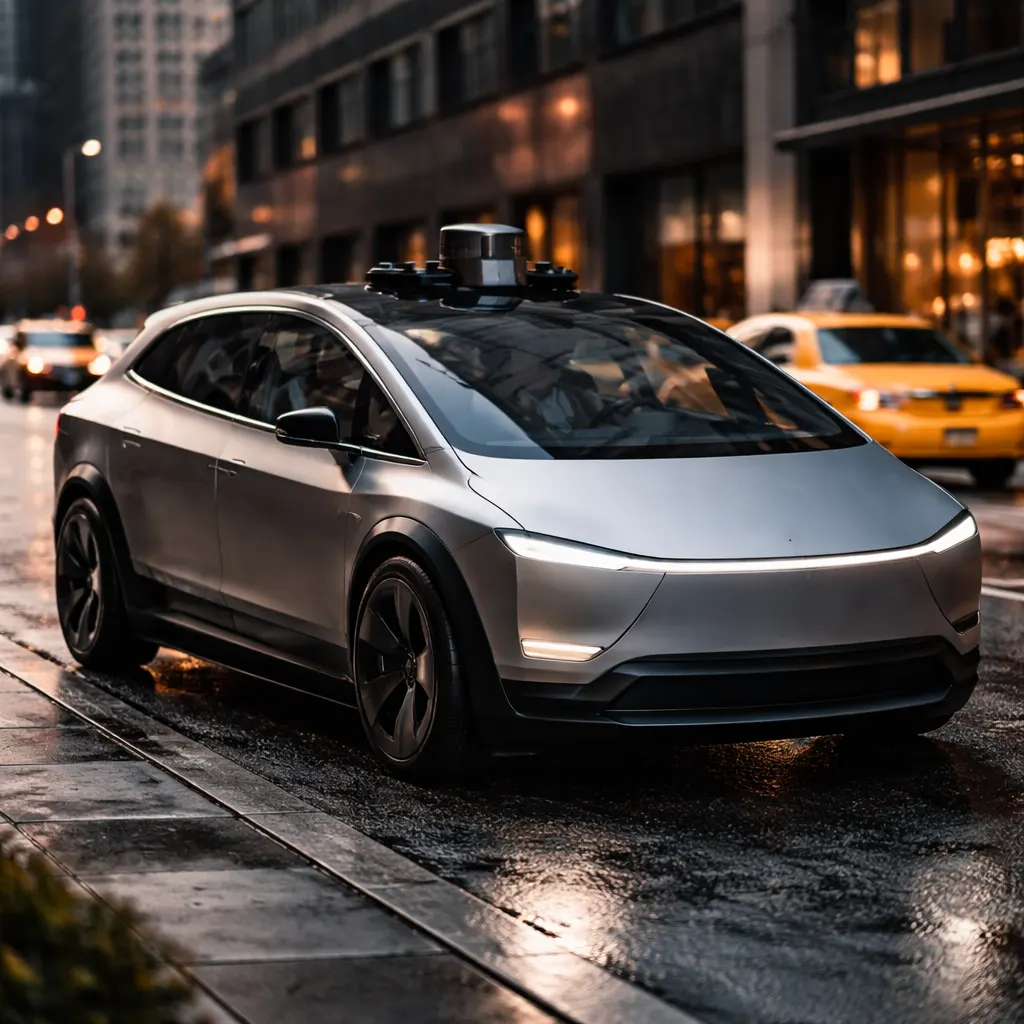
Tesla has begun inviting select customers to purchase a Cybercab for personal use at a listed price of $29,990, but the offer comes with a mandatory $299-per-month "Autonomy Subscription" that can't be canceled without rendering the vehicle completely unusable. According to reporting by The Verge, the steering-wheel-free two-seater will only be available to buyers living in cities where Tesla currently operates its Robotaxi service, and initial availability is limited. The company now has 278 Cybercabs in operation, representing roughly 40 percent of its fleet, based on crowd-sourced tracking data.
The mandatory monthly subscription adds $17,940 to the purchase price over a standard five-year ownership period, even including the first month, which brings the real baseline cost to approximately $47,600 before taxes, charging, and insurance. That's more expensive than a brand-new Model 3 or Model Y that can be driven anywhere in the country. Buyers must put down a $1,000 non-refundable deposit to reserve a December delivery window that isn't guaranteed. Tesla can raise the subscription price with just 30 days' notice, and if buyers continue using the service after an update, they automatically agree to the new terms. If a buyer cancels the subscription or Tesla suspends access, no partial refund is provided for the remainder of the month already paid.
The order terms explicitly ban owners from using the vehicle for commercial purposes, meaning no ride-hailing services, no delivery work, and no adding it to Tesla's own Robotaxi network to offset the monthly fee. Tesla AI chief Ashok Elluswamy has suggested the second quarter of 2027 as a possible target for allowing customer cars to join the network, so early buyers are paying the full subscription with zero way to earn income from the car. Unlike a standard Tesla where canceling Full Self-Driving just returns the car to manual driving, canceling the Autonomy Subscription makes the Cybercab completely unusable on public roads because there's no manual fallback—in effect, the car becomes a brick. The subscription covers autonomous driving, maintenance, and towing, but explicitly excludes auto insurance.
The offer raises a series of unresolved questions, according to the report. Tesla hasn't explained how it plans to sell a vehicle that doesn't comply with current Federal Motor Vehicle Safety Standards requiring traditional controls like steering wheels and pedals, or how personal auto insurers will underwrite a car with no human driver. The company hasn't disclosed how liability is split between the owner and Tesla if the vehicle causes an accident while operating autonomously, or how it selects invited buyers, or how many units are reserved for private sale versus the internal fleet. The National Highway Traffic Safety Administration has already opened a formal audit into how Tesla self-certified a vehicle without a steering wheel, pedals, or side mirrors—Tesla submitted its legal justification in October, requested that the entire response be kept confidential, and is now taking customer deposits while NHTSA's ruling is still pending. Early buyers aren't just paying $47,600 for a geofenced car they aren't allowed to drive manually—they're putting down non-refundable cash on a vehicle the federal government hasn't even decided is street-legal. The subscription model transforms what CEO Elon Musk originally pitched in 2024 as a pathway to passive income into a long-term cost obligation with no revenue opportunity for years, if ever. For companies weighing fleet automation investments, the gap between promotional messaging and contractual reality may signal a need to scrutinize not just the technology roadmap but the fine print governing its use.