
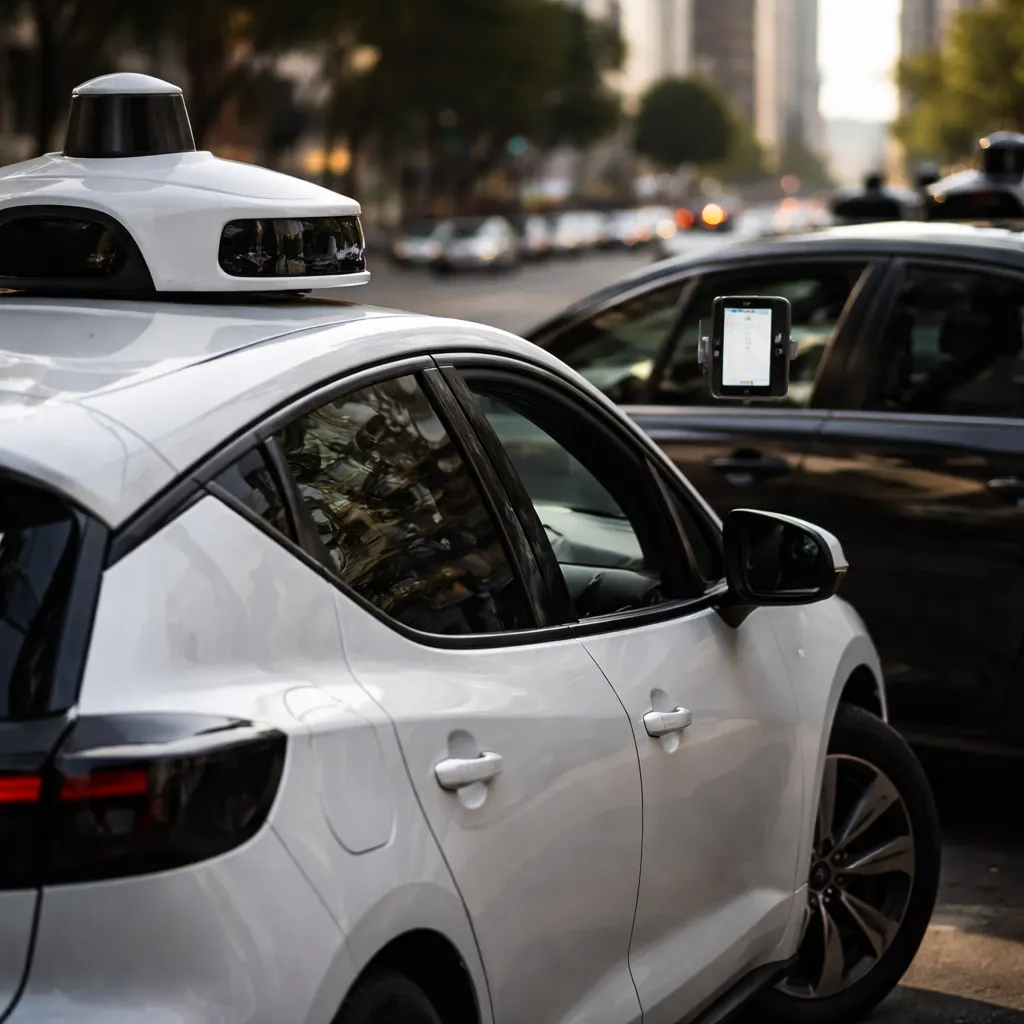
Waymo announced it will stop allowing Uber users to hail its autonomous vehicles through the rideshare app, just hours before Uber's CEO argued that robotaxi operators should abandon their own platforms and use his instead, according to a report published Wednesday by The Register. Waymo Co-CEO Tekedra Mawakana told Bloomberg her company was ending an exclusive partnership in Austin and Atlanta because Uber couldn't guarantee riders who requested a Waymo would actually get one. The timing created what The Register called a "deliciously ironic" collision, with Uber positioning itself as the natural marketplace host for autonomous fleets on the same day its highest-profile partner walked away.
Uber posted third-quarter bookings of $59.8 billion, up 20 percent from the prior year, while recognizing $14.75 billion as revenue, a ten percent gain. Rideshare bookings reached $29.5 billion and generated $7.5 billion in revenue, while delivery services brought in $5.5 billion of revenue on $28.5 billion of bookings. Separately, Australia's High Court ruled Uber must pay AU$81 million ($57 million) in state payroll taxes, determining that driver fees qualify as wages. The decision applies to one of six Australian states that levy payroll taxes, and follows similar rulings worldwide treating gig workers as employees for tax and legal purposes.
In prepared remarks for the earnings call, CEO Dara Khosrowshahi claimed Uber delivers roughly 30 percent more trips per vehicle daily compared to apps operated by autonomous cab companies, and that this utilization advantage, combined with shared charging and maintenance facilities, produces "higher fleet profitability even after paying Uber's marketplace fee." He added that "as autonomous technology becomes more widely available, we believe this ability to commercialize vehicles profitably will become an increasingly important source of competitive advantage and value capture." Khosrowshahi outlined plans to deploy around 2,000 robotaxis in 2027, followed by "a much larger commercial ramp beginning in 2028," mixing company-owned vehicles with third-party operators who list on Uber's app.
The Register noted that Uber's pitch mirrors the platform strategy Google uses for search, app stores, and YouTube, with both companies holding "concerningly dominant positions in their respective markets." Khosrowshahi said Uber would "maintain an open platform while concentrating capital, integration resources, and hands-on deployment support behind a smaller group of partners with the clearest paths to commercial scale and attractive economics at maturity," which The Register interpreted as Uber trying to maximize profits as it scales robotaxis. The CEO's push for autonomous vehicles makes business sense because robotaxis would bolster rideshare, Uber's more profitable segment compared to delivery. The Australian payroll ruling could ripple through other jurisdictions that monitor the country's High Court decisions, potentially forcing Uber to reclassify workers and increase tax payments globally.
Uber faces a strategic paradox: it needs autonomous fleet partners to scale quickly, yet must convince them the platform fee is worth surrendering direct customer relationships and margin. The Waymo breakup suggests that calculus remains unsettled, even as regulatory pressure on the gig-worker model makes driverless cars more financially attractive than ever.