
AI chips are generating heat at levels that traditional air cooling can no longer handle, forcing data centers to rethink their entire thermal strategy, according to a new analysis published by CIO. For years, cooling played a background role in data center planning, with decisions focused mainly on compute, storage, and networking while air-cooling systems quietly kept temperatures within safe limits. That balance has now been upended as artificial intelligence reshapes the thermal demands of modern facilities.
Racks that previously drew 5–10kW are being swapped out for AI systems pulling 60kW or more, with some cutting-edge installations surpassing 100kW per rack. Individual GPUs now consume 700W to 1,200W each, packing massive amounts of heat into tiny spaces. Traditional air cooling, which typically works effectively only up to roughly 20–30kW per rack, can't keep pace with this jump in thermal density. At the chip level, the challenge becomes physical: air has a hard ceiling for heat transfer efficiency, and boosting airflow or tweaking ventilation isn't enough to match the rate at which heat pours off these components.
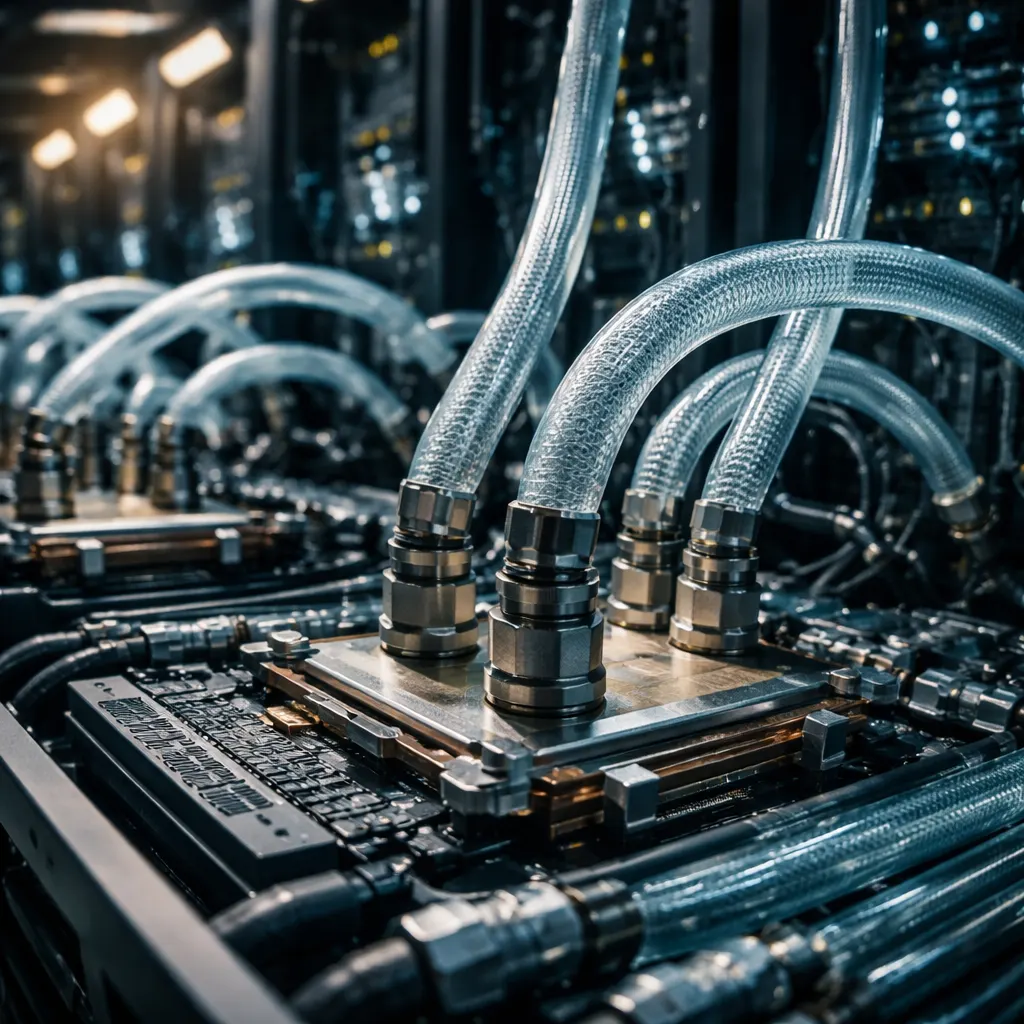
The analysis notes that this mismatch between computing power and cooling capacity is creating a structural problem. Facilities are burning more energy on cooling while juggling higher thermal risk and operational complexity, and in some instances, systems throttle performance to stay within safe temperature ranges. According to the report, direct-to-chip cooling tackles the core weakness of air systems by placing cold plates directly onto high-heat components like CPUs and GPUs, with coolant flowing through to absorb heat at the source before carrying it away through a heat exchange system. "Liquids transfer heat far more efficiently than air," the report explains, allowing data centers to manage much larger thermal loads with lower energy overhead since they need less power for fans, airflow, and chiller operation.
The shift to liquid cooling reflects a broader transformation in how organizations think about infrastructure planning. The report argues that cooling has stopped being merely an operational detail and has become a primary constraint on AI growth and a competitive advantage. Thermal design, energy efficiency, and cooling architecture now sit at the center of conversations about cost control, sustainability goals, and overall competitiveness, with decisions that once belonged to facilities teams now firmly on the agenda for CIOs, CTOs, and infrastructure leaders. While immersion cooling offers extreme performance by submerging servers in dielectric fluid, it demands major infrastructure changes that clash with established operational models, making direct-to-chip a more practical middle ground that delivers performance gains without forcing teams to abandon familiar workflows.
The report concludes that cooling must be treated as a strategic priority from the outset, considered alongside compute, storage, and networking rather than as an afterthought. Air cooling will keep supporting many workloads, while immersion will serve specialized, ultra-dense use cases, but direct-to-chip sits between the two as a viable path for handling escalating thermal demands without overhauling entire environments. For organizations mapping out their next infrastructure phase, the ability to remove heat effectively will dictate how quickly and how far they can scale AI workloads. The transition marks a fundamental redrawing of data center economics, where energy spend and facility design now hinge as much on thermal management as on raw processing capability. Strategic choices around cooling architectures will increasingly separate leaders from laggards in the race to deploy advanced workloads at scale.